
‘We lost everything.’ Naples commercial fisherman gets back to work after Hurricane Ian
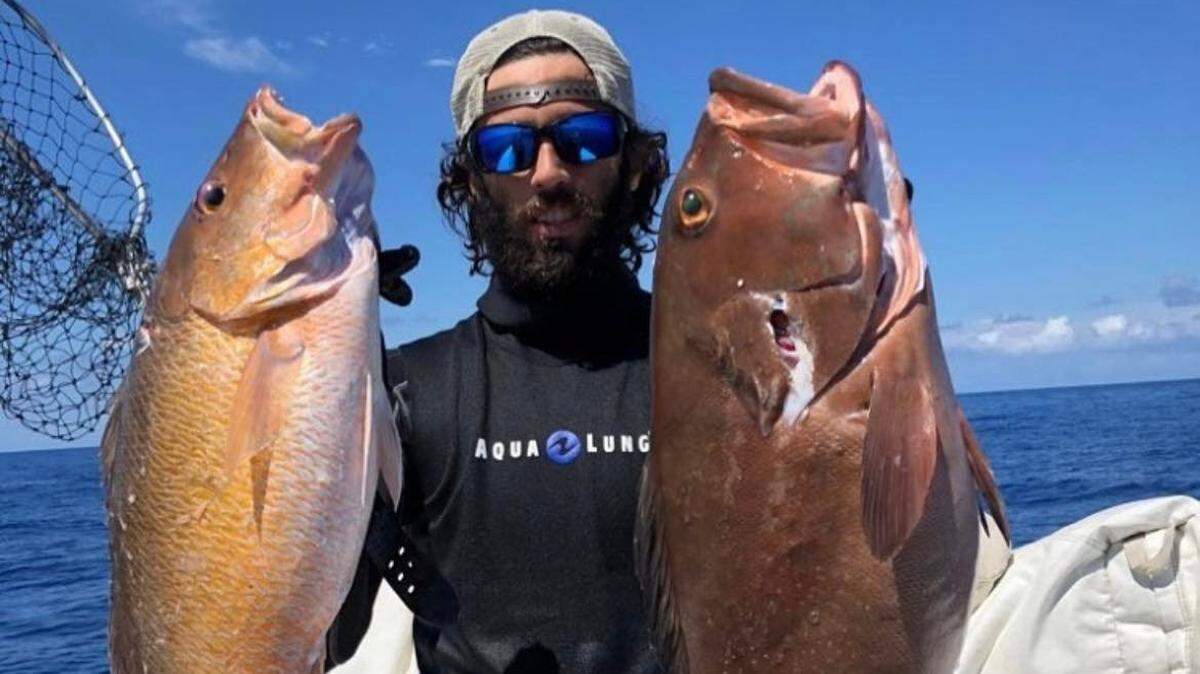
Captain Bill D’Antuono has been spending the past six weeks rebuilding.
“We lost everything. It’s been crazy trying to get it back together. There was 41 inches of water in my house,” the Naples resident said after being near the center of Hurricane Ian.
“We’re just now going through the rebuild phase. The house is gutted, showers are gone, counter tops are no longer there. We just got an A/C on order. I wish I could go fishing more, and this week was the first time my boat has been on the water since I took it off the day before the storm.”
D’Antuono started his offshore commercial fishing business five years ago, right before Hurricane Irma, and during that time has amassed a long list of fishing spots.
He was anxious to see what fish awaited on his favorite bottoms and make a few dollars selling them to market. Taking his twin engine cuddy cabin offshore, he pointed to a destination 55 miles southwest of Naples on the morning of Nov. 16.
He dawned scuba tanks and readied his speargun for a descent more than 100 feet below. Diving down he saw plenty of life and bait, but the bottom looked different.
“The first spot had a ton of fish on it. We got 16 red grouper, a gag grouper, a couple lobster and some mangrove snapper. The bottom seemed a little off but the fish were there. I said ‘This other spot should be good’ and thought the day was going to get off to a great start.”
On the next dive in over 100 feet of water D’Antuono and his crew were in for a surprise.
“I have dove that spot over 30 times. It was a nice ledge about 30 feet long. The backside had a crack that I’ve shot plenty of 50 to 60 pound black grouper. When we got down, the spot wasn’t there. It was gone!” D’Antuono said.
Instead of rocky bottom and fish, the bottom was covered in mud. D’Antuono stuck his speargun in the ground, where it easily pushed through the soft ground unlike normal hard sandy bottom. The group returned to the surface and looked around on the electronics.
“We dove three times trying to find it, but couldn’t,” he explained. “We started looking around the area. I have 50 spots within that two-mile area that seem to be completely gone. It was apparent that the storm moved a lot of sand around and covered up areas.”
As the day continued, more mud covered bottom awaited them on dives. One spot was covered, but a large goliath grouper was able to keep a good portion of the bottom cleaned out.
“Around the mud was a huge hole. A bunch of goliaths had already opened the hole and moved the mud. They go way up in the bottom and sit there. It’s much easier for a 700 pound fish to stay on the bottom when it’s turbulent instead of small grouper and snapper.”
When the day was coming to an end, he kept watching the depth finder, hoping to find signs of new spots. What he noticed was what looked to be hard bottom covered by mud as he drove home.
“You could see the hard bottom but it was covered in mud. It was like lumps covering the hard bottom on the bottom machine. I don’t know if my old numbers are even good anymore. I might have to start over I guess.
“I’ll go out and run and start marking new bottom when I can. We might have 10,000 numbers but there are 50 or so we always go to. Are they there? You don’t know.
“That’s what fishing does. It always keeps us on our toes.”