See vintage photos of Snooty’s life in Bradenton, 5 years after the manatee’s death
He drew crowds from across the country.
Thousands received his kisses and petted his thick, gray skin over the years.
And many people who grew up near Bradenton remember the oldest living manatee in captivity as a fixture in their lives.
Snooty, also known as “Baby Snoots,” was Bradenton’s mascot for almost 70 years.
Since his sudden death in 2017, many people have paid tribute to his legacy by remembering his life in Bradenton and rescuing other manatees like him.
Snooty’s birthday lands on July 21, and the five-year anniversary of his death is July 23. He would be 74 this year.
Life of a celebrity
Baby Snoots, or as we now know him Snooty, was born in Miami in 1948 — the first manatee ever born in captivity.
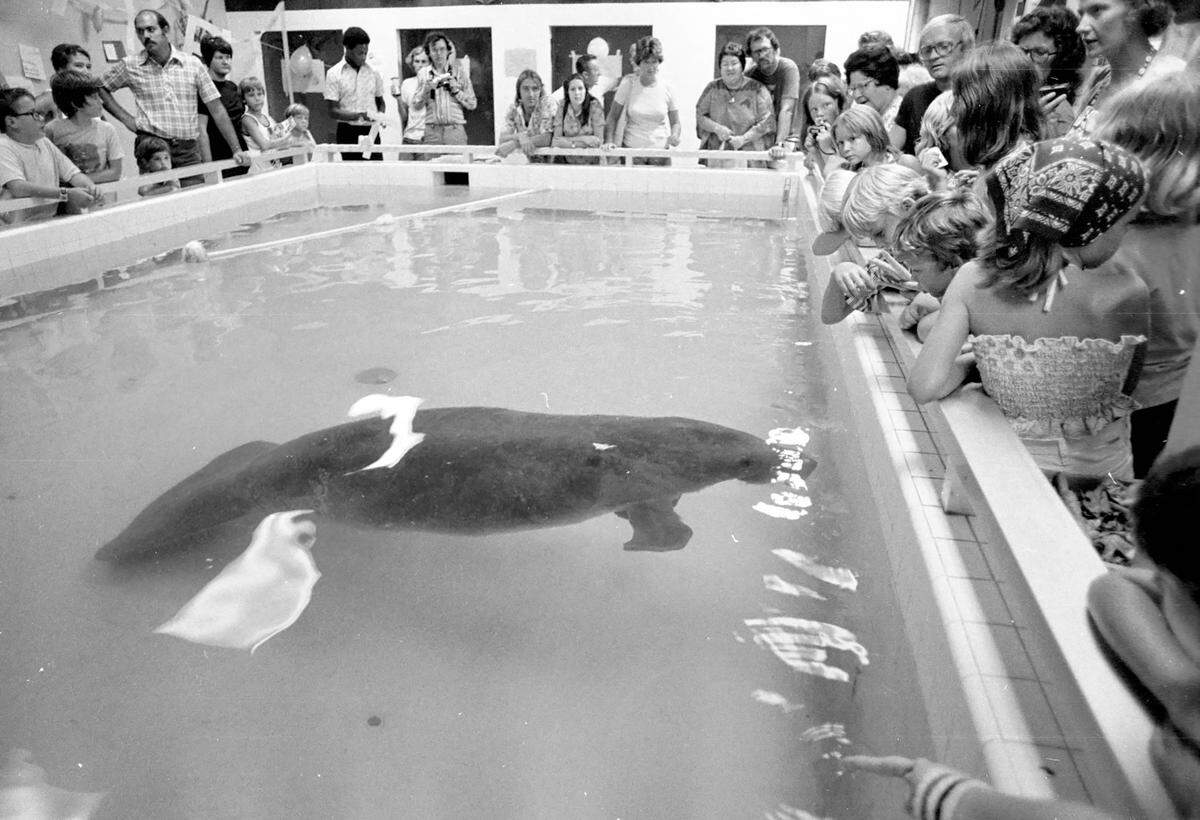
In 1949, Snooty was brought to Bradenton to live at The Bishop Museum of Science and Nature.
At the time, the museum was called the South Florida Museum and was located on the old Memorial Pier.

Soon, Snooty became a main attraction at the museum. Visitors of the museum loved his famously wrinkled nose and open-mouthed smile.
Through the years, word about the famous manatee traveled beyond county and state lines. People all over the country came to see Snooty.

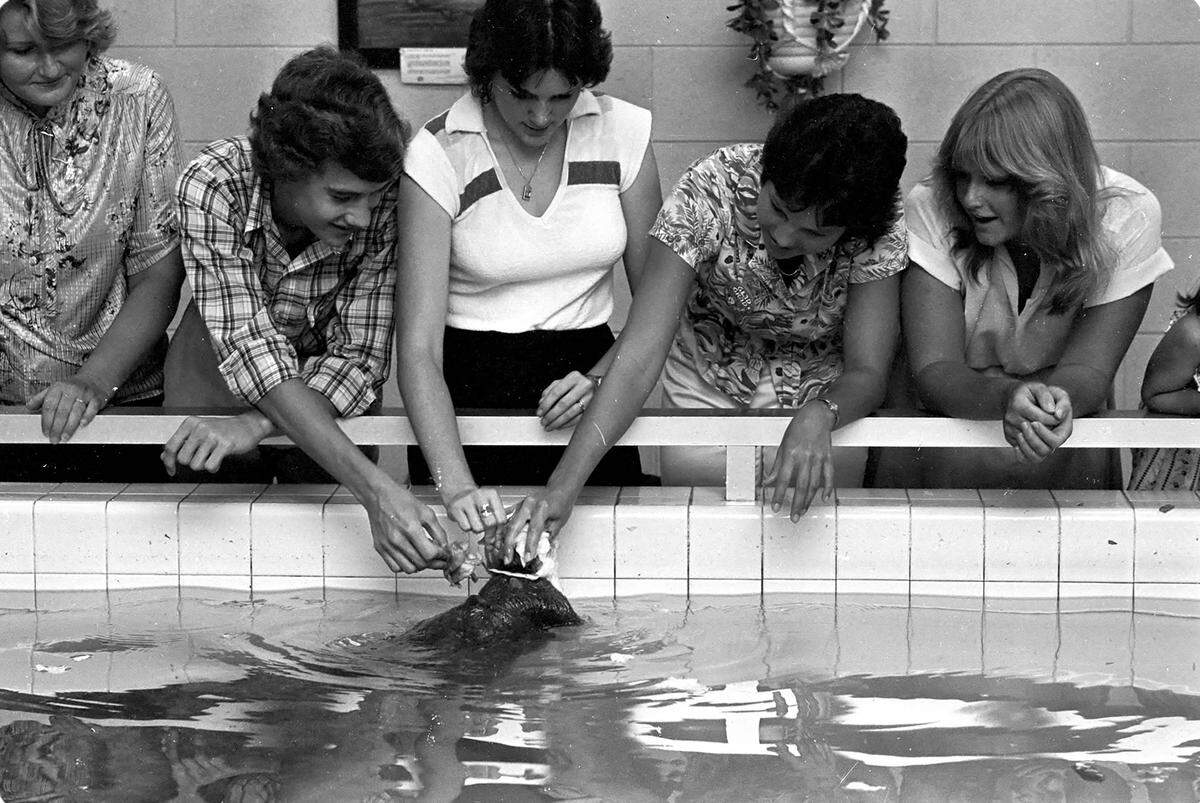
Families, tourists and school field trips loved to visit Snooty. He always put on a show for guests and loved posing for photos.
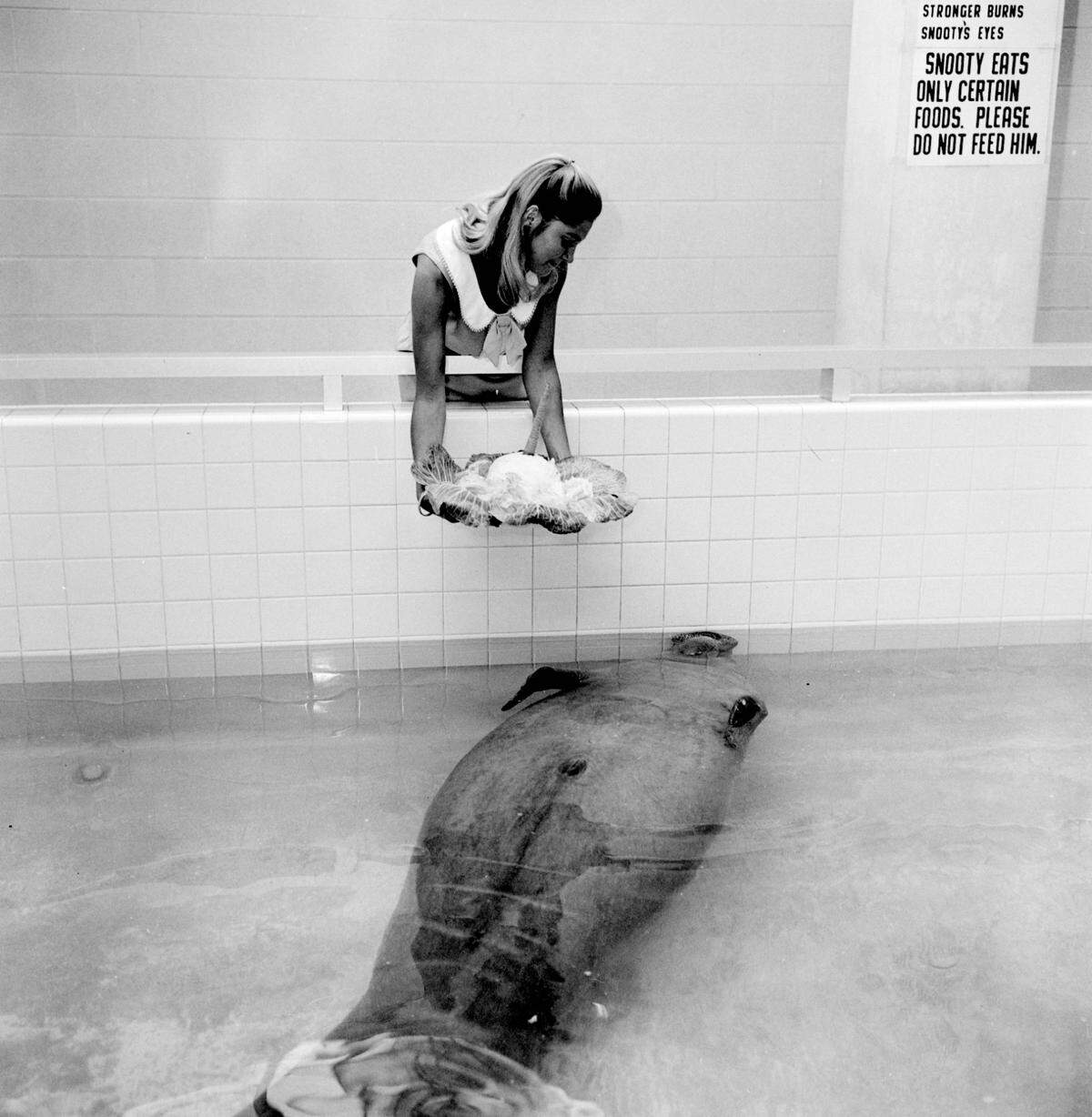
Gina Gill, a 38-year-old former Bradenton resident, recalls meeting Snooty on her first-grade field trip to the museum.
She was six years old, and Snooty still lived in one of his old tanks where the kids could pet and feed Snooty.
“Snooty startled me when he swam up to the edge and gave me a little smooch on my cheek with his wet whiskers,” she remembered. “Snooty was the best and I appreciated the experience.”
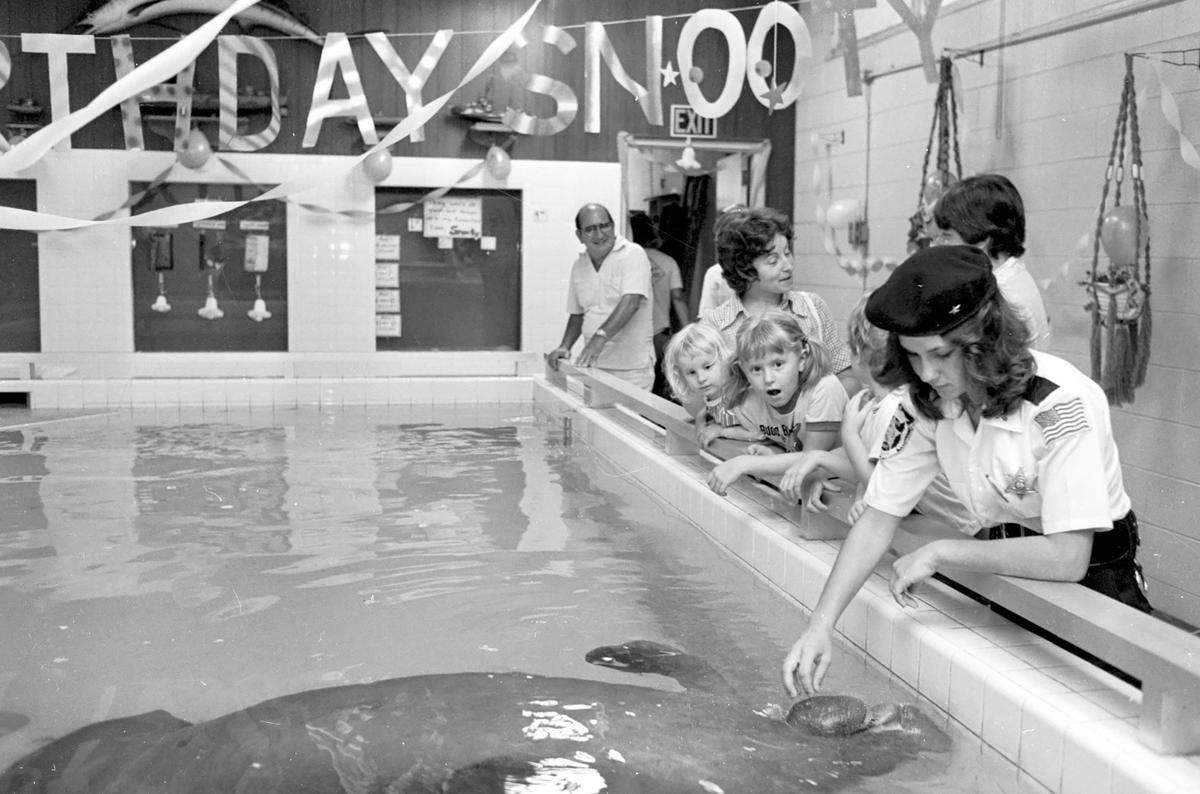
Almost 30 years later, she was able to give her children the same experience when they visited Snooty the week before his passing.
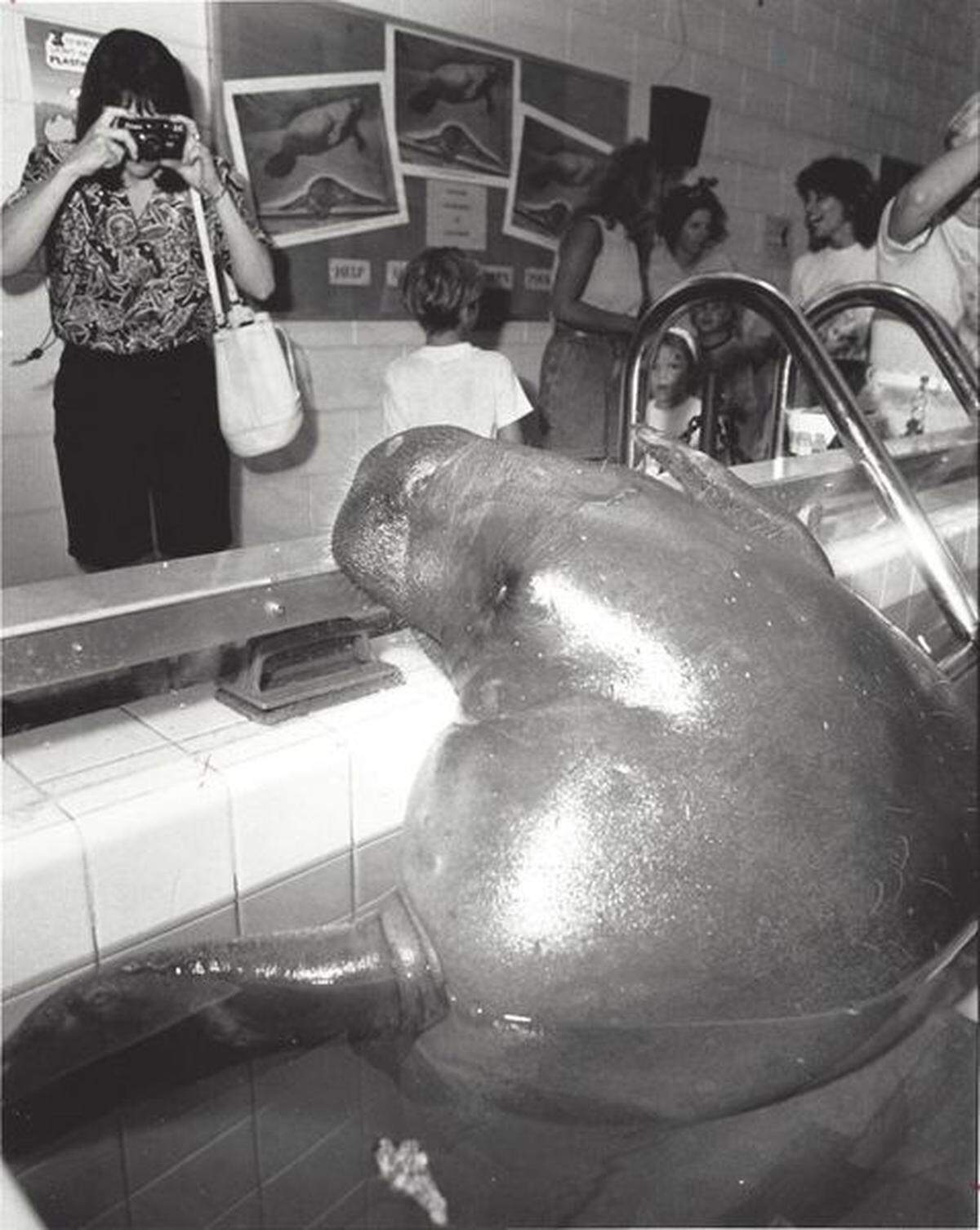
Each one of Snooty’s birthdays was a celebration. For the first few decades, the celebrations were intimate and only a few residents joined in on the museum’s Snooty parties.
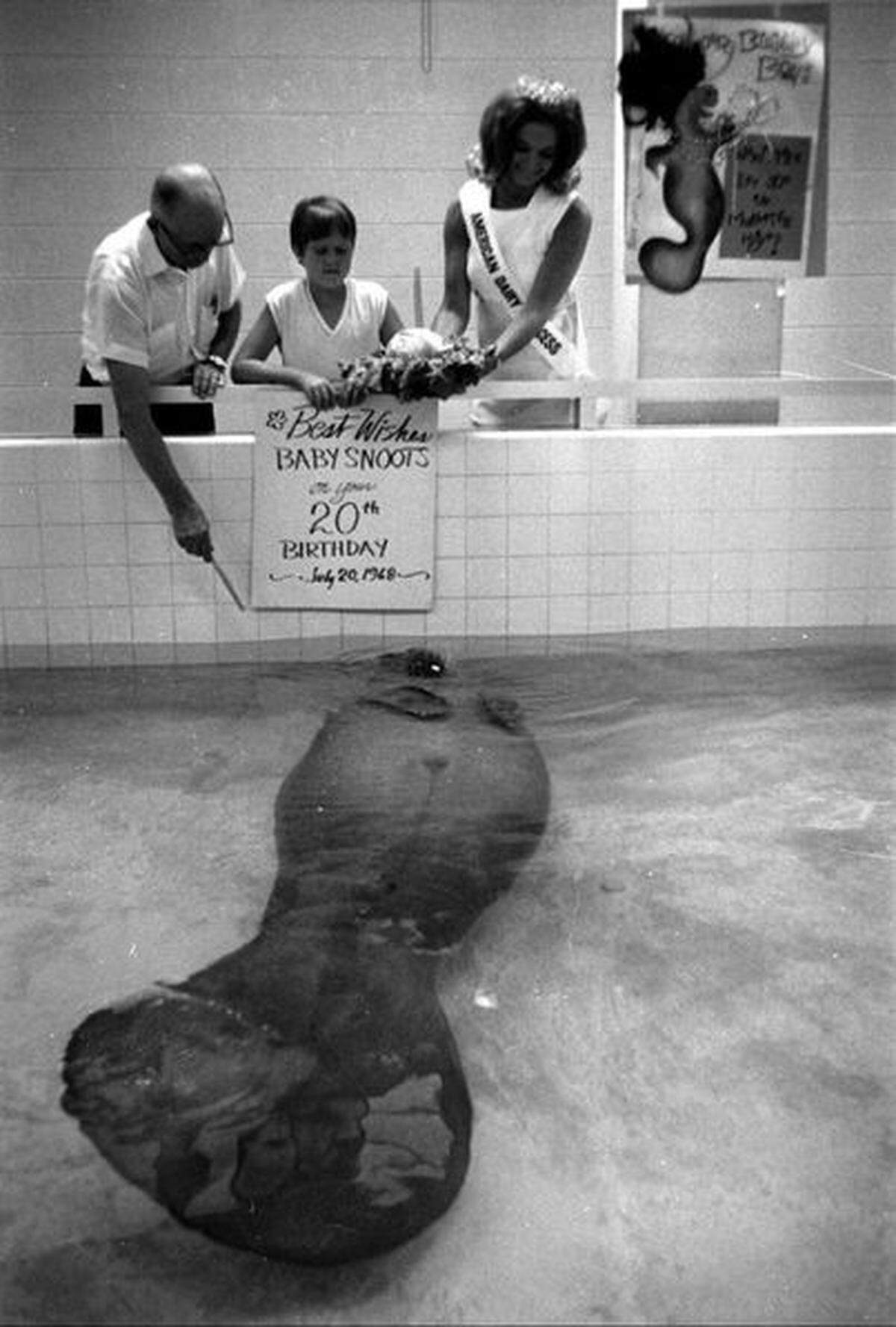
But In 1994, one of the biggest gatherings took place. About 30,000 people celebrated Snooty’s birthday that year. In the photo below, water skiing performers raced across Manatee River during Snooty’s Party in the Park.

Thousands of people would continue to serenade Snooty until the last of his birthdays.
Death and controversy
When the museum announced Snooty’s death on July 23, 2017, it was an unexpected shock to all who loved Snooty. But it was the museum’s admitted negligence that added controversy to his death.
The Endangered Species Act of 1973 missed Snooty by about 20 years. Because he had already been a full-time resident at the museum, the museum was allowed to keep Snooty there for his entire lifetime.
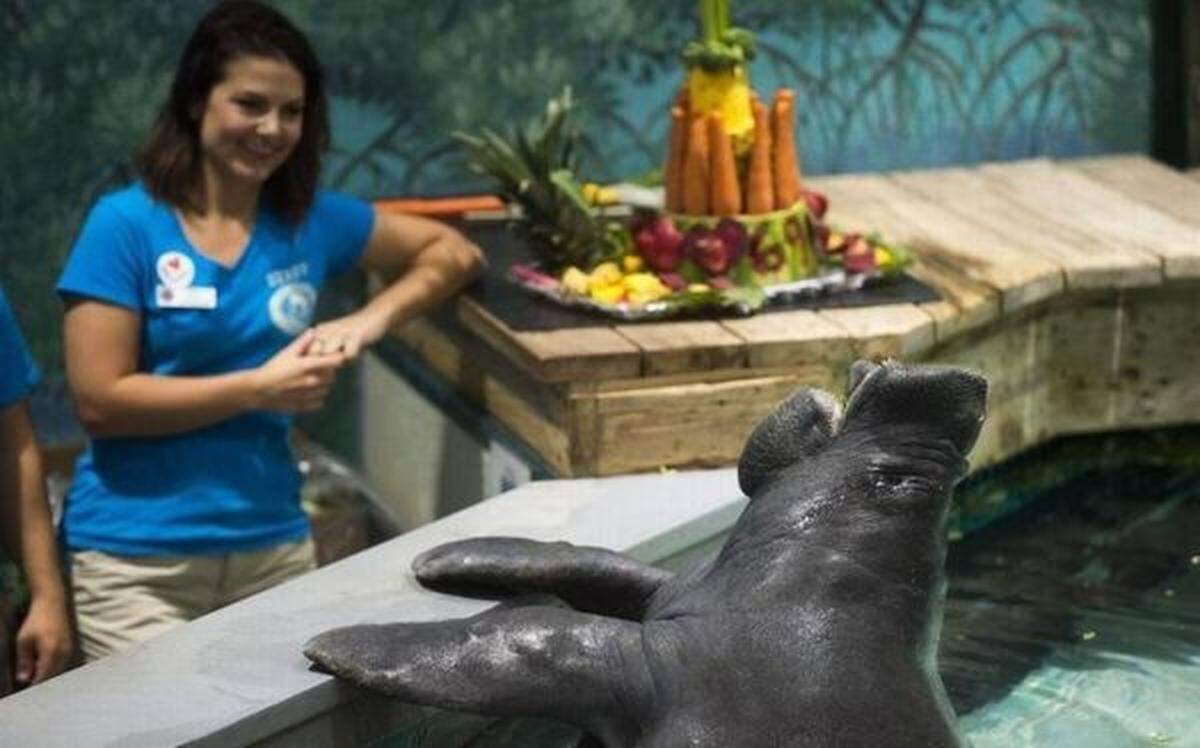
Denise Anderson, the director of nonprofit Friends of Manatees which was founded after Snooty’s death, said humans failed the manatee.
“He never lived a day outside in the wild,” she said.
Snooty was confined to artificial pools and facilities he constantly outgrew. He needed the natural springs environment, but he never got to experience it.
“There’s places in the wild where you can see a manatee without being right in their face and trying to get a selfie,” she said.
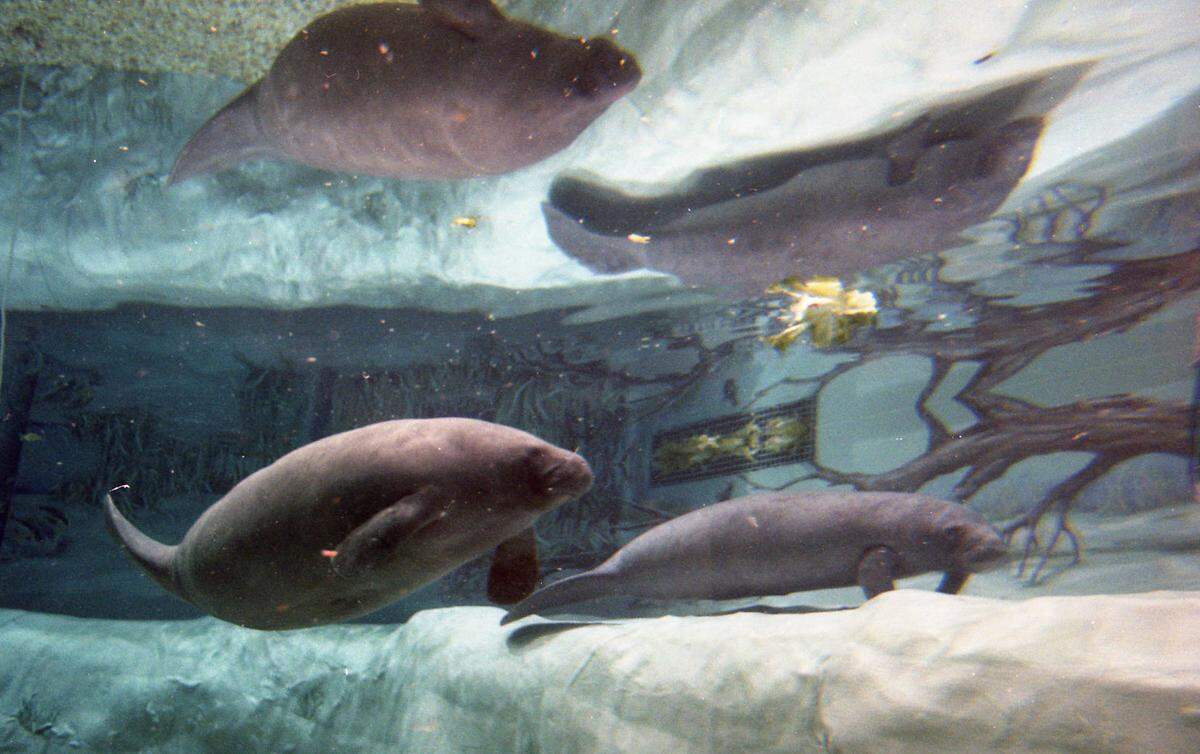
Manatees like to be unbothered, moisturized, happy, in their lane, focused and flourishing, as the internet meme goes.
Roger Reep, an emeritus professor at the University of Florida’s College of Veterinary Medicine, has spent 40 years researching manatees.
Reep said it’s important for humans to keep their distance from manatees because it takes a lot of energy out of them to interact.
“Because of the type of food they eat, which is just aquatic plants, their metabolic rate is fairly low,” he said. “So that means that they don’t have a lot of energy reserves. If you’re disturbing them, either directly by touching them where they’re resting or by just a lot of people being around them, they have to spend more energy kind of finding a place to rest and relax.”
Aquatic plants have become scarce in Florida and manatees are dying of starvation. About 631 manatee deaths have been confirmed by the Florida Fish and Wildlife Conservation Commission this year, the Associated Press reported.
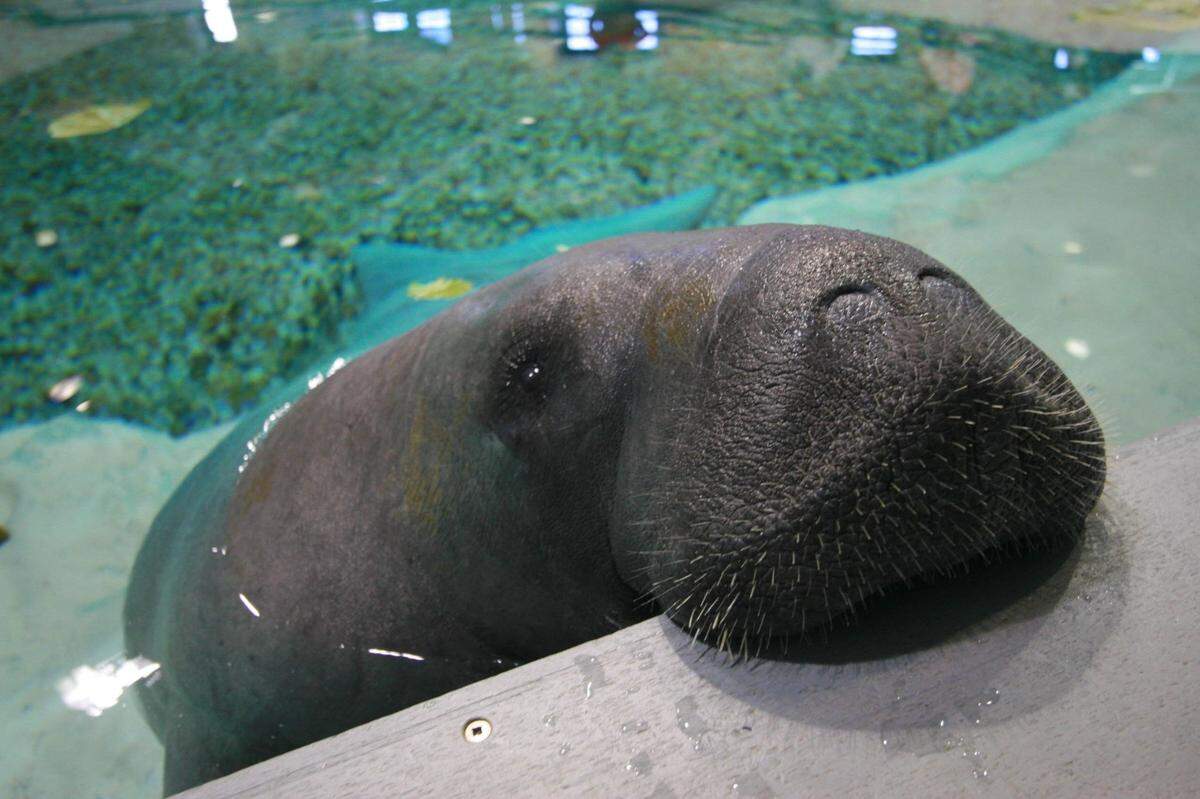
Eleni Sokos, the Bishop Museum’s spokeswoman, said that a lot has changed since Snooty’s passing.
“We have made critical changes in the staffing and oversight of the animal care division,” Sokos said. “So, most of the people who were responsible for Snooty’s care at the time are no longer employed by the Bishop.”
There will never be another full-time resident manatee like Snooty, either.
“It’s really not in the manatees best interest,” Sokos said.
Virginia Edmonds, the museum’s current animal care director, was hired after Snooty’s passing.
“Our mission now is to care for and rehabilitate and eventually release these manatees,” Edmonds said. “They’re not an attraction. They’re there because they need our support and our care.”
The Bishop Museum just announced they are expanding their rescue services to Myakka where they are building a new facility for their manatees.
For almost seven decades, Snooty influenced the Manatee County residents and visitors. Even now, Snooty continues to influence people into helping other manatees.
BEHIND THE STORY
MOREBradenton Herald's 100th birthday
This September, the Bradenton Herald will celebrate 100 years of serving readers in Manatee County.
We’re feeling nostalgic, so our reporters are taking a look back at a century of history in the Bradenton area.
Got an idea for us? Email metro@bradenton.com