Plan for a resort near Skyway alarms Terra Ceia residents. State wants to block it, too
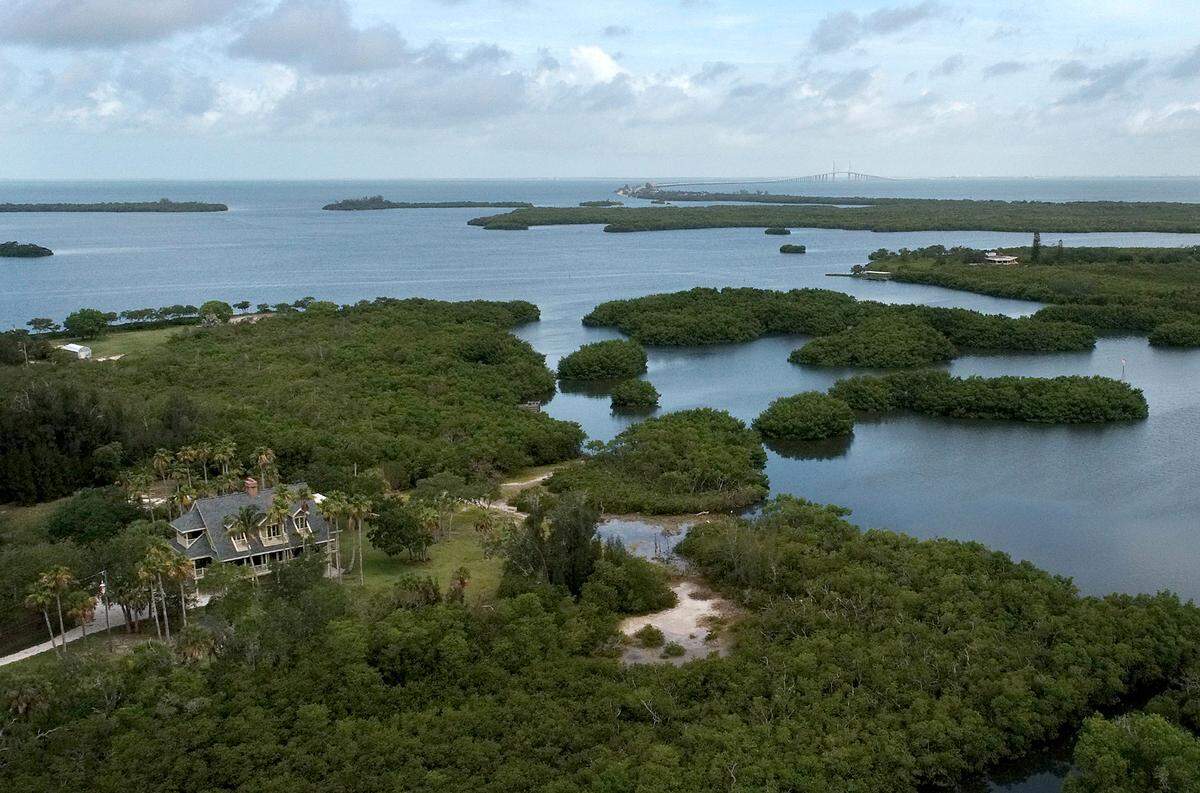
Residents of Terra Ceia got a wake-up call recently when a marketing plan surfaced online that could drastically change nearly 1,000 acres of pristine mangrove swamps and flatwoods on the islands and mainland around Terra Ceia Bay.
Proposed were a resort, shopping village, cruise ship terminal and more, located north of Palmetto, near the south approach to the Sunshine Skyway Bridge.
Dean Saunders, owner/broker of Coldwell Banker Commercial Saunders Real Estate in Lakeland, said this week that it was all a misunderstanding.
The marketing plan was from several years ago, and Saunders said he did not realize that it was still on his company’s web site.
“The property is not being actively marketed. It was on a slide on my website and it just never got taken down,” said Saunders, a former Florida state representative and aide to Lawton Chiles, the late U.S. senator who later served as Florida governor. “I have no idea what the owners plan to do with the property.”
When Terra Ceia residents saw the marketing plan, they called Saunders, lambasting the proposal, sometimes in very colorful language.
“It has created quite a hubbub,” Saunders said.
‘They don’t have approvals for anything’
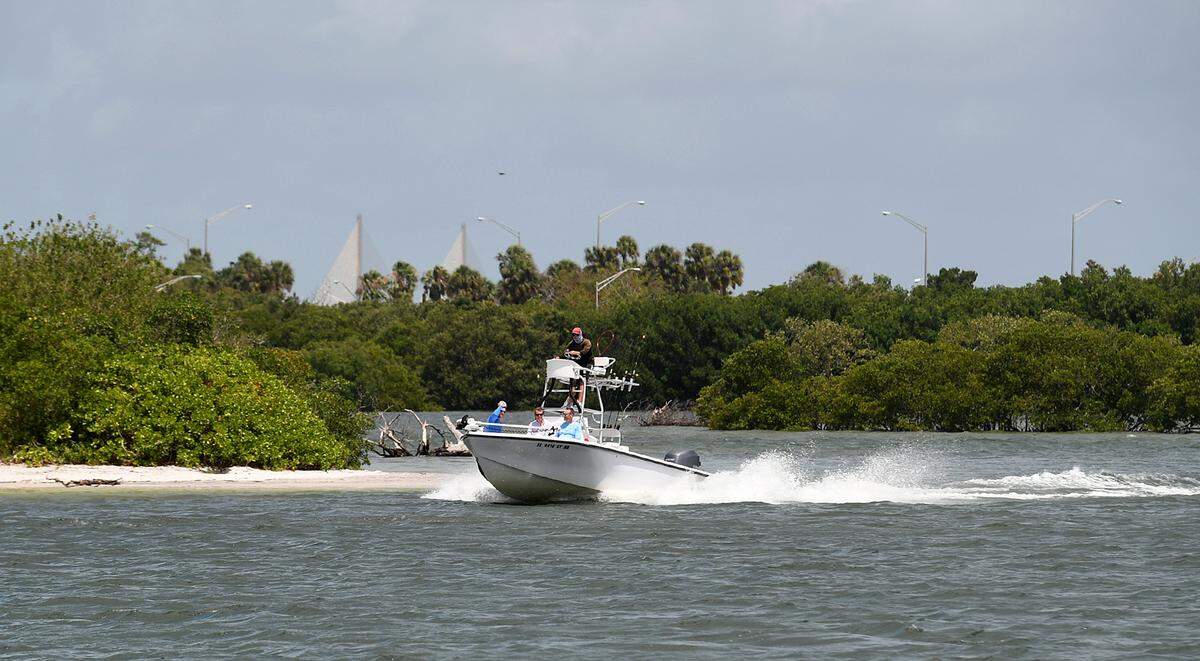
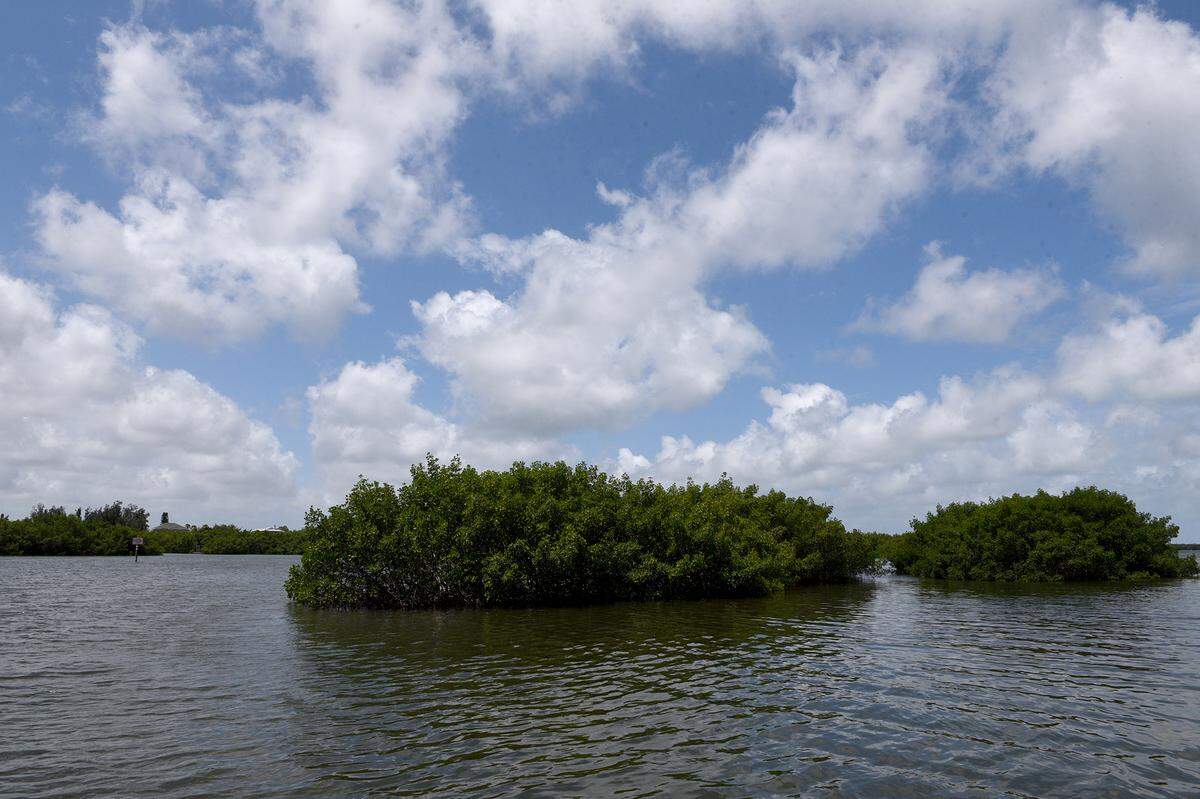
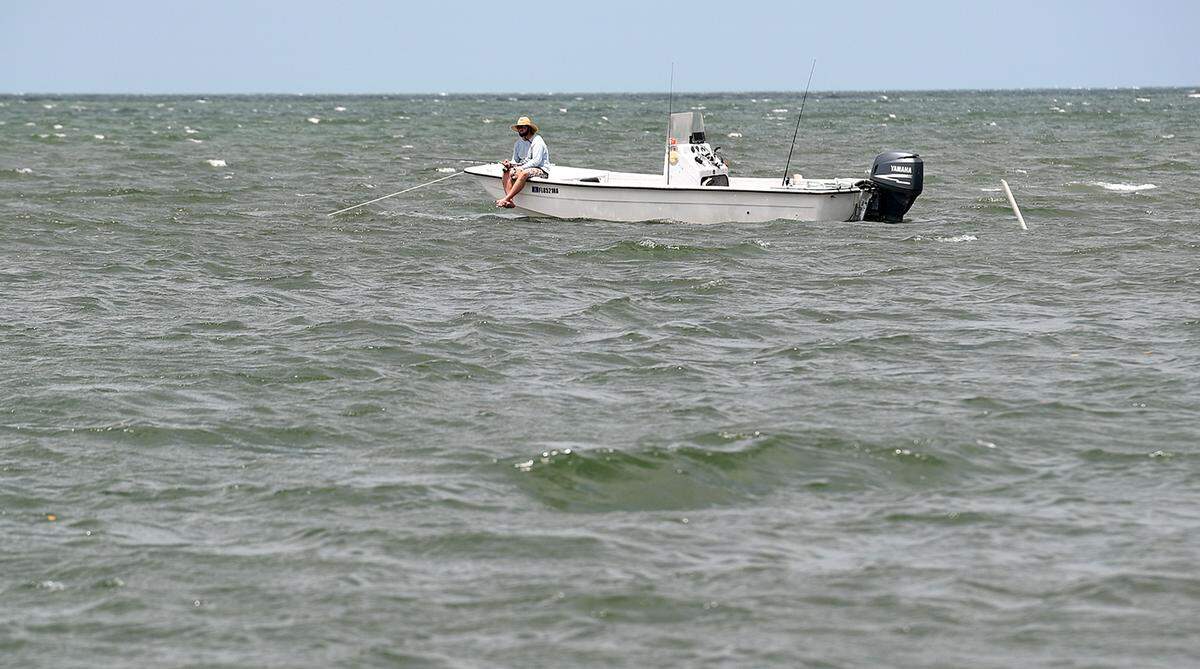
Alicia and Joe Dougherty have lived on a canal in Terra Ceia since 1999, and often see manatees at their dock, as well as dolphin in Tillett Bayou and Miguel Bay. It’s an area dotted with scrub-and tree-covered islands, whose waters are rich in fish and are popular with anglers and boaters.
“I don’t want to say they can’t do something with their property, but the footprint needs to be much smaller,” Alicia Dougherty said.
She is especially concerned that the owners have something rare and powerful: the right to bulkhead, fill and dredge, dating from the mid-1950s because of a surveying error that mistakenly located the south landing of the Sunshine Skyway Bridge on private property.
Charlie Hunsicker, director of the Manatee County Parks and Natural Resources Department, confirms that he has seen carbon copies of the documents conferring those rights, signed by the Florida secretary of state.
However, while the marketing plan for Skyway Resort Development on 991 acres of Terra Ceia talks about “endless development possibilities,” those are only hypotheticals under the Manatee County comprehensive land-use plan.
“They don’t have approvals for anything,” said John Barnott, the county’s director of building and development services.
Slip Knot LLC is listed by the Manatee County Property Appraiser as the owner of the northern parcel, straddling both sides of U.S. 19. The parcel includes the submerged land deed. Cayo Casabel LLC is listed as the owner of the southern parcel, including Rattlesnake Key.
William Blanchard of WRC Resources Inc. of Tampa is listed as the authorized agent for both parcels.
“WRB Resources is interested in well-managed natural resources with a specific focus in water and land. We develop and apply technologies that clean and conserve water, manage land to preserve it, while making use of it to provide sustenance, recreation, water purification and storage. We make efficient use of all the natural, financial and human capital invested in us,” the company’s web site states.
State of Florida wants to protect Terra Ceia from development
Terra Ceia resident Lee White lives in a house built in 1957, just three years after the original Florida Sunshine Bridge opened.
The best use of the 991 acres would be as a natural preserve, protected forever against development, White said.
“I think it would be absolutely horrible to have anything remotely close to what is outlined in the marketing proposal,” White said.
So, has anybody been working to preserve the property for the environmental treasure that it is?
As it turns out, they have.
Terra Ceia is included in the 2021 Florida Forever Five-Year Plan, most recently updated in December 2020 by the Division of State Lands at the Florida Department of Environmental Protection.
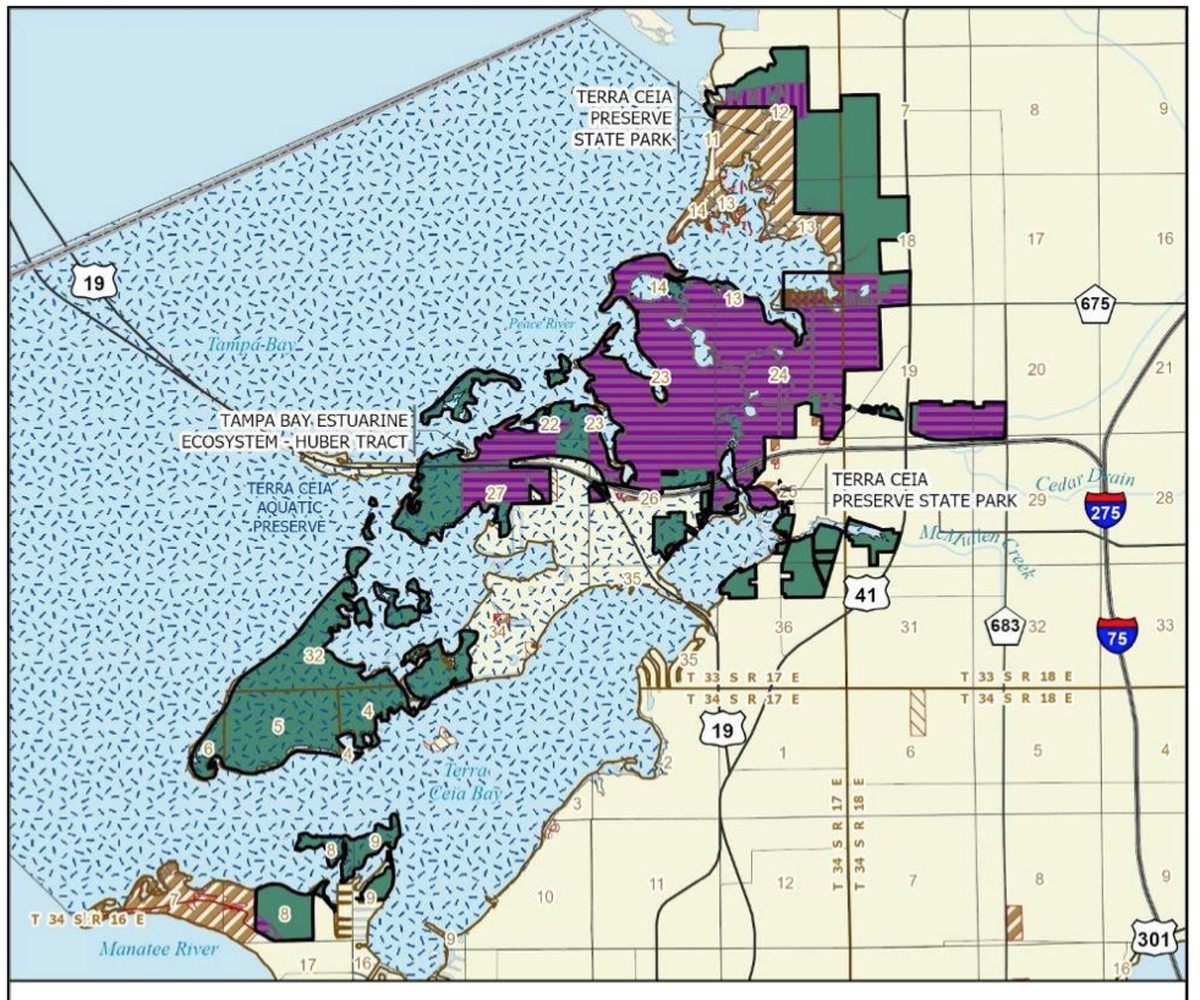
Terra Ceia was added to the state priority list in 1996. Thus far, 2,432 of the total 4,724 project acres have been acquired at a cost of $4.9 million, comprising Terra Ceia Preserve State Park. Most, but not all, of the state park land is located north of U.S. 19.
The remaining 2,292 acres, mostly extending south of U.S. 19 to Rattlesnake Key, has an assessed value of $27 million, according to the project report.
“The Terra Ceia project will protect and restore this natural area, helping us to preserve the fishery and manatee feeding grounds in Terra Ceia Aquatic Preserve and giving the public an area in which to fish, boat and enjoy the original landscape of Tampa Bay,” the plan says.
“The Terra Ceia project is two-thirds mangrove swamp and one-third a mix of xeric hammock and flatwoods, and old fields colonized by Brazilian pepper. This area is particularly significant for the protection it offers to bird rookeries (including nearby Bird Island, one of the top two rookeries in Florida) and to the adjacent Terra Ceia Aquatic Preserve (an Outstanding Florida Water), with its seagrass beds used heavily by manatees, its nursery areas for fish and invertebrates, and its important fishery. Sixty-nine archaeological sites, mostly middens, are known from the project, and more are likely. The natural resources of the project are vulnerable to alteration or destruction by development and invasion by exotic plant species. Growth pressures are intense, so endangerment is high,” the report says.
What has stood in the way of acquisition of the remaining Terra Ceia acreage is money, Hunsicker said. Worthy preservation projects all over the state are competing for a share of a limited pot of money.
“We have to maneuver and negotiate those differences all the time. Governments rarely can pay for speculative value. That’s been the obstacle,” Hunsicker said.
Terra Ceia should be included in the highest ranked group of properties in the Tampa Bay area to be preserved because of its rarity, and its importance to the resiliency and sustainability of Tampa Bay, Hunsicker said.
And also because it has not been developed, and has the potential to be developed, he said.
This story was originally published June 24, 2021 at 5:00 AM.