
Speaking Volumes | Triangle Shirtwaist Factory fire led to changes in workplace safety
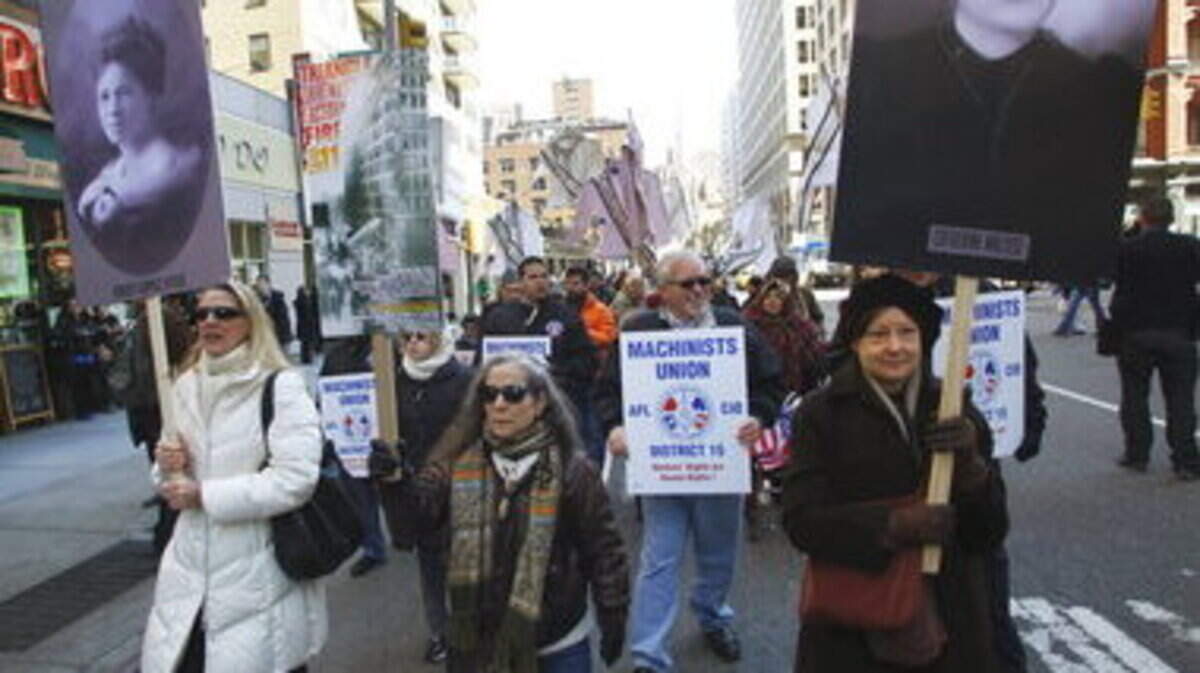
Late in the afternoon of March 21, 1911, a fire in Greenwich Village of New York City would leave a lasting impact on working conditions and safety in the United States. The tragedy at the Triangle Shirtwaist Factory highlighted significant problems with the safety of large buildings at the time, as well as the labor laws of the day.
The Triangle Shirtwaist Factory was like many clothing factories in the early 20th century: workers and equipment packed into rooms with few windows, working long hours for very little pay. This factory was located on the top three floors of what is now the Brown Building, a ten-story building constructed roughly 10 years earlier. To prevent unscheduled breaks, it was common for staircases and exits to be locked. The factory floor was noisy, with sewing machines and other equipment whirring and banging away. The rooms were so cramped that workers’ clothes would get caught in machinery on a regular basis.
Smoking was expressly forbidden in rooms full of flammable materials, but it was reportedly a lit cigarette that started the fire. A bin of scrap fabric caught fire, and the workers began to panic. Someone on the 8th floor was able to call the 10th floor to report the fire, but there was no audible alarm or means of contacting the 9th floor. Workers had few exits, as one of the staircases was locked and the foreman who held the key had fled. The other staircase was blocked by flames, and the single exterior fire escape was not strong enough to hold the weight of the fleeing workers. It collapsed with around twenty people trying to climb down. The two freight elevators made several trips to carry people down, but the fire eventually buckled the elevator rails and forced them to stop.
The fire department responded within minutes but struggled to stop the fire. Their ladders could not reach above the 7th floor, and by that point panicked workers had begun to jump from windows to the street below. Nearly 150 people lost their lives in the fire, and half that number were left injured.
In the aftermath of the fire, the company’s owners were sued by the victims’ families. The fire prompted factory workers to unionize, and for legislation to be passed to improve working conditions in similar factories. The building had been declared safe by the standards of the time, but those standards would quickly change to require better exits and more safety equipment. An investigation found more than 200 factories in New York City with similar conditions. Labor laws were also passed to shorten the work week to 54 hours and to prevent anyone under 18 from working in dangerous situations.
You can find out more about the fire and its aftermath in the books “The Triangle Shirtwaist Factory fire of 1911” by Gina DeAngelis and Albert Marrin’s “Flesh & Blood so Cheap: The Triangle Fire and its Legacy”. We also have a documentary on DVD, “The Triangle Fire”. These and other materials are available at your local library. More resources are also available on Hoopla.
Your library is online: www.mymanatee.org/library. Free masks are available at all library locations. Manatee Libraries are fine free! Please note that lost/damaged fees still apply.
Speaking Volumes is written by members of the staff at the Manatee County Public Library System. Joel Mimbs is an assistant at the Central Library.