Myakka schoolhouse restoration moves slowly forward. More hands and money welcome
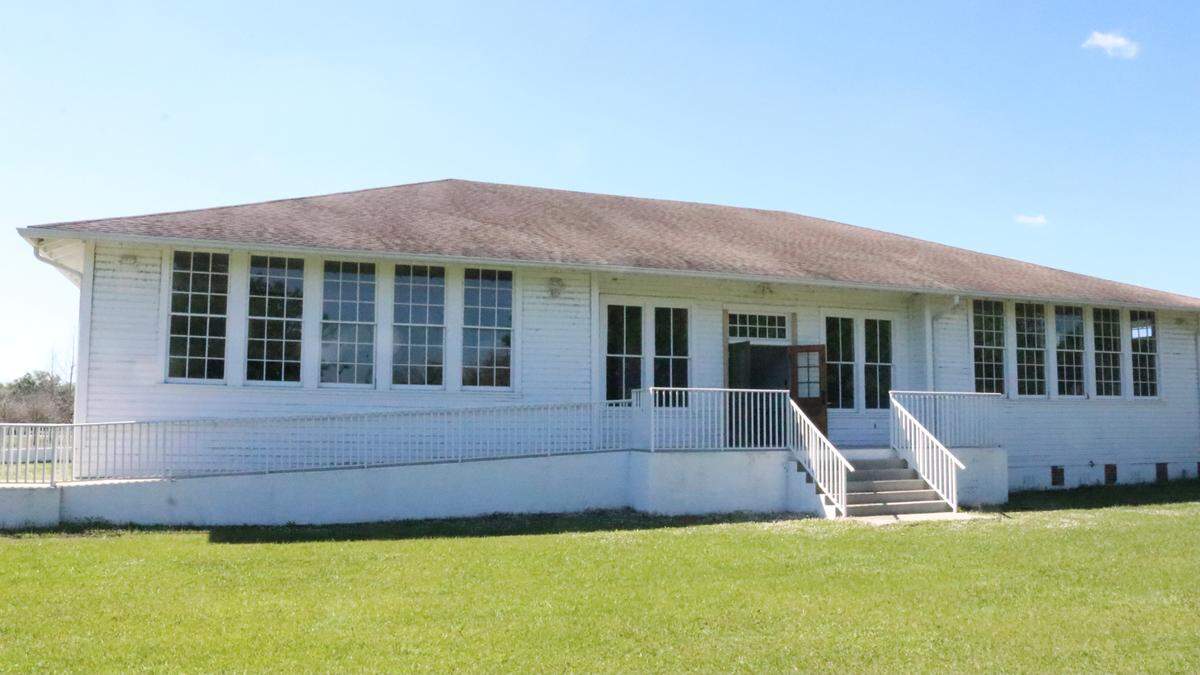
Saving the historic 1914 Myakka City schoolhouse has not been an easy road to travel.
Were it not for the Myakka City Historical Society, the old building would have been reduced to splinters a long time ago.
Manatee School District officials planned to demolish the 1914 structure in 1993, but members of the Myakka City community, led by the historical society, rallied and paid to have it moved.
The building was cut in half and moved to the Manatee County maintenance yard in Myakka City.
In 1996, the two sides were reunited at its current location, 10060 Wauchula Road, with plans to renovate it and use it as a library, museum and cultural center.
Old asbestos siding was removed that same year, and it has been a work in progress ever since.
A $100,000 grant award from the William G. and Marie Selby Foundation in late 2017 was seen as a major boost toward saving the building, but labor and money continue to be problems.
Herrmann’s Royal Lipizzan Stallions has for several years held an annual benefit for the 1914 schoolhouse. This year, a full-dress benefit performance was planned for 4 p.m. Sunday at 32755 Singletary Road with a $20 donation requested.
The most recent work completed on the 5,500-square-foot building includes removal of the drop ceiling, installation of fans, the injection of spray foam insulation into the walls and the installation of wainscotting, a type of wood paneling, along the lower portion of the walls.
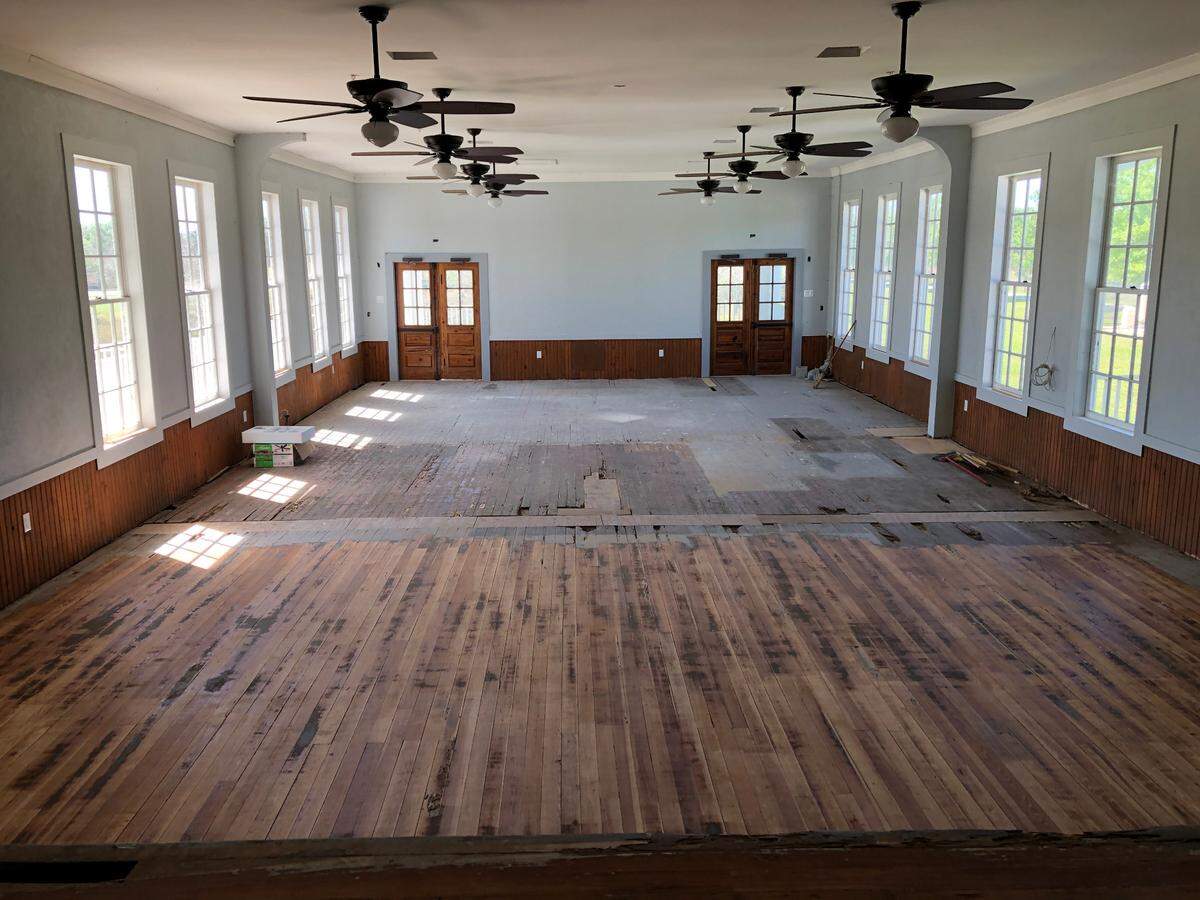
In addition, glass panels have been reinstalled in the transoms — the space above the doors — in the auditorium. Windows have been restored and the walls have been repaired, said Walter Carlton, project manager and vice president of the historical society.
Among work to be completed: air conditioning, plumbing and floor repair.
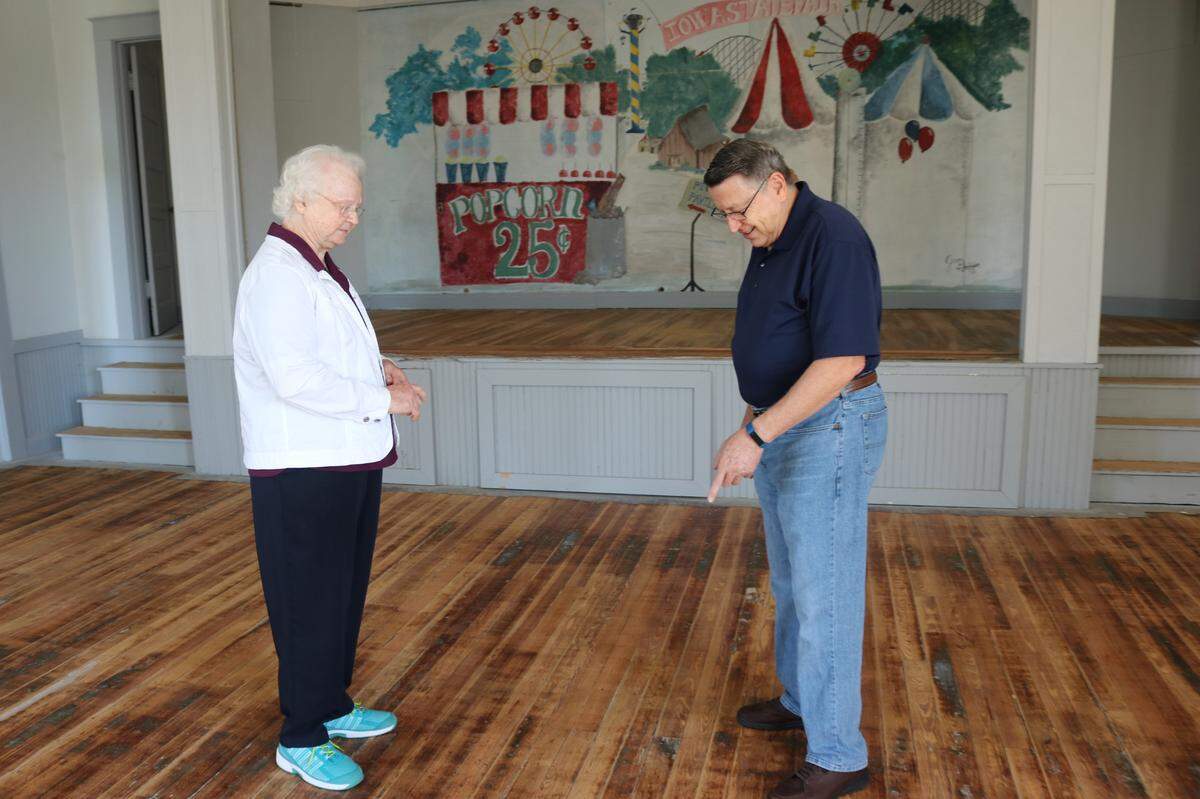
“We have about $65,000 in the bank and we are working as diligently as we can,” said Marilyn Coker, who served as postmaster of Myakka City from 1962-1999, and has been involved with efforts to save the school since the beginning.
Coker attended classes in the school from 1944-1950 and remembers when neither the school nor Myakka City were served by electricity. Cooling was provided in the summer by opening windows, and heat was provided in the winter by a pot-bellied stove.
Carlton attended the school, too, from 1956 to 1964.
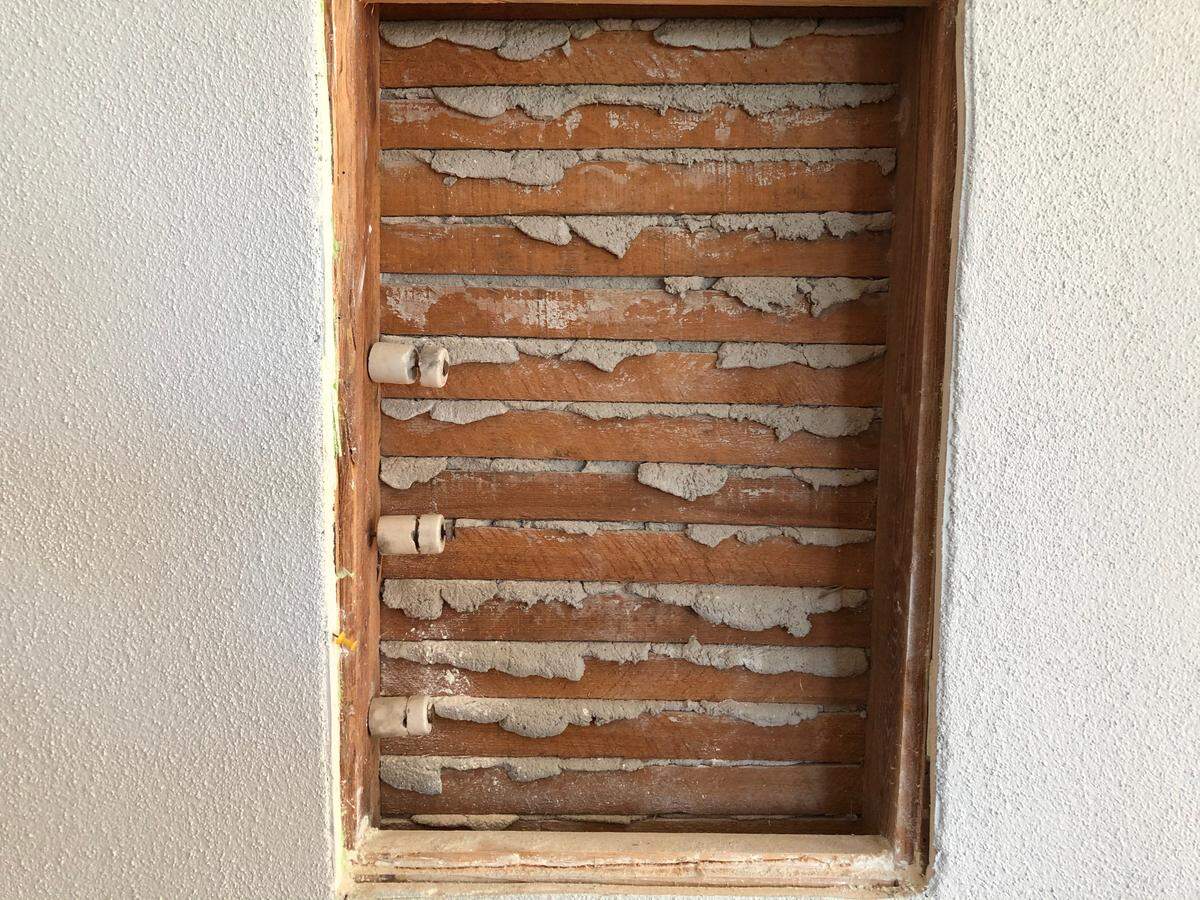
A section of the auditorium wall will be preserved behind glass to showcase the original lathe-and-plaster construction, along with the knob-and-tube wiring system that was installed about 1948, he said.
The school will be open from 1 to 3 p.m. so the public can see what has been done at the school.
For more information, visit the Myakka City historical society’s Facebook page or email myakkacityschool1914@yahoo.com.