Holmes Beach residents protest removal of 1,100 parking spaces as city continues plan
Sweeping changes to the city of Holmes Beach’s parking policy will create more problems than they intend to solve, protesters said as they demonstrated outside City Hall on Tuesday evening.
A plan that removes over 1,100 beach access parking spaces sparked more than 80 residents and visitors to gather outside the building, holding signs that called for a reversal of the new policy. Police Chief William Tokajer said the plan was meant to prevent “disrespectful” beachgoers from parking in local neighborhoods.
“We have people that are disrespectful. They park on residential properties, they use pools, hoses, urinate on property and leave diapers behind. It’s a public safety issue that has increased as time goes by,” Tokajer said in an interview with the Bradenton Herald on Monday.
Protesters had different thoughts on the matter. Some suggested that the beaches are a public resource that shouldn’t be blocked from the rest of the county.
“Everyone has a story, but the good far outweighs the bad,” said Nicole Quigley, a lifelong Holmes Beach resident, who noted that most visitors don’t cause problems. “Now more than ever, we need to offer our hospitality and beautiful beaches to the residents of Manatee County. We’re all neighbors.”
About 1,300 parking spaces will still be available in the area, and the city still meets the public parking requirement to receive funding assistance for beach renourishment.
While the new rules prevent guests from parking on neighborhood streets, it’s also causing headaches for residents who have parked along the road for years.
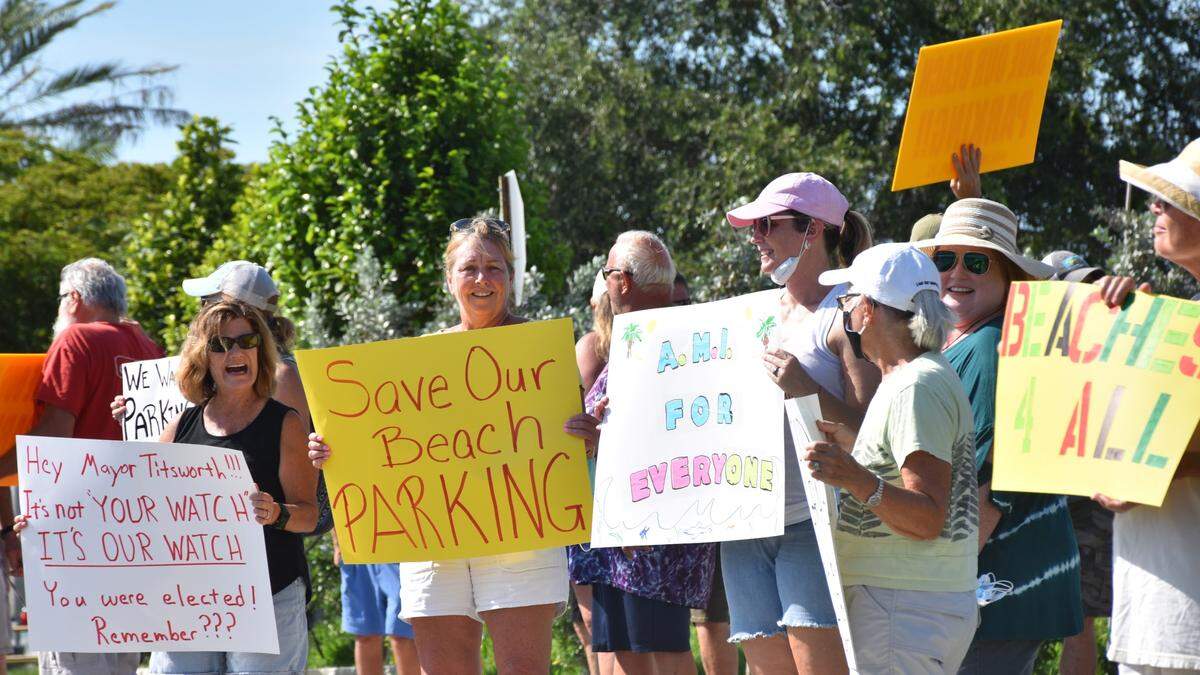
“We want to be able to use our own streets for parking,” Zoie Kelly, a 7-year Holmes Beach resident, added. “We’re down to two spots in our whole neighborhood. We want full disclosure about how these spots were picked and why there wasn’t a full traffic study.”
For now, the new parking rules will remain in place, commissioners decided during Tuesday’s meeting, which took place just an hour after the protest. Nearly 100 people tuned into the meeting held via video conference.
A public comment period lasted more than an hour and was filled with concerns from residents on and off Anna Maria Island who took issue with the new parking regulations.
“We are talking about limiting the public from a public parking space to access a public beach,” said Holmes Beach resident Steve Freeman, arguing that the change could potentially prevent thousands of people a day from visiting the island.
One resident, Renee Ferguson, said she supported the ban because of the behavior she’s seen from guests parked in front of her house, but she agreed that changes need to be made.
“I’ve had people on my lawn and dirty diapers in my yard. I want people on the island, but they need to be respectful,” said Ferguson.
“(The plan) does need to be tweaked and maybe parking permits is the answer,” she added. “I just don’t think it’s fair that our city has to be the sole provider of the parking.”
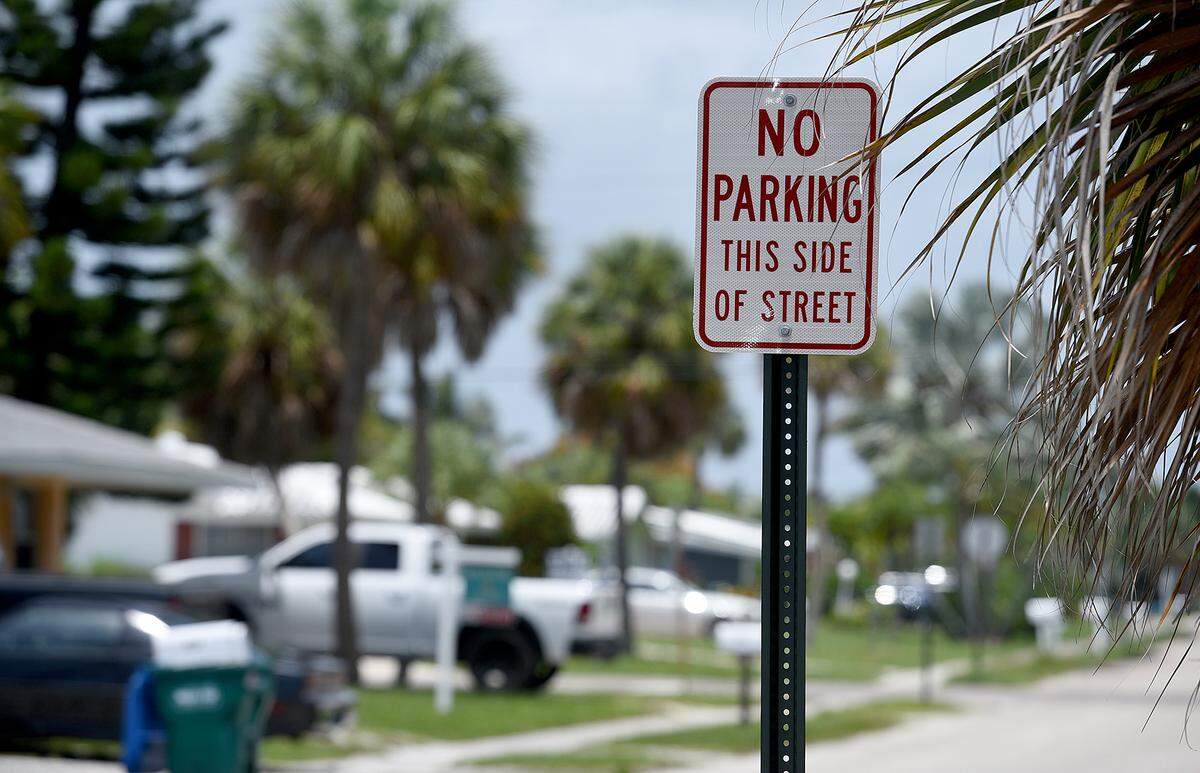
Several other Holmes Beach residents expressed concerns about where visitors to their homes would park in the event of a party or gathering.
According to Tokajer, residents would need to call the police department — similar to the process for a permit approval — and officers would temporarily cover “no parking” signs near the home for the duration of the event.
“All they have to do is give us an address and how many people they might expect,” Tokajer said.
Jason Hull, who said he was born and raised in the area and comes back to visit friends and family each summer, called into the meeting from California to criticize the new plans.
“You want to have a barbecue and you have to get a permit?” Hull asked. “It feels like you’re really trying to keep people from the Gulf of Mexico.”
Others decried the timing, calling the change a “COVID-19 power grab,” and criticized city officials for the lack of public input. The changes went into effect at about the same time as public beaches and many parking areas were closed because of the pandemic. The beaches have since been reopened.
The city of Anna Maria also has reduced the number of on-street parking on the north end of the island. The city of Bradenton Beach, open to county-run parking lots at Coquina and Cortez beaches, has long prohibited parking along its rights of way in residential neighborhoods.
Holmes Beach commissioners, who previously voted 5-0 in favor of the reduced parking, stood by their decisions. In the past, city officials ignored the problem, but it was time for a new approach, said Commissioner Carol Soustek.
“This action that the commissioners have taken is the first step toward resolving an issue. It’s to address an issue that has been passed down and ignored for years. It’s fallen to us to see if we can find a solution to this uncontrolled, unlimited growth,” Soustek explained.
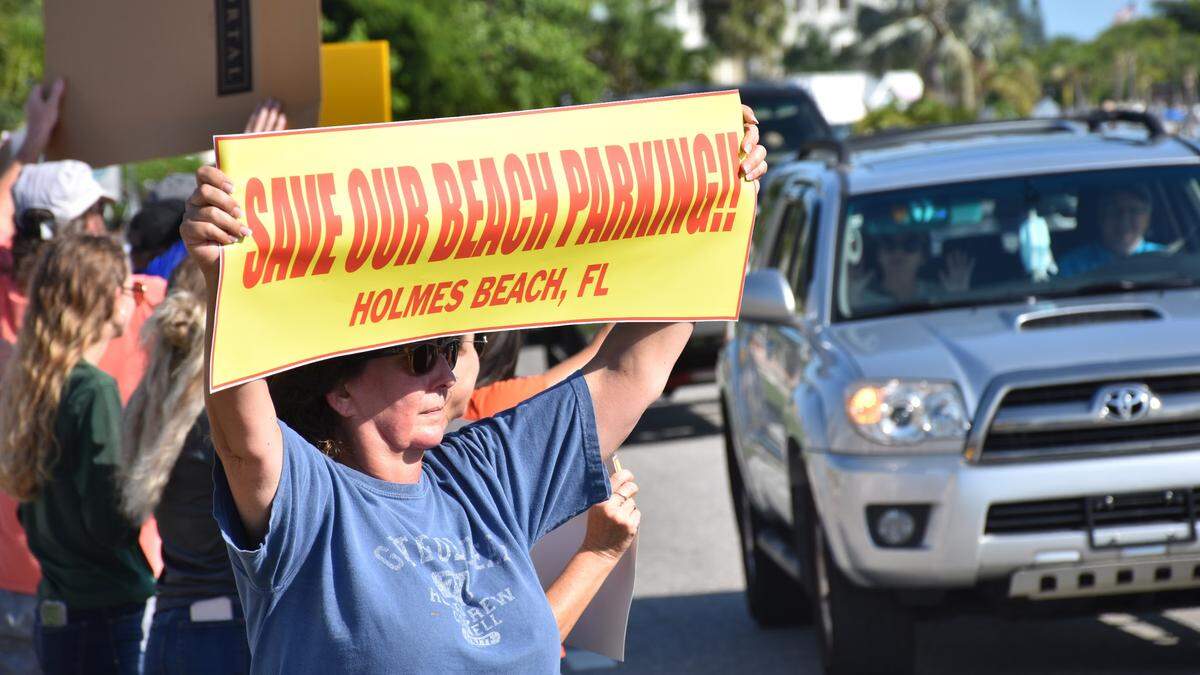
The commission and police chief largely deflected parking issues on the island to Manatee County government, which they said has failed to provide the necessary infrastructure for a rapidly increasing population.
“The county has not controlled its growth or its new development,” Tokajer said. “The county and tourist development need to give some thought to where they plan to park all those people.”
“We have a situation where our island continues to be marketed worldwide,” Commissioner Terry Schaefer said. “The problem is, the success of the county’s advertising has resulted in infrastructure incapabilities on our behalf.”
Schaefer suggested that the city approach the county for parking solutions.
“I hate to see Holmes Beach take it on the chin for an issue that is bigger than just our city,” said Commissioner Jim Kihm. “Our city exists on 1.6 square miles of land and we can’t make any more of it.”
Manatee County Commissioner Carol Whitmore, a current resident and former mayor of Holmes Beach, called in to the meeting to contest the claims.
Whitmore also objected to how the regulations were rolled out, citing the lack of input from residents.
“We’ve had the use of 2,000 spaces since 1990. I’m very upset that you didn’t go through the public process,” she said.
Officials acknowledged, however, that the removal of 1,100 spaces is just a first step toward a suitable solution. Tokajer explained that his department is willing to adjust the plan based on public feedback.
“We’re gonna need to do some tweaking on this, but it’s a start on doing something,” said Commissioner Kim Rash.
This story was originally published June 10, 2020 at 5:00 AM.