
It’s the 75th anniversary of D-Day. Local veterans recount horrors of Normandy invasion
After World War II was over, Army combat veteran Bill O’Brien never wanted to revisit Normandy.
“I couldn’t stand the thought of seeing all those graves,” O’Brien, now 95 and the retired former principal of Prine, Palmview and Parrish elementary schools, said of the thousands of allied soldiers who fell during the invasion.
Seventy-five years after D-Day on June 6, 1944, the world this week is remembering the largest seaborne invasion in history, the day when more than 160,000 U.S., British and Canadian troops hit the beaches to start driving the Nazis from occupied France.
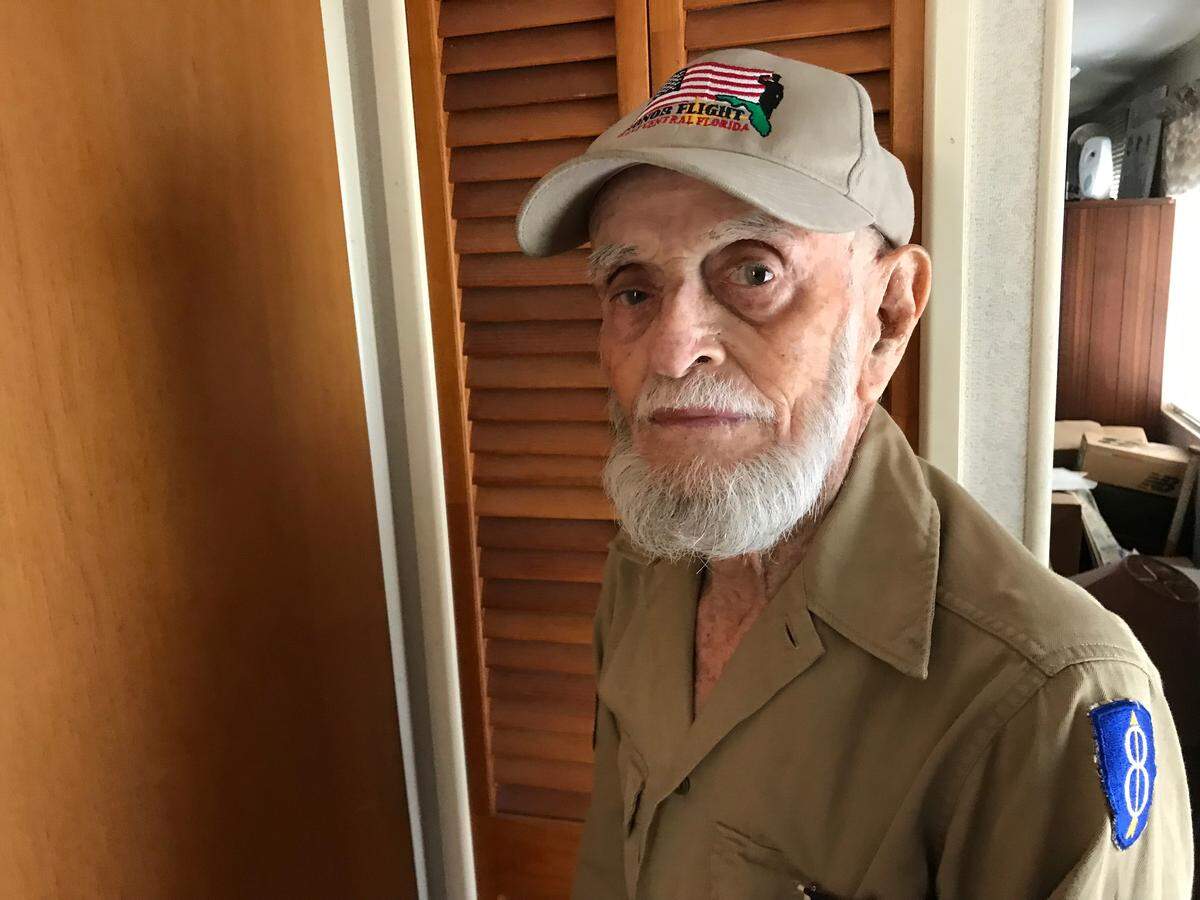
A long-time Bradenton resident, O’Brien was an assistant squad leader in the 8th Infantry Division that landed on Omaha Beach.
He would see plenty of action as the 8th Infantry fought its way from Normandy, across northern France and into Germany’s Rhineland before the war ended in Europe on May 8, 1945.
His 11 months in combat are seared into memory, including drinking muddy water from a ditch, freezing in the winter, hearing alarming noises in the pitch-black night, and shooting at the enemy and being shot at.
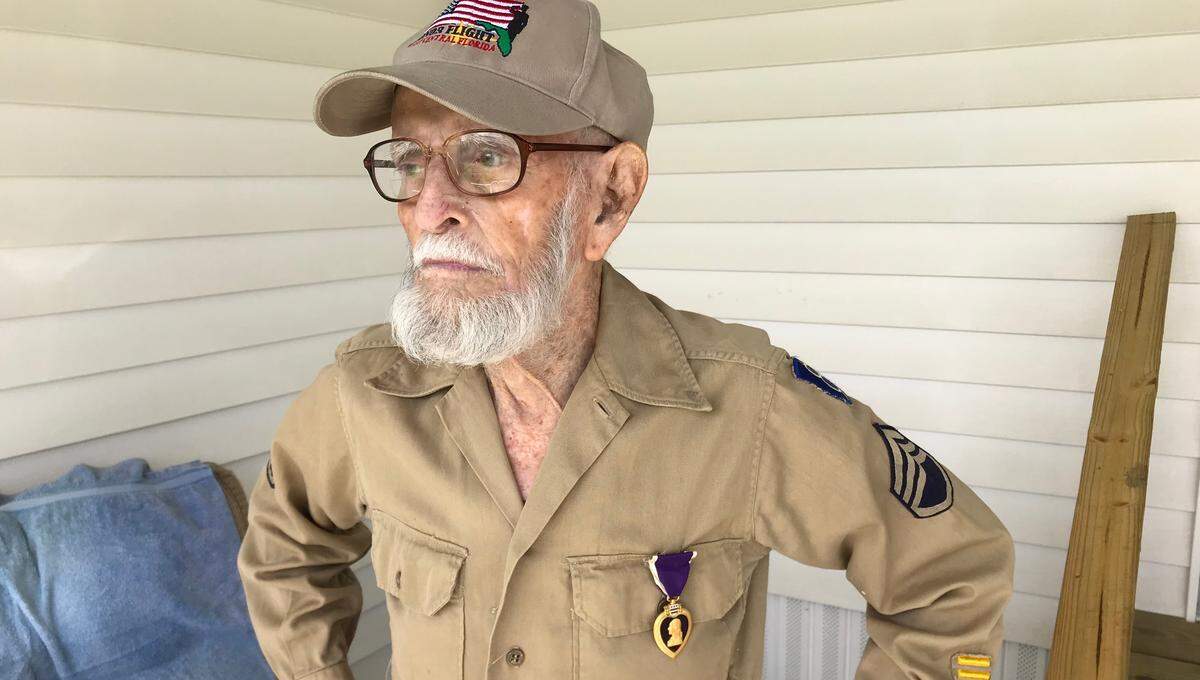
“It was April 15, and we were trying to keep contact with the Germans because they were taking off. To keep up, the infantry rode on tanks. We were exchanging fire with the Germans and I felt a sting in my leg. I didn’t think anything about it. Then one of my buddies said, ‘Look at your leg. It’s full of blood,’ ” O’Brien said.
A medic treated and bandaged the wound, and returned O’Brien to the fight.
“There is no way to explain what a person feels like when the war is over. You’re being shot at all the time and suddenly you’re free. I was scared all the time. Any soldier who says they were in combat and they weren’t scared is lying,” O’Brien said.
It’s been estimated that more than 10 percent of the American population wore the uniform during World War II, but most of that generation is either dead or in their 90s, like O’Brien.
Pat Glass, 92, a former long-time Manatee County commissioner, was in high school during the invasion of Normandy.
“There was a lot of unity in the country at that time. It was a time that people really pulled together. I remember that a lot of my classmates went off to war,” Glass said. “Normandy was a real turning point.”
By early July 1944 — when O’Brien would have landed at Normandy — the allies had suffered 60,771 casualties, including 8,975 dead.
“There was a lot of coverage of the invasion of Normandy. A lot of people died there,” Glass said.
Retired Army Col. Earl Tingle of New Smyrna Beach, a 74-year-old Vietnam War veteran, first visited Normandy in 1999 and has returned 14 times.
Tingle was particularly interested in the battle because he had served in the 82nd Airborne Division in Vietnam, the same unit that captured the town of Sainte-Mère-Eglise during the invasion of Normandy.
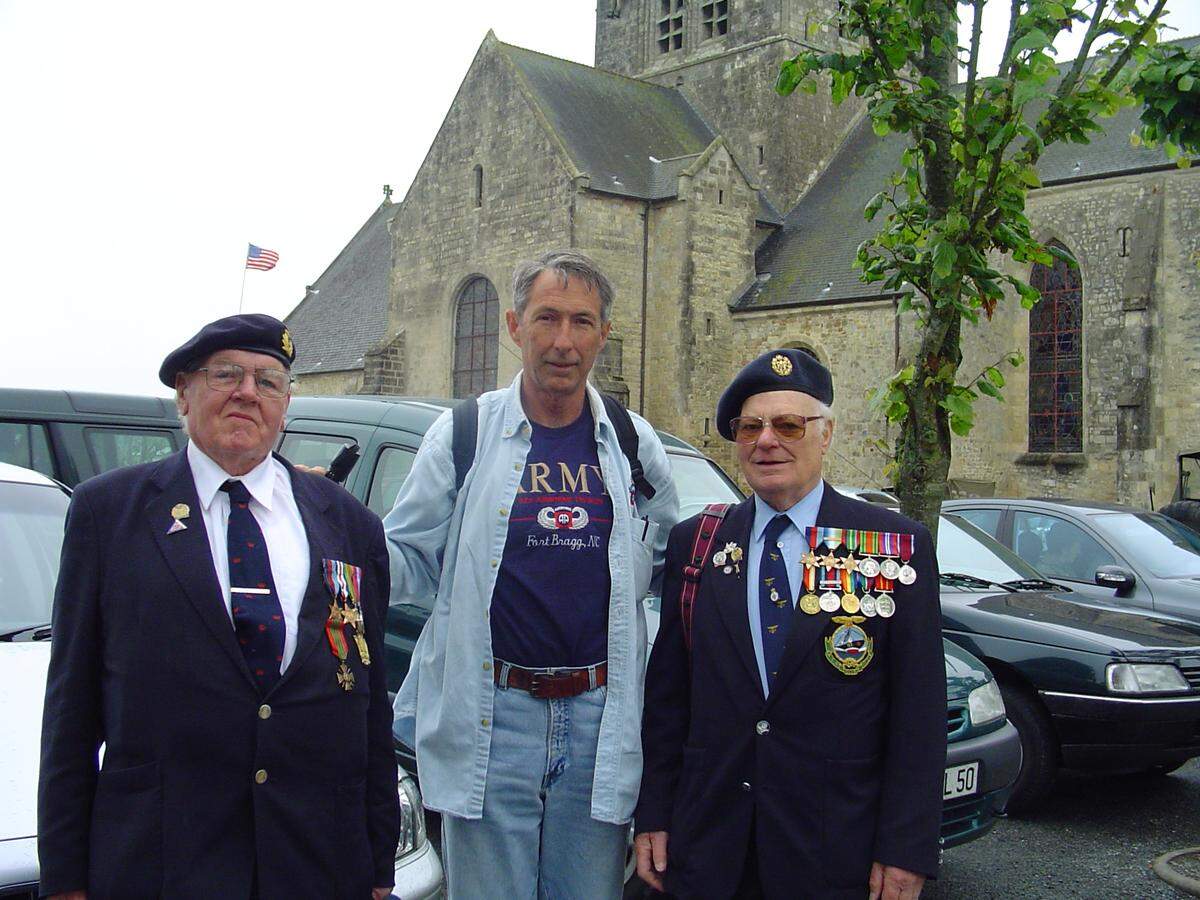
“Sainte-Mère-Eglise is the epicenter of all the D-Day celebrations and is the first village liberated by the allies from the Germans,” he said.
One of the 82nd’s paratroopers, John Steele hung from the steeple of the church in Sainte-Mère-Eglise for several hours until being taken prisoner by the Germans.
Today, the French in Normandy remain thankful to the Americans who spearheaded the liberation of France, and decorate the area with French and American flags, Tingle said.
For several years, Tingle has stayed with French families during the D-Day services.
The enduring French gratitude for America’s D-Day role is something that Retired Navy Lt. Cmdr. Jack King of Heritage Harbour noticed when he visited Normandy for the 70th anniversary in 2014.
“The thing that impressed me most was the gratitude and hospitality of the people in Normandy,” King said in 2014.
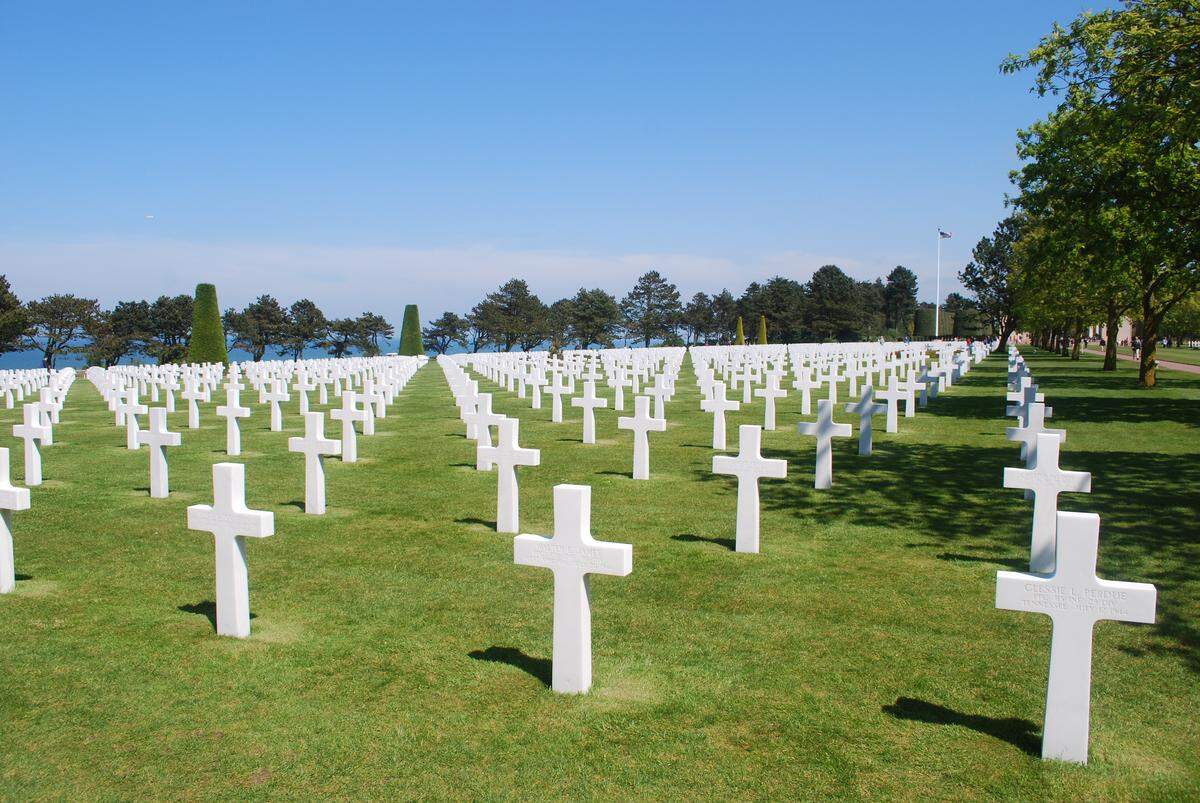
And then there was the sight hundreds and hundreds of crosses and Stars of David marking the graves of fallen Americans in France.
“It was stirring and it was emotional,” King told the Herald in 2014.
Many of the D-Day veterans the Herald has interviewed over the years have since died.
“When I first visited Normandy, there were hundreds of D-Day veterans who were returning. Most of those veterans are gone now,” Tingle said.
Tingle continues to return because it is such an important part of U.S. and world history.
Cassie Yacovazzi, professor of history at the University of South Florida Sarasota-Manatee, said that despite meticulous planning leading up to D-Day, planning carried out in utmost secrecy, the allies realized that there was a 50-50 chance the invasion could fail.
“It was high drama, and it surprised the Germans. They weren’t prepared for an attack in that location,” Yacovazzi said. “When news of the invasion reached the American home front, church bells tolled and people got out of their cars to pray.”
There were blunders of war, magnified by the immense size of the operation, bad weather and deadly fire from the Germans, who soon regrouped from their surprise to make the allied landing costly.
“The first troops who came ashore lost 90 percent of their men to German machine gun fire. By nightfall, the shore was covered in 5,000 bodies,” she said.
Even so, with the opportunity for so many things to go wrong, the allies prevailed and started their eastward push toward the defeat of Hitler’s Germany.
“It’s an overall stunning military event. It was a turning point in defeating the Nazis,” Yacovazzi said.
This story was originally published June 6, 2019 at 6:00 AM.