
Stone crab season may get off to a slow start. Red tide possibly partially to blame
Fishermen are reporting fewer stone crab traps in the water this year than in the past and that production may start a bit “off,” A.P Bell Fish Co. and Star Fish Co. Market and Restaurant owner Karen Bell said, but there’s some evidence red tide may also affect the season.
Monday marked the official start to stone crab season, which runs until May 15.
“We’re not expecting much today,” Bell said of the expected haul from the boats that did go out Monday. “What I hear is they’re thinking the inshore traps in the bays and inner waters might have some crabs.”
Bell said the start this year is slower than usual, with about 1,000 to 1,500 traps out Monday, and production is expected to be a bit “off” to start. Usually, she said, they have about 8,000 traps out during the season.
She said fishermen who have put out traps told her they haven’t seen many stone crabs yet. But there are several possible factors why, Bell said, including the pesky red tide.
Red tide, caused by the algae Karenia brevis, is known to kill fish, eels and other marine life — including manatees, turtles and dolphins — washing the dead ashore. The algae bloom has been lingering off the southwest coast of Florida for nearly a year. It’s been a thorn in the side of Anna Maria Island for more than two months.
“But red tide generally doesn’t mess with the crabs too much. They seem to move out of the way. But they did report about a month ago they saw some floating dead crabs, stone crabs, which is unusual,” Bell said.
However, FWC officials have found that stone crabs are being affected by red tide. To see the impact, scientists have been sampling research traps off Sanibel, FWC’s Kelly Richmond said in an email.
“What we have found is that the red tide is highest at the surface and in shallow water near the beach and inlets where surface water mixes. In these areas where the concentration is the highest crabs can die in a few days. In deeper water off the beach, 20 feet or deeper, the concentration of red tide at the surface is high but on the bottom the concentration is much lower, and crabs show less impact,” Richmond said.
The FWC is posting information on its stone crab website as the study is ongoing.
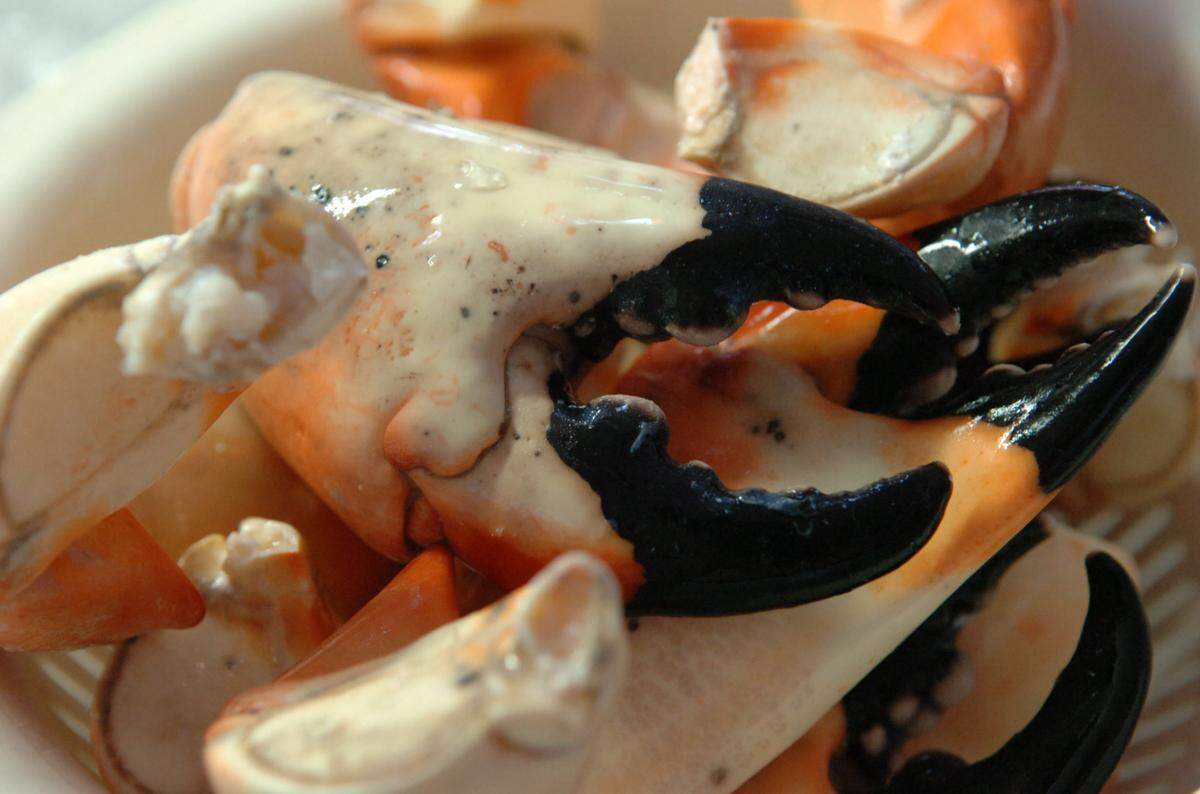
Another factor is likely weather: It’s been warm and has stayed warm. Bell said cooler weather could bring the crabs out.
“We’ve had a lot better years, but they always say crabbing is really cyclical. You’ll have one really good year and then you’ll have a few normal years and then you’ll have another good year. It’s just a cycle,” Bell said.
Last year was “fair,” Bell said.
“Last year wasn’t as good as it could have been, but it wasn’t as bad as this is, so we’re hoping this is a little bit better,” Bell said.
The possibility of losing some of their gear to the stirring waters and rising storm surge of Hurricane Michael may have kept some from setting out traps, too.
Bell asked customers looking forward to the seasonal specialty to have patience. They hope to have more as the season progresses.
“I’m sure it will improve once the weather cools,” Bell said. “They’re out there somewhere.”
Florida Fish and Wildlife Conservation Commission guidelines say stone crab claws must measure at least 2 3/4 inches. Though both claws can be harvested — as long as they meet the size requirement — it leaves the crab without a way to defend itself until it can regrow its claws.
This story was originally published October 15, 2018 at 5:07 PM.