
Red tide is seriously hurting local business, officials say. Here’s how Florida is trying to help
There’s nothing humans can do to stop red tide.
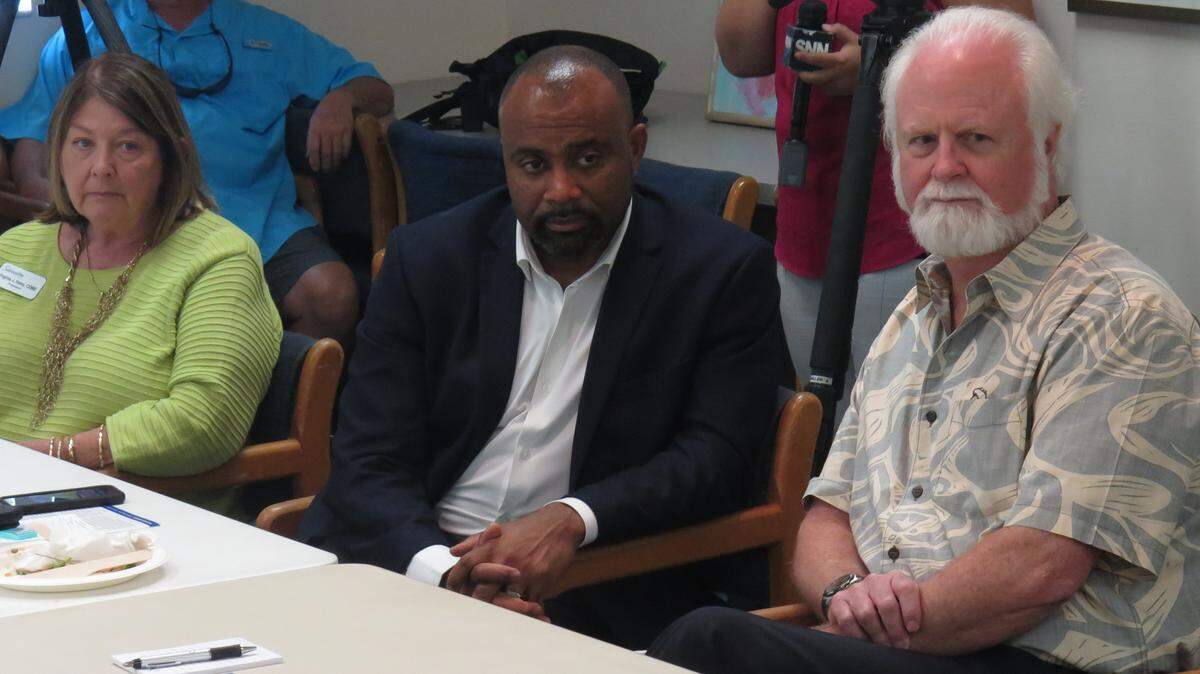
Researchers put it bluntly during a Wednesday meeting at Mote Marine Aquarium & Laboratory with government officials and local business representatives. While human activity does contribute to red tide’s life cycle, it is in no way the root cause of the problem, said Mote president Michael Crosby.
“You could take every human being out of Florida and you would still have red tide and fish kills,” Crosby said.
He noted that even when the first Europeans made contact with Florida’s Native Americans, they warned them of dead fish that often line the coasts.
The red tide phenomenon, Crosby explained, is naturally occurring and could last another few months, based on statistical data.
Natural or not, the bottom line, business representatives said, is that the dead fish are hurting their bottom line. Virginia Haley, president of Visit Sarasota, sent surveys to business owners and the results speak for themselves, she said.
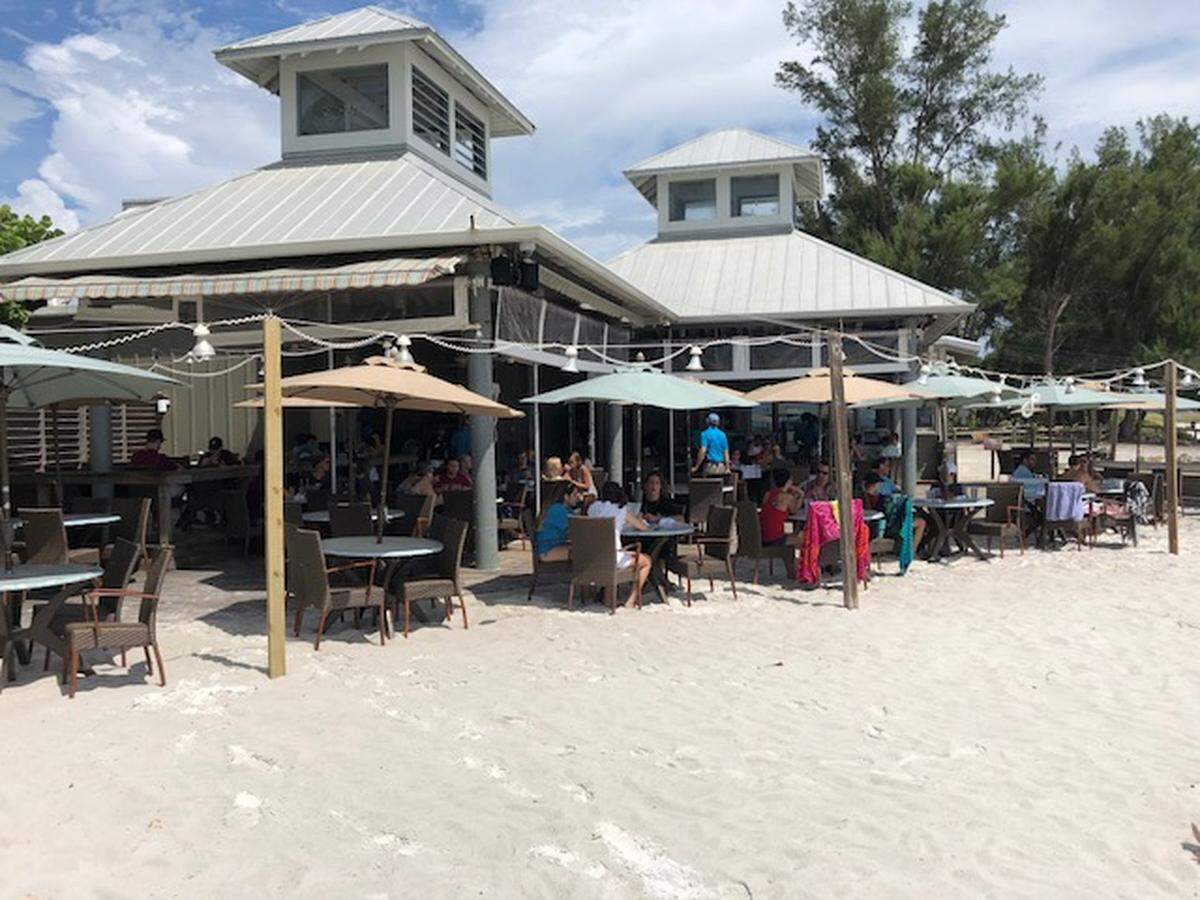
“In our first week of August, we are now up to $525,000 — a little over half a million dollars — in lost business,” Haley said.
The current red tide bloom has been in the Gulf of Mexico since October but it wasn’t until Monday that Gov. Rick Scott, who had faced a barrage of political criticism because of his response, declared a state of emergency. His order included more than $100,000 toward Mote research and another $500,000 for Visit Florida to distribute emergency grants for local tourism support. The money will be distributed equally to seven affected counties, including Manatee.
Ken Lawson, CEO of Visit Florida, said his organization will post an application on its website (VisitFlorida.org) on Friday for counties to request funding for post-red tide marketing plans.
“I want to make sure that I’m doing all I can with Visit Florida in the right time and in the right way to get our tourists to come here,” Lawson said.
In addition to Scott’s emergency grant, Lawson explained his plans to dedicate some of Visit Florida’s funding to a marketing plan for the entire region, similar to the organization’s response after Hurricane Irma last September.
“What we did post-Irma was this: We put about $5 million into sending the right message throughout the country — and also internationally — that the door is open,” Lawson said. “We put live cameras on the beaches and also used social media and traditional advertising in the Northeast corridor.”
Business leaders said they’re at odds because they’re not sure what to tell concerned customers and clients while the bloom is in full effect. Some suggested an even heavier social media presence depicting the significant progress officials have made to keep local beaches clean. As red tide forecasting is still in its early stages, Mote researchers deferred them to their beach reporting chart at visitbeaches.org for daily updates.
U.S. Rep. Vern Buchanan, R-Longboat Key, sent a letter to Scott on Wednesday imploring the governor to reach out to the U.S. Small Business Administration for additional disaster loan funds for impacted businesses.
“Red tide off Florida’s west coast has had a devastating impact on small businesses in my congressional district, many of which rely on tourism,” Buchanan wrote. “The stench of dead fish and respiratory problems caused by current outbreak have caused several people to cancel or change travel plans to some of the region’s most popular tourist attractions and driven locals inland, away from coastal businesses.”
The city of Sarasota, which has been subject to red tide’s effects for weeks, issued a local state of emergency Wednesday. City officials said small business owners may be eligible for interest-free loans up to $50,000 from the Florida Department of Economic Opportunity. For more information, visit www.floridadisasterloan.org.
Crosby echoed statements by Lawson and said he agreed with the need for a short-term responses in addition to long-term help provided by the state, citing tourism as Florida’s financial backbone.
“The environment of Florida is what attracts so many people to the state,” Crosby said. “This environment is the basis of our entire economy, and when you have a devastation going on like we’re experiencing with red tide, you have got to get everyone together on this.”
A self-proclaimed statistics lover, Crosby said he explored the correlation between the government funding Mote receives and major occurrences of red tide over the last 20 years.
“What you see is that when you have a major red tide event, funding goes up. When it goes up, red tide crashes and then you have another red tide event like we’re having now, it goes up, and it should go up,” Crosby said. “The problem is that you’ve got to have consistency in funding. If you have erratic funding, you can’t keep these programs going.”
Tracy Fanara, one of Mote’s environmental engineers, gave a presentation and overview of Mote’s advances in red tide research and reporting. She agreed with Crosby and said it’s the time in between huge algal blooms that government funding for scientific innovations, such as red tide forecasting methods, is needed most.
State Rep. Margaret Good, D-Sarasota, attended the meeting and said she appreciates Mote’s research effors and looks forward to a continued partnership during the next legislative session.
“It’s important to note that red tide is naturally occurring but there are things we can do to deal with the exacerbation that comes from providing nutrient-rich areas near the coastline that provide the ‘food’ for red tide,” she said.
In upcoming sessions, Good hopes to take a look at new environmental protections and regulations that could potentially lessen the effects. In the meantime, Haley said Florida’s tourism agencies are focused on making sure the region bounces back.
“We know from experience, sadly from the oil spill and hurricanes, how we get back into the market is going to be very important for our businesses,” she said.
This story was originally published August 15, 2018 at 4:40 PM.