
Our History Matters: A look at a time when crates were a colossal industry in Manatee
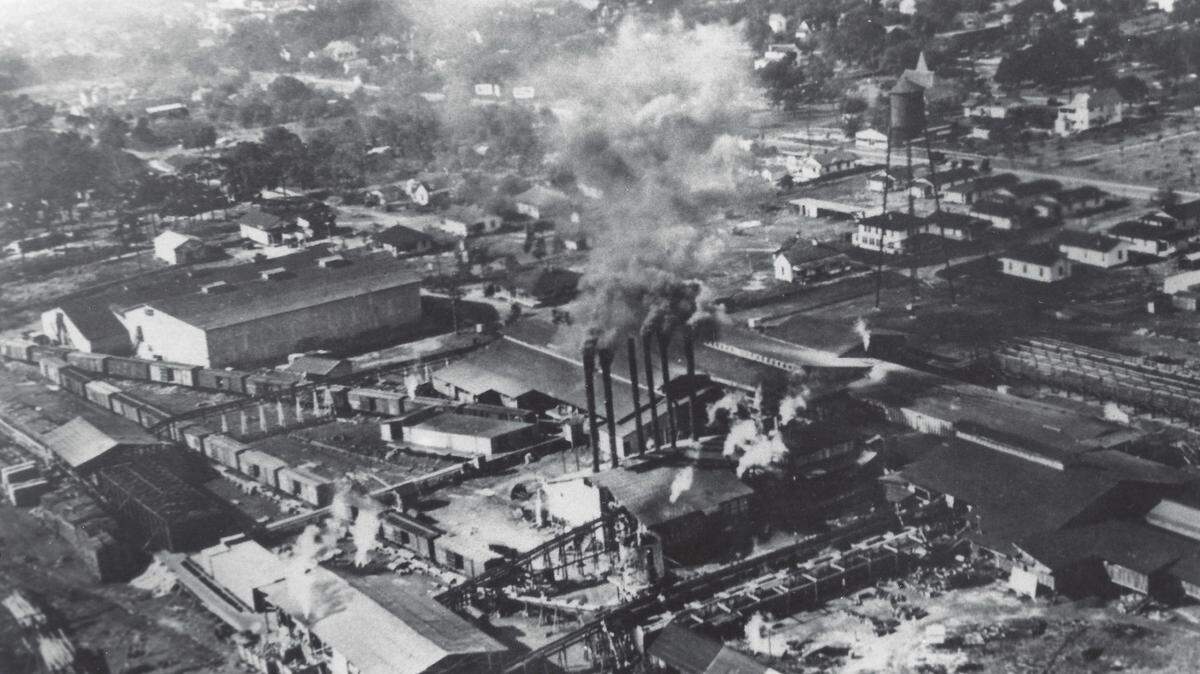
Agriculture was the major industry in Manatee County in the 1920s. With so many crops that were shipped to larger markets in the north, a new crate-making industry was brought to Manatee County that became the largest employer for several years.
In 1920, the Manatee Crate Company opened for business in the Town of Manatee. They began with 150 employees making hampers, orange boxes, celery and tomato crates. The 4-ONE wire bound crate was the most popular because of the neatness of packaging and ease of handling for packinghouses.
The Crate Company was the second-largest industry for many years. It had a company store on the property, rented out homes to their employees and was a stable job for many.
The Crate Company was able to produce upward of 20,000 crates a day. It had warehouses throughout the state of Florida in order to supply their clients. Some crates were also sent to Georgia in the summer months for the peach crop.
The Crate Company owned land in east Manatee County and later throughout the state, where it sourced its logs for the crates. The logs came by railroad from the logging camps to the sawmill on the property. Then, the logs were cut up to the desired size, and put into the kiln to dry/cure.
The logs then went to the pane mill where they were cut into lumber strips and veneer to make the wire bound baskets and crates. Celery crates were very popular as were the bean hampers.
.jpg "Crate Mill 6 evening herald article (2).jpg")
In a 1988 interview, Aline Berkstresser, a former Crate Company employee, recalled how the crates were produced: “And then they (Manatee Crate Company) went into the wire-bound business. They made the wire-bound celery crate. Which came out of a long slab. All stapled from the machine. And then they would fold it up. The whole thing. And then they had a twister that they gave everybody that worked. And they would just twist the ends together.”
The crate mill continued to produce thousands of crates during the Great Depression and World War II. During the 1930s it was a stable economic force. It hired local people the best it could and usually tried to employ one family member at a time to help spread jobs around. The pay of workers increased through the years and in the 1940s, they were averaging 35 cents an hour with time and a half if they had to work more than 40 hours.
The crate mill began to struggle in the early 1950s. There was a lumber shortage for the crates and card board boxes began to be used, which were cheaper to make, transport and store. It closed its doors in 1952 and the property was sold to several companies. Some employees were permitted to purchase the houses that they had been renting from the Crate Company.
One of the companies that purchased the buildings on the site began to tear them down in 1952. In a Bradenton Herald article it was noted that 2 1/2 million feet of usable lumber was expected from the demolition and the lumber was sold on site.
The City of Bradenton and Manatee County were purchasers of the lumber.
Melissa Morgan works for the Manatee County Agricultural Museum. Our History Matters is an occasional series published in the Bradenton Herald.