
Planning to light fireworks on the beach? Here’s why you shouldn’t, advocates warn.
Update: As of April 2020, Florida residents can legally use personal fireworks on New Year’s Eve, New Year’s Day and Independence Day. However, Manatee County’s rules ban the use of fireworks in public parks, including beaches, without a permit.
Bradenton area beaches are an ideal place to watch Fourth of July fireworks.
They are also an ideal nesting place for vulnerable shore birds such as black skimmers, American oystercatchers, least terns and snowy plovers.
All of these species are designated as threatened by the state of Florida.
Manatee and Sarasota area bird advocates are organizing to walk the beaches where birds nest around the Fourth of July and educate the public about the negative impact of setting off personal fireworks.
“The main thing people should know is that it’s best to leave the personal fireworks at home,” said Holley Short, Project Manager with Audubon Florida.
In addition to being illegal in the state of Florida, exploding fireworks scare away nesting shorebirds.
According to Short, the resounding boom from nearby fireworks usually causes shorebirds to “flush up,” or fly away suddenly. This leaves eggs and chicks exposed to predators and without temperature regulation. Some birds never return to their abandoned nests.
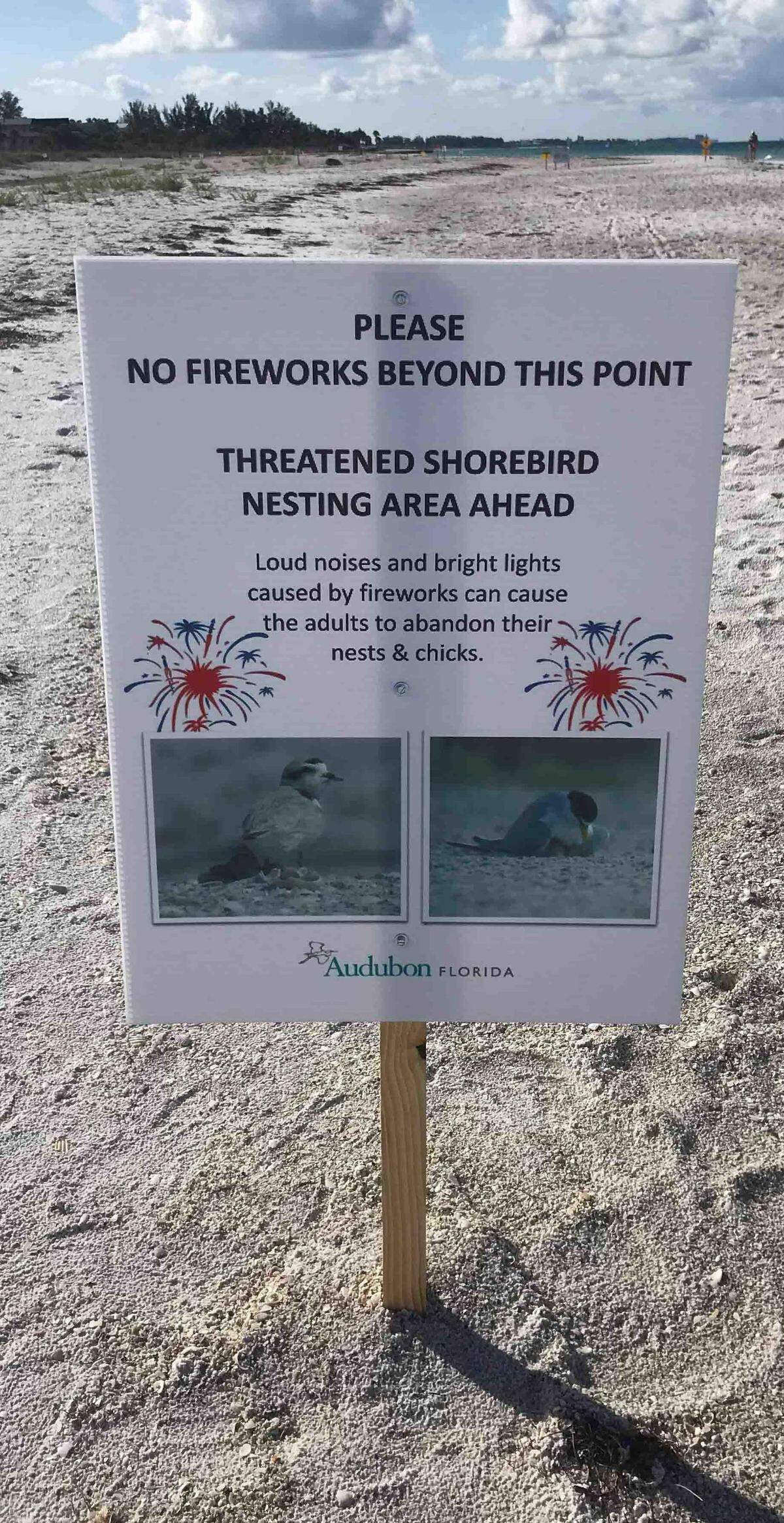
Signs reading “Please no fireworks beyond this point, threatened shorebird nesting area ahead,” are being posted near nesting sites on Sarasota and Manatee beaches.
Instead, Short encourages beach goers to enjoy public fireworks displays.
“The big fireworks displays are all far enough away that they won’t affect the birds,” Short said.
People interested in volunteering as beach stewards can contact Short directly at 352-455-8993 or hshort@audubon.org.
Learn more about Florida’s shorebirds and listen to their calls online at audubon.org/bird-guide.
This story was originally published July 3, 2018 at 2:24 PM.