
After Hurricane Maria, Puerto Ricans in Manatee find trials and blessings in starting over
“The experience of the hurricane, many people see it as something …” 56-year-old Yuderka Rodriguez Polanco began, treading lightly on the memory of the storm that changed her life.
“Punitive,” Candida Reyes, 33, finished her mother’s sentence. “Like something bad.”
Like Puerto Rico’s 3 million other residents, Rodriguez Polanco waited out the late September storm with her loved ones, coming out the other side of Hurricane Maria facing the destruction of her home, her town and life as she knew it.
“Yes, it has its negative things,” Rodriguez Polanco continued. “But it also has its positive things, because if the hurricane in Puerto Rico hadn’t happened, I wouldn’t be in Florida.”
Maria was the third costliest Atlantic Ocean hurricane in modern times, which the National Oceanic and Atmospheric Administration estimating it caused $90 billion in damage, sitting behind only Katrina in 2005 and Harvey in 2017 that are tied with costs of $125 billion each.
The deadline for FEMA's transitional housing program for Hurricane Maria survivors ends June 30. As of Thursday afternoon, there were 597 families in Florida relying on this program, according to a FEMA spokesperson.
Those who spoke with the Bradenton Herald for this story had family in the Bradenton area to help them move.
For some Puerto Ricans who have moved to Manatee County after Hurricane Maria, their new home on the mainland means different things to them. Starting over means new living arrangements, new jobs, a new language.
Carving out their independence in Bradenton, a thousand miles from home, will take time. They yearn for the familiarity of home, something as simple as their favorite nail salon, or as dear as their family and friends.
They left because it was the best option for their families and for themselves, as Puerto Rico is still grappling with recovery efforts, including re-establishing the food supply and the power grid. After nine months, parts of the island have recovered more slowly than others, mainly in the rural municipalities far from the capital of San Juan.
Even so, some see Maria as a blessing. It happened for a reason, and that reason will manifest itself.
Some will soon return to the island to help repair what was lost. Even with the challenges presented with starting over, others don’t plan on moving back.
Memory of home is calling
Dominicans who lived in Puerto Rico for nearly 30 years, Rodriguez Polanco and Reyes are students again, taking English classes at Manatee Technical College. Rodriguez Polanco is retired but became a chaplain a few months before Maria.
“I finished my prayer and stood up to sit down in the seat until the service started when an hermana from another church approached me and brought me a brochure to give to the pastor,” she said Soon after, she started saving money in her retirement to enroll in the program.
She couldn't point to a particular reason why she was so interested. Her daughter said it must have been God who knew what would happen in September and guided her to become a chaplain.
“You have to be on a firm level of spirituality to be able to receive all the burdens of other people,” Reyes said, speaking to her mother’s strength.
Chaplains offer spiritual guidance for those who need it, from prisoners to patients. After Maria, she helped another hermano inside a shelter. She prayed for many people.
“In the history of Puerto Rico, that’s going to stay seared into the minds of every human being,” Rodriguez Polanco said.
Meanwhile, her own home in Comerío, a municipality in the central-eastern part of Puerto Rico, had been all but destroyed. Rio de la Plata snakes through the valley, and sits 50 feet below a cliff near Rodriguez Polanco’s house. Officials had to open two dams on the river because they were about to burst with the amount of flooding that had happened. The water rose quickly, covering some houses.
Five days after the storm, Rodriguez Polanco returned to survey the damage. Debris was piled at least a foot high. Branches, fish and turtles invaded her home. It was a 100-year flood, a catastrophe, Reyes explained, and many had to be rescued.
“The old people who live in the Caribbean countries — Cuba, Santo Domingo, Haiti — people who live in those regions think, ‘I’m not leaving my things. Even if the devil comes and says he’s taking them, I’m not leaving my things. I’m staying here. He won’t take it,’” Reyes said. “So for that reason, there were people that had to be rescued by a helicopter.”
Reyes was introduced to the Bradenton area by her husband's niece, and came here before her husband and two children to look for work. With nearly 10 years of experience as a nurse, she now is employed at All Children’s Hospital in St. Petersburg. It’s the job of her dreams, she said.
“I know that moving from one place to another isn’t easy, because you lose your culture, you lose your food, you lose who does your hair, who does your nails. It’s something dumb, but you lose it,” Reyes said.
Living with her daughter is just temporary. This summer, Rodriguez Polanco plans to return to her home in Comerío. The turtles and branches are gone, the mud has been cleared and the house needs a new coat of paint.
“Nothing in life happens by chance. God always has a purpose in people’s lives. I am not sure what his purpose is for me, but he does have a purpose to come live here in this town,” she said.
Worrying a thousand miles away
The last time Millie Lugo-Ferdinand returned to her home of Puerto Rico was nearly three years ago, to bury her father’s ashes. She says that for the past two decades, trips back home have been for something sad for her.
A happy occasion — a family reunion — is set for this summer, which she imagines will be a "beautiful moment." Some cousins she hasn't seen for 40 years. Lugo-Ferdinand, 68, pictures from the plane the familiar lush green mountains on the island that’s 100 miles long and 35 miles wide.
But she fears the unwelcome sight of a different sea of blue: the color of the tarps that cover damaged rooftops, too many to count.
“I’m going to start crying then and there,” Lugo-Ferdinand said recently from her home in northwest Bradenton. At this moment, she's still unsure if she wants to go.
"Millie" is just a nickname. Lugo-Ferdinand's real name is Maria, like the hurricane that nearly destroyed the place she grew up.
In her home, there are reminders of Puerto Rico. Some instruments like a guiro — a percussion instrument played with a thin stick gliding over rows of notches — lay in wait in her living room. A poster for Fiestas de la Calle de San Sebastian hangs in her living room, reminding her of the year she moved away: 1983.
Lugo-Ferdinand has family and friends who waited out the storm and are picking up the pieces on the other side. Communicating by Facebook chat, Lugo-Ferdinand doesn't bring up the fact that a new hurricane season has arrived.
"I haven't even broached that subject with them. I don't dare," she said. "I don't have the guts, and they know."
Jose Luis “Pepin” Lugo, Millie’s 61-year-old cousin who remains in San Juan today, said that Hurricane Georges in 1998 and Hurricane Hugo in 1989 were strong.
“Pero nunca con la intensidad de Maria,” he wrote in a text to the Bradenton Herald. "Nothing like Maria’s strength."
While Maria was taking aim at Puerto Rico, life in Bradenton was relatively calm. Hardly any rain fell and the clouds stayed away for the most part. It was nine days after Hurricane Irma, and the last of Manatee County residents were getting back their power while others faced mountains of debris. Yet Millie was worried about her cousin and friends.
That same Wednesday, 1,200 miles away in San Juan, Pepin woke up to a Category 4 hurricane. He was hunkered down in a friend’s condo with his girlfriend and her mother in the capital city. The evening before, they prepared with sandwiches and cookies, and set aside radios, battery-powered fans and flashlights.
By 6 p.m., the winds picked up. Three hours later, the power went out, and they were left to the sounds of the pounding rain and whipping winds. “Terrible,” he called it.
Exploring the aftermath the next morning, Pepin said he knew before seeing it that his roof would be gone.
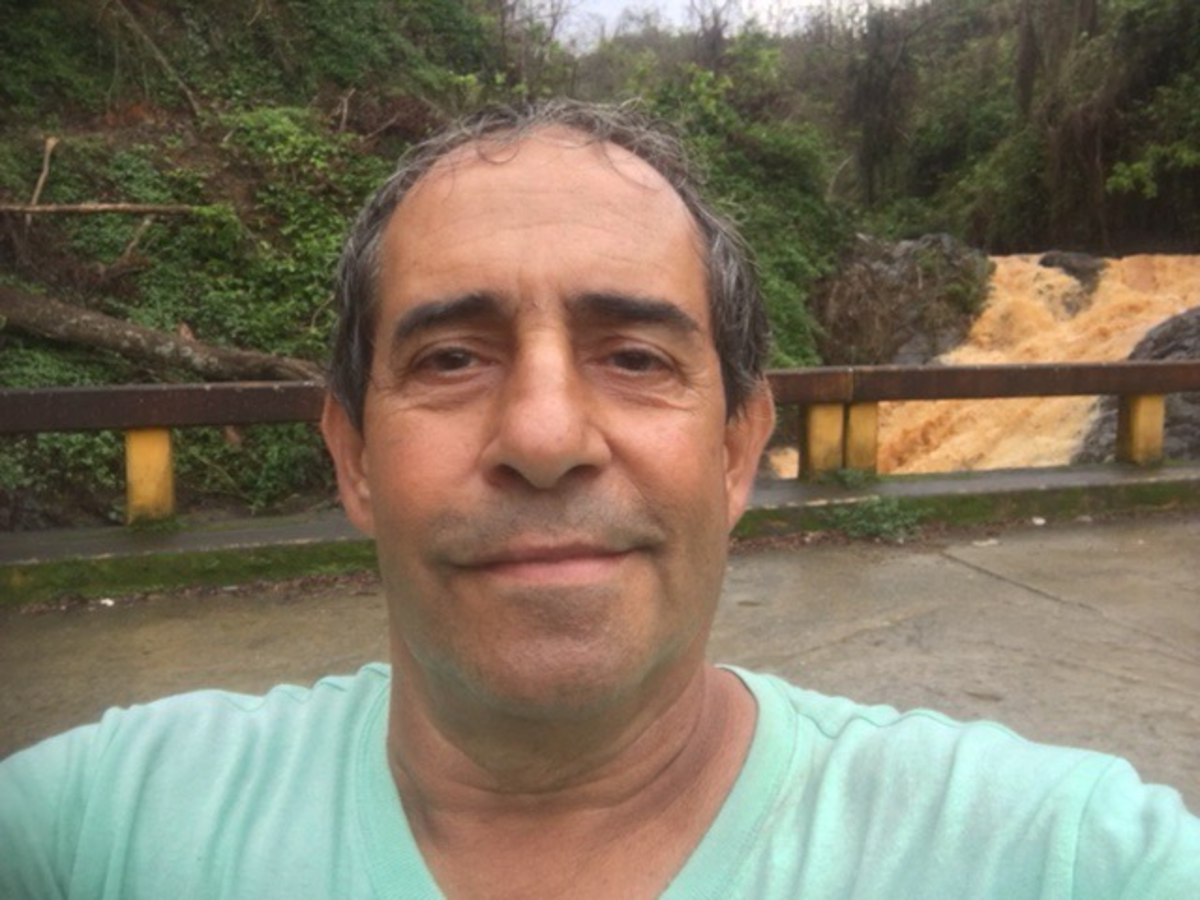
“It was amazing the destruction, pieces of roofs, doors and windows everywhere,” he said. “Well before, we thought that the storms wouldn’t touch us, that at the last moment it would divert and we would be saved. Now we know they are real.”
For Millie, not knowing how her loved ones were doing — if they were alive — was difficult to bear.
“I lived glued to my computer, trying to find anyone who would send me a message,” she said. “It was like a week before I heard from one of my friends for the first time.”
Finally, a close friend got a signal.
“At the time, listening to the phrase, ‘I’m OK,’ it meant, ‘I’m alive,’” she said. “It wasn’t, ‘I’m OK.’”
Millie said she tried to offer friends and family a place to stay in Florida.
“When you have your family and you have a tiny house on a property, you don’t want to get away. You want to fight for it.”
Aside from the occasional power outages, Pepin said life was relatively normal again in Old San Juan, where tourists congregate from cruise ships. As for those who still live in the mountains, recovery is much slower.
Better opportunities
Soft-spoken newlyweds Karina Perez Sanchez and Andre Garcia, both 23, had a trying first year of marriage. With every challenge they face, namely Maria arriving just five months after they were married, they take it one day at a time. If it’s meant to happen, it will.
Garcia's parents owned two properties on a plot of land in Dorado, a municipality on Puerto Rico's northern coast 15 miles west of San Juan; the newlyweds lived in one house and his parents lived in the other. The couple rode out the storm with his parents and older brother, since his parents’ roof was made of wood.
Rain came down in sheets, emboldened by the strong winds that pushed water in every direction. Perez Sanchez recalled mopping up the water that collected on the floor and wringing towels out in the laundry room drains.
“We had already started taking out water from the house since five or six in the morning because our windows, we hadn’t put panels or anything over them because we didn’t know and all that is expensive. So we didn’t put anything over them,” Garcia said in Spanish.
Hours upon hours were spent making sure the water stayed out. They couldn’t sleep anyway, because the power had gone out and the winds were loud.
After the noise died down, the rain evaporated and Puerto Ricans started their long and continuing journey to rebuild, the newlyweds tried to get back to normal.
There was a point at which Perez Sanchez had a breaking point. She was working in a grocery store meat department, which still ran on generator power. A limited number of customers could enter the store at one time, and they could only use cash.
“When I saw all that, I saw the magnitude of the problem. Because when you are stuck at home, you don’t see the reality until you leave home," she said. "So when I saw that, I told him, 'We’re leaving.' Just like that, 'We’re leaving.'"
Perez Sanchez’s aunt lives in Bradenton and helped the couple get plane tickets. By the time they left in December, the electricity at their house had returned.
To them, moving to the mainland U.S. meant more opportunities.
It’s not a glamorous start – they are saving for an apartment and new furniture, which they are finding is an expensive investment, and the car they bought broke down. In the meantime, Perez Sanchez cleans houses for a living (“I want to stop cleaning houses, because I don’t like it much,” she said.”).
But their goals in life propel them forward.
Garcia got a job at an auto body shop 11 days after arriving. He did the same independently, but here the work is more consistent and the pay is hourly.
In Puerto Rico, Sanchez Perez got her bachelor’s degree in criminal justice. There, she completed a three-month internship with a prison, where she would collect evidence and take fingerprints.
She was told she would need at least three years of experience at a police department, and she was advised to take English classes for the police academy. Being in Bradenton helps her take that step to achieve her dream.
"I had told him that either way, I wanted to come here because I studied criminal justice," Perez Sanchez said. "I have always wanted to go work for the FBI."
Seeking independence
Sonia Tosado Hernandez, 48, bought a generator six months before Maria hit.
A storm wasn’t threatening her home. Rather, the Puerto Rico Electric Power Authority was.
“They were announcing that there would be blackouts, that they would cut power services,” Tosado Hernandez said in Spanish. “I had prepared with a generator, with flashlights for that event, never for the hurricane. It was the hand of God who made that happen ... because I wouldn’t have made that investment.”
Her mother and father came to ride out the storm with her two youngest children in her one-story, five-bedroom concrete house in Quebradillas, nearly two hours west of San Juan. Her eldest son lives in Bradenton.
“Never in our life did we think it would go that way,” she said.
Hours upon hours of loud wind. Water started pouring into the house.
“It was like the front door had a fireman’s hose spewing water through the door from the outside in,” Tosado Hernandez said. “We were evacuating water for eight hours. Nonstop. Out and out.”
When it finally stopped, the family was exhausted. A misleading calm in her neighborhood fell, but she knew better. As Maria’s eye swept overhead, some of her neighbors ran out with machetes to chop down felled trees.
“But the virazon is coming!” she recalled yelling. The eye wall would soon be back with strong winds, and her neighbors went running back inside.
Living in Quebradillas after the storm might as well have been like living on the other side of the world. Having little to no access to communication, the rumor mill worked overtime — Tosado Hernandez heard that gas trucks were being robbed and that morgues were running out of room. That’s when she began to panic, she said.
Rumors aside, it was true that her family didn’t have water for a month. It was true that her daughter’s school depended on generators and flashlights, and Tosado Hernandez had to sign a responsibility waiver to let her go back to school.
It was true that two days after she bought herself and her children plane tickets to Florida, the power came back to her home.
Being close to her eldest son in Bradenton makes her happy, Tosado Hernandez said, but she’s craving independence. Tosado Hernandez and her two youngest children share a room — she sleeps in a bottom bunk, her 16-year-old daughter up top and her 12-year-old son is in a full-size bed next to them. She misses her home.
In late November, she was able to transfer from her job with AcceptanceNOW, a subsidiary of the furniture and appliance rental chain Rent-A-Center, but it’s not enough to afford an apartment in Bradenton and continue to pay for her mortgage in Puerto Rico.
Her children grew up bilingual, but Tosado Hernandez now takes English classes at night.
“The one who didn’t worry about it was me, and I’m paying for it dearly,” she laughed. “I’m always tired.”
She also hopes to re-certify her cosmetology license so she can practice in Florida.
Tosado Hernandez reminds herself that she doesn’t benefit from being negative.
“But all my life I’ve always said, ‘Heavenly Father, if you don’t want me at a certain job you’ll open the doors for something better, and you don’t want me at a certain place then you’ll move me,’” she said. “It seems like He has other plans, because I’m here for a reason.”
Herald staff writer Jessica De Leon contributed to this story by facilitating and transcribing interviews.
This story was originally published June 29, 2018 at 7:37 AM.