
Trump administration deported Marathon man with TPS to Haiti. He’s back in the U.S.
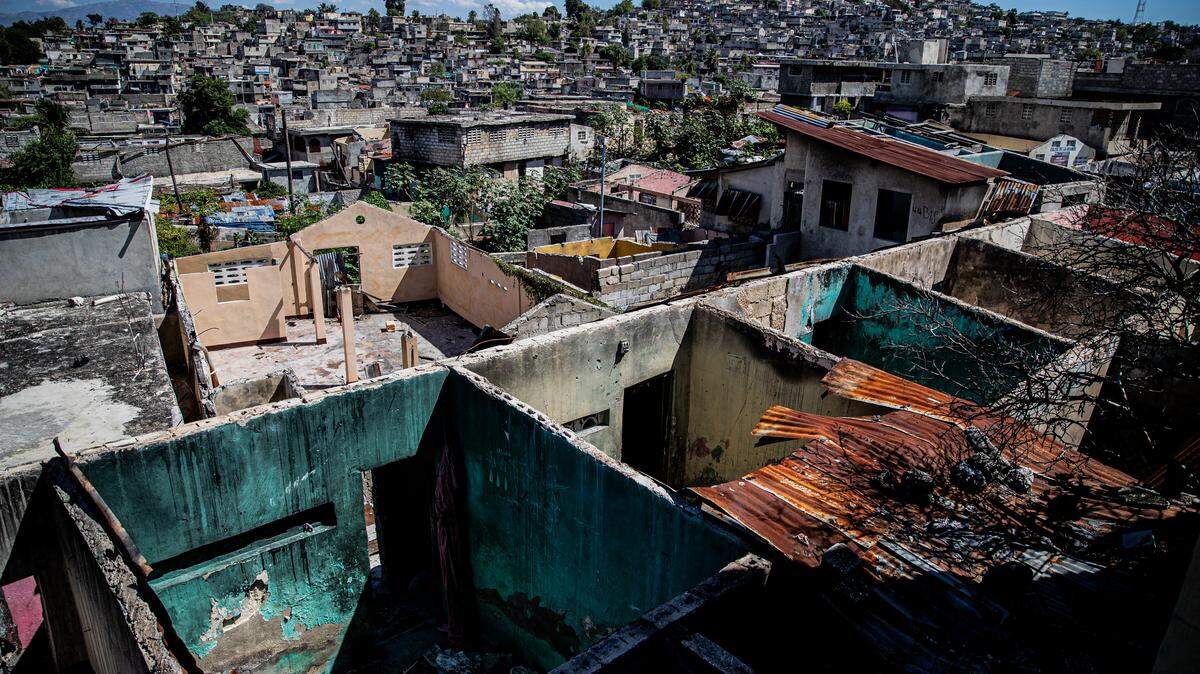
The Trump administration deported a longtime Marathon resident with Temporary Protected Status to Haiti despite a federal judge’s order that has kept the protections in place — and then allowed him to come back to the U.S. two weeks later.
Law enforcement agents picked up Brulan during a routine traffic stop on April 12 in the Keys while on he was on his way to work on April 12, according to interviews and court records. He then spent nearly a month in Immigration and Customs Enforcement custody — including in the state-run facility in the Everglades known as Alligator Alcatraz — before being sent to Haiti on May 7.
While in his violence-stricken homeland, Brulan said he feared for his life. He routinely encountered gangs during his brief time in the capital of Port-Au-Prince, he said. He returned to South Florida, his home for 22 years, through a wrongful detention lawsuit that his lawyer filed.
“I’d rather be dead now than sent back,” Brulan, who asked that his name not be used because he still fears the gangs back in Haiti, told the Miami Herald.
Brulan is not the first TPS holder from Florida the Trump administration has deported despite active TPS protections or court orders. In October, the Herald interviewed a Venezuelan father from Tampa who was sent to back to Venezuela even though a judge had upheld TPS for Venezuelans the same day he was arrested during a routine check-in at an immigration office.
READ MORE: Trump administration deports Venezuelan father with Temporary Protected Status
The deportation comes as President Donald Trump targets hundreds of thousands of immigrants with TPS from over a dozen countries for deportation. In both of his administrations, Trump has focused on Haitians who are fleeing extreme gang violence, the destructive aftermath of earthquakes and the collapse of political institutions. In his second term, the future of Haiti’s TPS has reached the Supreme Court, which is currently weighing the protections. In the meantime, a federal judge in Washington D.C. has kept the protections alive through at least July 1, which the Trump administration has begrudgingly acknowledged.
Brulan had an outstanding final deportation order from an immigration judge in 2004. He later obtained Temporary Protected Status in 2010, after the Obama administration designated Haiti for TPS, when a devastating earthquake killed hundreds of thousands and devastated Port-Au-Prince. Since then, he has renewed his TPS multiple times and complied with the requirements to keep the protections in place.
That, his lawyer said, should have been enough to prevent the government from deporting him, describing his removal to Haiti as “illegal.” Federal law explicitly protects TPS holders from deportation while the designation is in effect.
“Brulan’s case is a reminder that due process matters, once we demonstrated that his removal was unlawful, we fought to return him and reunite him with his family. No one should be deported in violation of the law,” said Alexandra Friz-Garcia, a Miami-based immigration attorney who represents Brulan.
The Department of Homeland Security did not immediately respond on Thursday to questions about why it had decided to deport Brulan or how it handled cases of TPS holders who had outstanding deportation orders.
READ MORE: Supreme Court weighs whether Trump can end Haitian TPS. South Florida is watching
‘We have security’
Brulan is from the coastal commune of Miragoâne, about two and a half hours from Port-Au-Prince. He worked as a bus driver before coming to the United States in 2003. He left Haiti fearing life-threatening harm and persecution because of his political views and involvement in local politics, he told the Herald.
He has lived in South Florida, making a home in Marathon, since then. He wakes up before the sun rises to go to the first of three jobs at a cleaning company. He then goes to another job at a hotel, goes home to take a shower when he finishes, and heads to his job at a restaurant, he said. He goes home for the day at around 10:30 p.m.
Despite the grueling hours, he is grateful to be in the United States. “Life is great, I work, I have family. We have security,” he said.
It’s also how he’s able to take care of his family, still in Haiti. His sisters, brother, and all of their children are there. Every two weeks, he sends money to his relatives, which they use for healthcare and for schooling. That financial support helps as many as 50 loved ones, Brulan estimates. Sometimes, strangers who know his relatives ask him for help, he said, and he sends them money through his family.
The Herald did not find any criminal records for Brulan. He had four traffic citations for speeding from 2010, 2014, 2015, and 2022, according to public records, and another for leaving his car on county property in 2018. His employer at the restaurant describes him as a “very good soul” who sometimes prepares containers of necessary supplies to send back home.
‘God bless you’
Brulan said he was on the way to one of his jobs when he was picked up last month. He is unclear which agency picked him up, and the Herald was unable to verify whether a state or federal agency first came across him. He told officers he was a TPS holder, and had shown his passport, work authorization and license as proof of his lawful status in the country — documents he said he always carries with him. The officer called someone to consult them about his case, likely federal authorities, as is standard in those sorts of traffic stops.
“He opened my car door, said get out, and after that, he arrested me,” said Brulan.
After picking him up in Marathon, the officers took him to Key West and then Miramar. He later ended up in Alligator Alcatraz, the state facility in the Everglades.
“The way they treat us... if you are an animal, and you like the animal, you aren’t going to bring him to Alcatraz,” he said. Immigrants held at Alligator Alcatraz have reported scarcity of food, cages that reek of urine and use of force. The administration of Gov. Ron DeSantis, which runs the facility for ICE, has repeatedly denied allegations of mistreatment.
READ MORE: Beatings and pepper bombs: Conditions worsen at Alligator Alcatraz, detainees say
In early May, guards instructed Brulan to pick everything up and moved him to a section that housed just Haitians. He tried to call his boss but the phone call didn’t go through. “That’s when I realized, oh, they are going to deport me,” he told the Herald. An employee at the facility who checked his blood pressure and evaluated him before they removed him, hesaid, told him: “God bless you.”
Brulan had not been to Haiti in over two decades before landing in Cap Haitien, a port city on the northern coast that the U.S. government regularly uses for deportation flights. As he made his way to the capital on a string of buses, the journey revealed the devastation his homeland has undergone since he had left.
Gang members blocking the roads constantly stopped them. They made passengers get out of the bus to frisk them and search their luggage and other belongings. On the last stop, more than 15 men stopped them, pointing automatic rifles at them. . “I thought I was going to die,” Brulan said.
When he made it to Port-Au-Prince, where gangs control up to 90% of the city, he could not recognize where he was amid the debris and destruction. He found refuge in the house where his brother still lives, he said, and his sisters traveled all the way from their hometown to reunite with their brother after more than two decades. He watched gangs patrol the streets through the windows, and didn’t leave the house while he was there.
“My family cried when they saw me. They told me to stay inside,” he said. “When you are deported, people don’t know why you are deported. They don’t know if you are a criminal or something.”
When his lawyer, Friz Garcia, called him last week to tell him that he would be able to return, Brulan could not believe it. The airline asked for paperwork that he could not provide because U.S. Embassy operations in Haiti are heavily restricted because of security conditions. But eventually, he was allowed to board a plane destined for South Florida.
“I felt like I was in a dream,” he said.
Brulan said that border agents questioned him for about two and a half hours before letting him go back home to Marathon. One of the guards, he said, was Haitian American, who told him he was familiar with what was going on in Haiti because he had family there.
For now, Brulan is back in the United States, and his unexpected deportation to Haiti is now behind him. His removal means that he no longer has a judge’s order to remove him looming over his head.
But his family continues to live in difficult and dangerous conditions, which weighs on him, as does the separation from his family. And the potential end of TPS, now in the hands of the Supreme Court, has hundreds of thousands of Haitians in the U.S. like him uncertain about their future.
He fears ending up again in Haiti soon, unable to help his family or himself in the midst of the extreme gang violence.
“I love America,” he said, “And I’m going to pray so God keeps America safe, and so he keeps me here.”
.
This story was originally published May 29, 2026 at 5:30 AM with the headline "Trump administration deported Marathon man with TPS to Haiti. He’s back in the U.S.."