
‘Execute him’: Cuban Americans in South Florida celebrate Raul Castro indictment
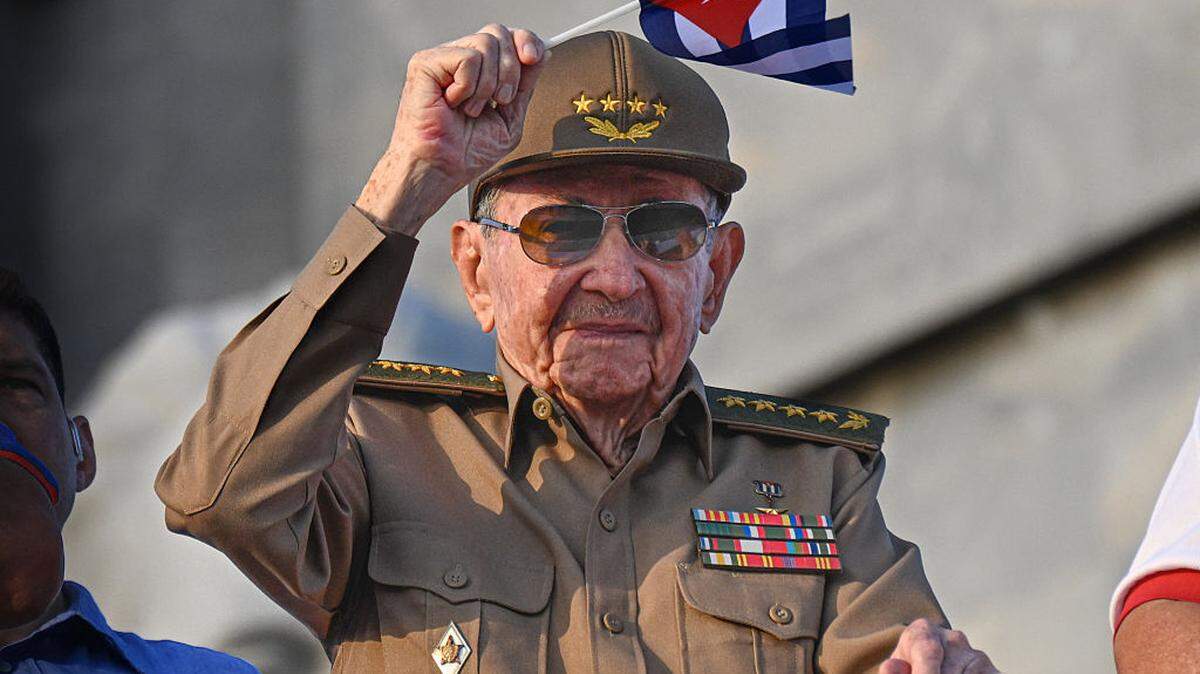
Cuban Americans in South Florida celebrated the federal indictment Wednesday of Cuban leader Raul Castro as a long overdue reckoning for his alleged role in the 1996 killing of four Cuban American men — a shoot-down over the Florida Straits that has long lived in South Florida’s collective memory.
“I’m glad there’s a reason to finally execute him because he executed many people,” said Andres Catalas, 57, who came to the United States 23 years ago, said of Castro and his indictment. “I do think they ordered those people to be killed.”
At the iconic Versailles restaurant near Little Havana, Cuban Americans gathered to witness the indictment. A billboard truck portrayed an image of a free Cuba with the words “Cuba Libre... Fin de la Dictadura... Libertad.” Cars on the street honked in solidarity at a Cuban flag Adrian Rodriguez, a 26-year-old man from Havana, waved on the sidewalk.
Rodriguez, who wore a “Make Cuba Great Again” baseball cap, said he left Cuba in 2014 seeking freedom. He called the 1996 shoot-down of the airplanes a “terrorist act.”
“We’re here celebrating because it’s the first time in history that we have a president who hear the people and what the people want,” Rodriguez said.
On Wednesday, which also marked Cuba’s Independence Day, a federal judge unsealed an April 23 indictment against Castro, the 94-year-old president of Cuba and brother of the late Fidel Castro. The complaint says that Castro authorized the shooting down of two unarmed planes on a humanitarian mission to rescue Cubans in distress trying to get to the United States through the Florida Straits.
Three U.S. citizens, Carlos Costa, Armando Alejandre Jr, Mario de la Pena, and a U.S. resident, Pablo Morales, died aboard the two Cessna aircraft. Thirty years later on Wednesday, Castro was charged with conspiracy to kill U.S. nationals, destruction of aircraft and murder.
The killings have long been personal for Cuban Americans in South Florida, many who came to the United States by boat themselves or still have family on the island.
“We have to put him in jail, it’s what we have to do. We cannot be scared of him,” said Carmen Torres, a 57-year-old woman born to Cuban parents in Puerto Rico. “We need to have Cuba free. That’s what I want so I can go back to see my family.”
Read more: U.S. indicts Raúl Castro for Cuba’s 1996 shoot-down of two civilian planes from Miami
Andy Herrera, an investor in his mid-50s from central Cuba who came to the U.S. in the 1990s, said the indictment was a “past due victory” for the Cuban American community of South Florida. He was a college student in New York when Cuban jet fighters shot down the plane.
“We have been waiting for our government to seek justice even if it’s late, sooner or later justice will be served,” he said “We are really happy that he was indicted. There is no way to escape justice.” The federal indictment says that the Cuban government infiltrated Brothers to the Rescue and reported back on its activities to Havana.
“At the time of their destruction, the two Brothers to the Rescue aircraft were flying outside of Cuban territory. In fact, they were flying over international waters, traveling away from Cuba,” the indictment says. A third aircraft managed to escape safely.
Bryan Calvo, the mayor of Hialeah, the U.S. city with the largest concentration of Cuban exiles, said Wednesday’s indictment spoke to “a deep wound in our community.”
“The families of the four men killed in 1996 deserve to see that the world has not moved on. The people of Cuba deserve more than a change of slogans. They deserve the end of the regime that took those lives and has taken so many others in silence. This indictment should be a beginning, not a curtain call, in the effort to finally bring about a free Cuba,” Calvo said.
Cuban leader Miguel Diaz Canel in a statement called the indictment a “political maneuver, devoid of any legal foundation” that would be used to “justify the folly of a military aggression against Cuba.”
During a press conference on Wednesday outside the Freedom Tower in downtown Miami, U.S. officials described the 1996 killing as premeditated, state sanctioned murder. They spoke of he downing of the planes as an inflection point in Cuban American history and Wednesday’s indictment as seeking justice. Jason Reding Quinones, the U.S. Attorney for South Florida, acknowledged the importance of the location of the announcement at the Freedom Tower, calling the building “the Ellis Island for Cuban Refugees.”
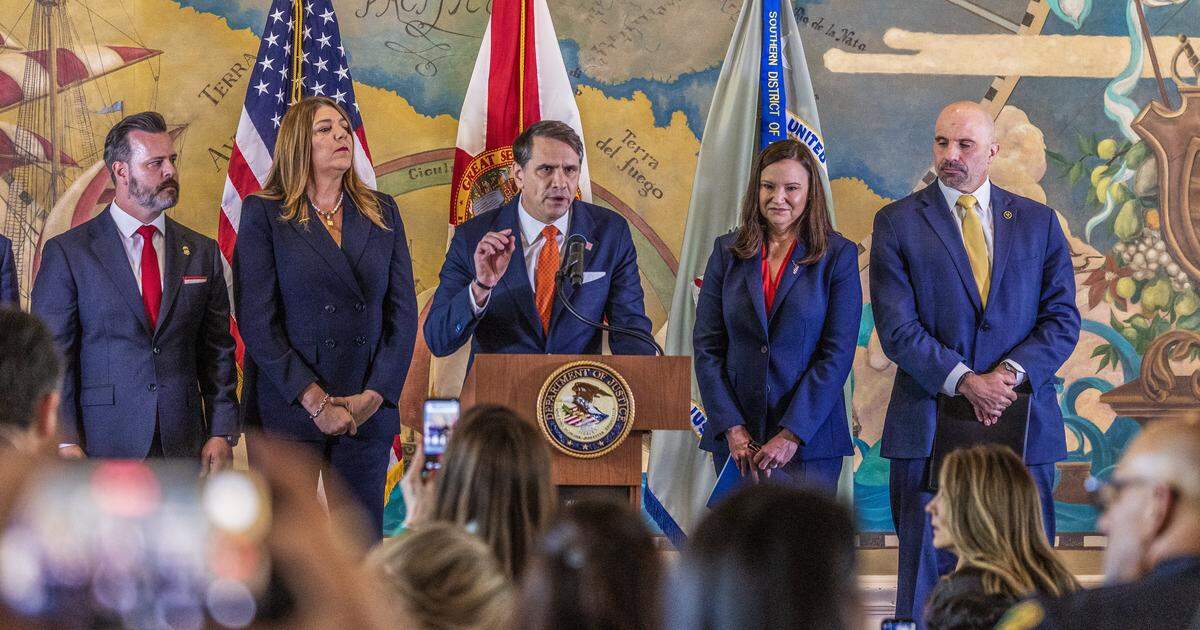
“For 30 years, the families of these men have waited. The Miami community has waited. Our country has waited. Today is a step toward accountability,” Reding Quiñones, himself the child of Cuban exiles, said. “This passage of time does not erase murder. It does not diminish the value of these lives. And it does not weaken our commitment to the rule of law.”
The indictment comes as the United States puts pressure on the Cuban government to negotiate economic and political reforms, and President Donald Trump has recently hinted at the possibility of regime change. The federal government in recent months has imposed an oil blockade on Cuba to bring its leaders to the table, a sanction that has exacerbated the island’s humanitarian crisis.
This story was originally published May 20, 2026 at 3:56 PM with the headline "‘Execute him’: Cuban Americans in South Florida celebrate Raul Castro indictment."