State changing how it tests for COVID-19. Here’s how it will affect Bradenton residents
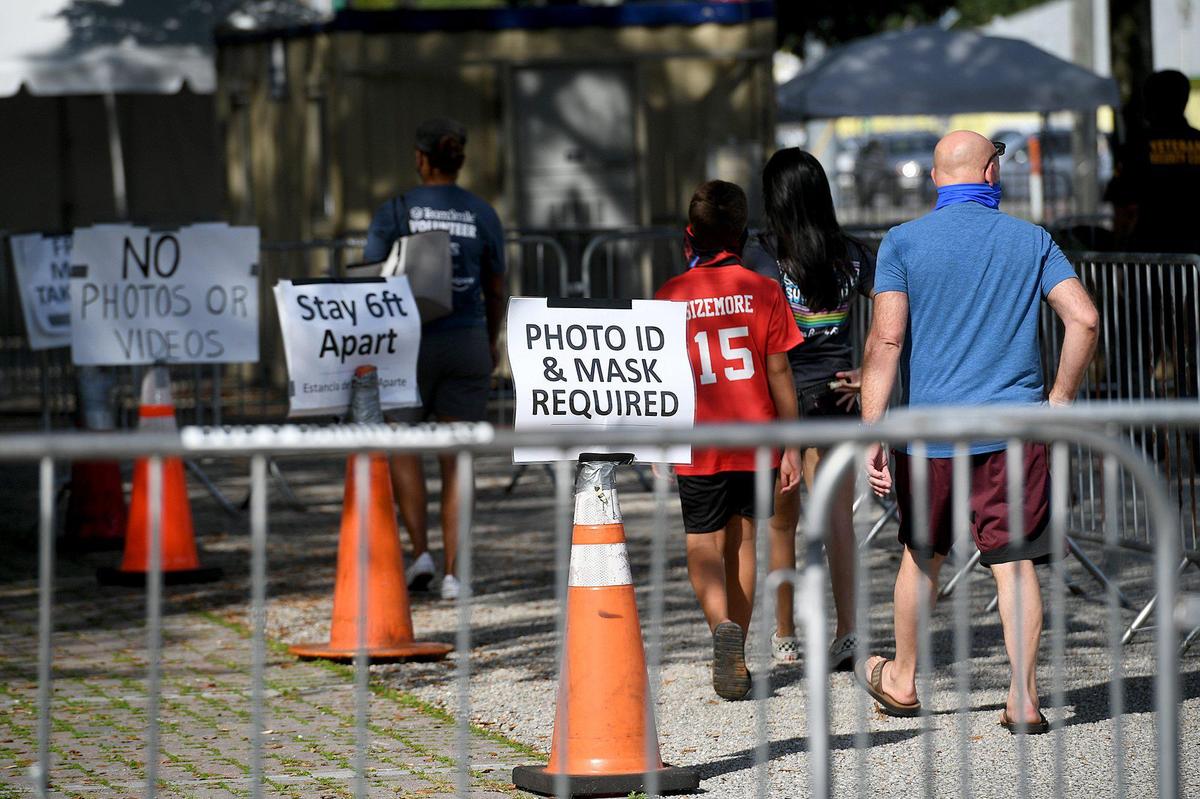
Rapid testing will now be the standard procedure for the coronavirus at all state-run testing sites ,including the location at Lincoln Park in Palmetto.
The switch to the Abbott BinaxNOW rapid test, which provides results within 15 minutes, was among the changes announced by the Florida Department of Emergency Management to county emergency managers on Monday.
The federal government purchased Abbott’s entire stock of BinaxNOW rapid tests in August as part of a $760 million contract for delivery of 150 million rapid tests. Earlier this month, Gov. Ron DeSantis announced that Florida was getting 6.4 million of the tests.
DeSantis said the state would begin receiving weekly batches of 400,000 tests, with 100,000 tests going to long-term care facilities, 180,000 to “senior-care communities,” 60,000 to school districts and 60,000 to state-run testing sites.
The Lincoln Park testing site had not yet begun using the rapid tests, but the state’s goal is to have the rapid tests at all of the state-run community-based testing sites by Saturday.
The Abbott BinaxNOW rapid test is an antigen tests that detects specific proteins on the surface of the virus. While the rapid test produces results in 15 minutes, it is less sensitive in detecting the virus. The testing kit consists of nasal swab, dipped into a provided reagent, and an index card-sized testing card with a testing strip.
For months, the primary test being offered at the state-run testing sites has been a molecular test known as PCR, or polymerase chain reaction, which detect the virus’ genetic material. The PCR tests must be processed in a laboratory and results can take days, part of what has plagued the state’s testing strategy.
In addition to the convenience and speed of the results, FDEM found that testing demand doubled or tripled when rapid tests were implemented at testing sites at Florida A&M University and in Jacksonville, Jared Moskowitz, state emergency management director, said Wednesday after an earlier version of this story was published online.
Anyone who tests negative with the rapid test but is showing symptoms of COVID-19 will then be given a PCR test.
“Any individual that requests a PCR test, can still get a PCR test,” Moskowitz said. “We really do believe that by the test being rapid, it allows for contract testing to be done faster and stop the spread of the virus.”
Among the other changes to testing include officials at state-run testing sites asking individuals who receive a PCR test for their health insurance card. Regardless of whether someone has or provides their insurance information, tests will still be provided for free.
“This is merely an accountability issue so that we can show FEMA a good faith effort that we are seeking other avenues to recoup costs,” Moskowitz said.
The state is also making clear to officials at the local level that providing a driver’s license or social security number is not necessary in order to be tested. Staff at sites do ask for a driver’s license, but this is just to make it easier to get the individual’s information, Moskowitz said.
Additionally, all state-run testing sites will also now provide testing for all ages. Previously, not all testing sites had tested children or had a minimum age requirement. The testing site at Lincoln Park, set to be relocated to the Bradenton Area Convention Center, had formerly only tested children 12 years old or older.
Rapid tests sent elsewhere without a plan
During the statewide call Monday, local emergency managers raised concerns they had about rapid tests being sent to long-term care facilities and communities for those 55 years and older.
But FDEM would not take any questions regarding those shipments, focusing the call on testing sites, according to Manatee County Public Safety Director Jacob Saur. As part of DeSantis’ announcement last month, senior communities wanting rapid tests were able to do so by emailing rapidtestsforseniors@em.myflorida.com and then responding to the survey they would automatically receive.
“It’s concerning that they would send theses tests out without proper procedures or abilities to utilize them,” Saur said.
The tests must be administered by a specially certified healthcare provider or staff who have a needed waiver. That provider must also be able to dispose of the associated hazardous waste from testing.
On Wednesday, Moskowitz defended the rapid tests being sent to these communities without the logistics being worked out beforehand.
“We want locals to buy in. We want them to decide if they want the county health department or hospitals to administer,” he said. “We want them to make those decisions.”
According to Moskowitz, FDEM is working with county health departments, county emergency managers and local hospitals to find partners in the community to administer the tests.
“But I didn’t want to just have tests sitting in a warehouse,” he said.
In Manatee County, emergency management and the health department officials were not informed that rapid tests would be sent to senior communities, nor were they notified which long-term care facilities or communities requested or received the tests.
In Manatee County, rapid tests have been sent to the Manatee County School District, the Lincoln Park testing site, 35 long-term care facilities and five senior communities. A total of 12,320 rapid tests have been sent to these locations.
Saur, whose department includes emergency management, said he is now working with Florida Department of Health in Manatee County health officer Dr. Jennifer Bencie to formulate a plan to assist the long-term care facilities and senior communities to administer the rapid tests. Moving forward, Saur’s office is asking that the rapid tests be sent to emergency management so testing at the requesting facilities or communities can be coordinated.
Additionally, Saur has reached out to FDEM with similar concerns about testing administration after another survey came through emergency management on Tuesday, asking fire departments and law enforcement agencies to provide how many employees they have for rapid tests to be sent to them directly, as well.
“Everyone has a bunch of questions and not enough answers,” Saur said. “We’re just jumping in.”
The county health department is taking the lead at the long-term care facilities, while county emergency management has taken the lead on the senior communities. Since Monday, Emergency Management Coordinator Tom Kitchen, Jr. was able to determine the five senior communities who requested rapid tests and reached out to each community’s designated contact.
Those five communities are Village on the Greens mobile home park in Bradenton; Leisure Lake mobile home park in Palmetto; Presbyterian Villas of Bradenton in Bayshore Gardens; Ridgewood Estates mobile home park in Palmetto; and Trailer Estates Park and Recreation District.
All but one of the communities had already confirmed receiving boxes of tests and had agreed to work with emergency management.
“We really want to save them undue burden,” Kitchen said.
This story was originally published October 21, 2020 at 5:00 AM.