Carnival has a plan for improving its environmental record. Meet the man in charge
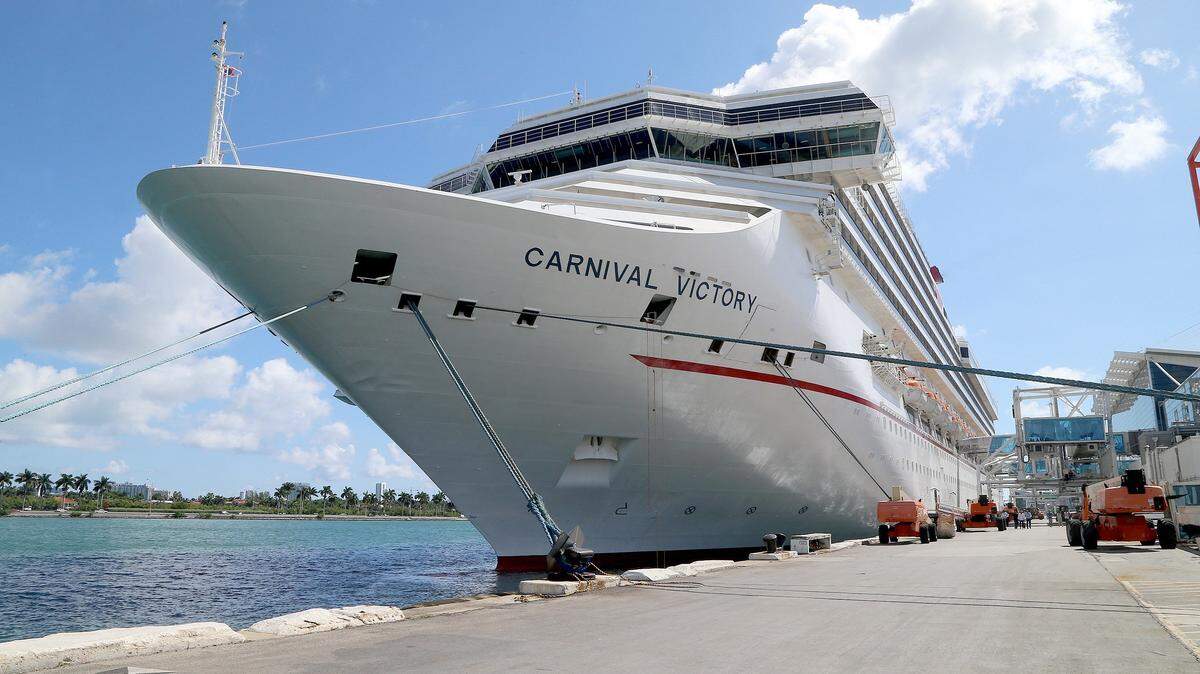
Pete Anderson has his work cut out for him.
The newest member of Carnival Corporation’s C-suite is tasked with steering the world’s largest cruise company through a passage beset by environmental dangers, long-standing practice and legal consequence. As the company’s new chief ethics and compliance officer, Anderson is charged with shifting the company’s culture and preventing it from breaking environmental laws — all while a federal judge, court-appointed monitor, third-party auditor and probation officer look on.
Perfection is unrealistic. Other major cruise companies have also been convicted of similar environmental crimes over the past several decades. Any current issues at competitors are largely undocumented; none has experienced the intense scrutiny given to Carnival this year.
Anderson admits that it is impossible for a company of Carnival Corp.’s size — 105 ships run by nine cruise lines — to avoid polluting altogether. While the corporate line, often repeated by CEO Arnold Donald, says “Our aspiration is to leave the places we touch even better than when we first arrived,” Anderson is pursuing what may be a more realistic goal of “self-governance,” with the company holding itself accountable and doing the right thing because it’s the right thing to do.
“There will always be violations,” he said. “Are we detecting them and are we responding and are we getting better? If you don’t take care of and own your issues, you’re subjected to this. No one wants to go through this ever again.”
By “this,’’ he means the conviction following a 2016 federal investigation that found some of its Princess Cruises-brand ships had been dumping oily waste into the ocean — and covering it up — for eight years. The company paid $40 million as part of that settlement, the largest fine for environmental crimes in U.S. history at the time, and began its five year probation period. It was the company’s third conviction for dumping oil into the ocean since 1998.
While under the probation microscope, Carnival Corp. continued to violate environmental laws in 2017, 2018 and 2019. In June, Donald pleaded guilty on behalf of the company to six probation violations and the company agreed to pay a $20 million fine. The plea deal required Carnival Corp. to appoint a chief compliance officer.
Enter Anderson, a 56-year-old white-collar defense attorney from North Carolina who worked in the Department of Justice environmental crimes division in the 1990s. Most recently he assisted the court-appointed monitor for Volkswagen during the company’s three year probation for its 10-year conspiracy to sell cars that contained software to cheat on U.S. emissions tests. Before he started at Carnival, he had been on just two cruises — one he said he won by filling out a Chick-fil-A coupon.
Anderson is a compliance evangelist who talks about four pillars — prevention, detection, response, and correction — with the confidence usually reserved for a sure-fire recipe passed down from two generations ago. He peppers his speech with company acronyms — “OpCo ECO” (Operating Companies Chief Compliance and Ethics Officers), “ABG” (All Brands Group), and “OLTMs” (Operating Line Training Managers).”
Anderson’s new position marks the first time he’s worked for a corporation in-house. He hit the ground running in August.
His recent on-the-record conversation with the Miami Herald is Anderson’s first media interview since his appointment. It provides a behind-the-scenes look at the company’s comeback.
Building the foundation
When Anderson began to look at Carnival Corp.’s operations, he found a siloed company where lessons learned from environmental violations on one brand’s ship were not shared with environmental officers on other ships. Each of the nine brands — Carnival Cruise Line, Princess Cruises, AIDA Cruises, Costa Cruises, Cunard Line, Holland America Line, P&O Cruises, P&O Cruises Australia, and Seabourn — largely functioned on its own without a central leader held accountable for compliance.
Now, that leader is Anderson.
In his first months on the job, Anderson said he worked with environmental and safety teams for each of the brands to centralize leadership and come up with a list of immediate and long-term priorities to create a foundation for moving the company forward. He expanded the team charged with investigating incidents from four to eight. The budget for the company’s compliance office went from $27 million to $47 million, and the compliance staff in Miami from 29 employees to 55.
“We’ve made, I think, significant progress in laying that foundation,” he said. “And the next six months we’re going to see some concrete deliverables as we begin to try to bear the fruit of that foundation.”
Anderson is seeking no less than an unprecedented cultural shift shared by the more than 120,000 Carnival employees around the globe. The result, he hopes, will be far fewer environmental violations.
He’ll be rowing through shoal-laden waters. In its most recent report covering the period of April 19, 2019 to July 18, 2019, the court-appointed monitor in charge of overseeing Carnival Corp. during probation, Washington D.C.-based lawyer Steven Solow, found that the company continued to violate environmental laws regulating air quality and ocean discharges. A survey conducted by an outside expert hired by Solow in December 2018 and January 2019 and delivered to the company in August found that there is a pervasive lack of trust between workers, supervisors and managers.
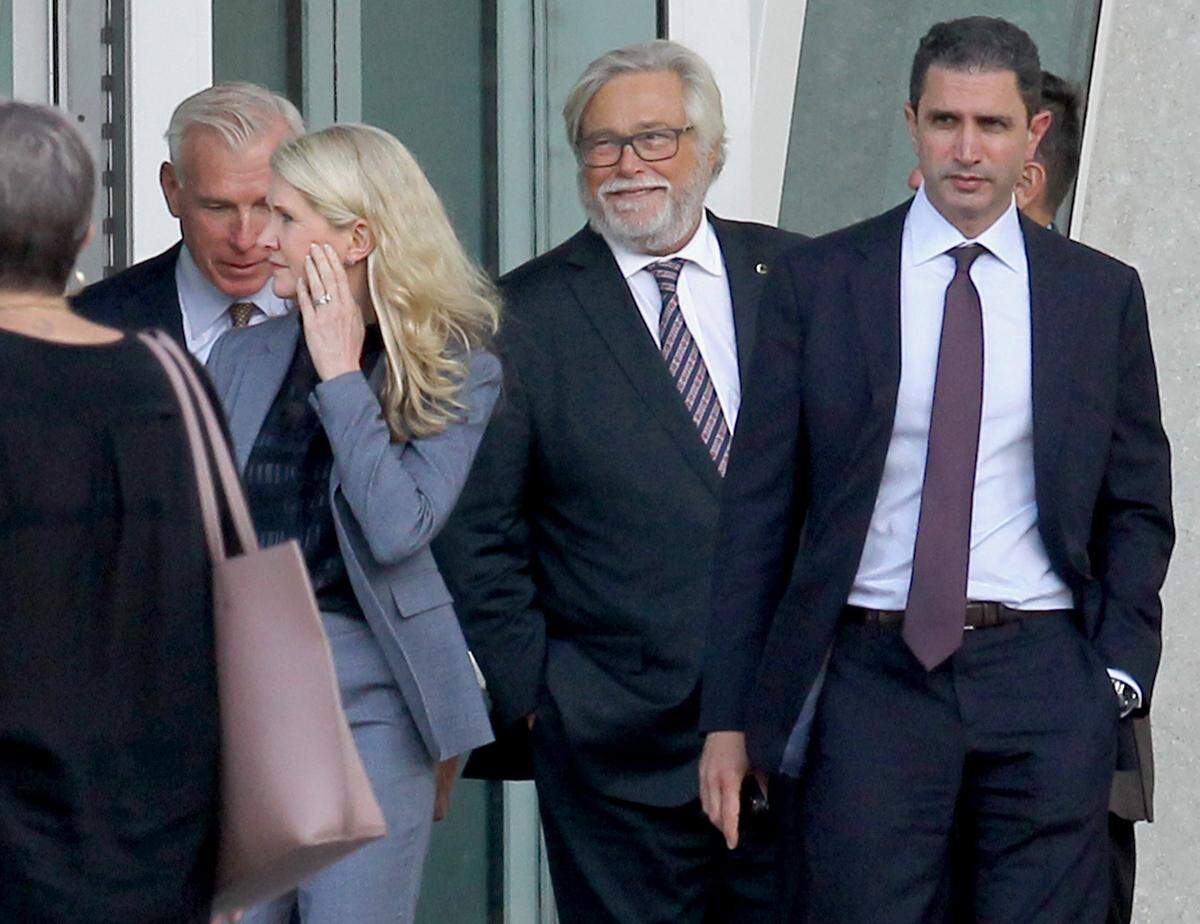
U.S. District Judge Patricia Seitz, who has overseen the Carnival Corp. case since the beginning, has repeatedly said publicly that getting rid of the company’s “blame culture” is essential to cleaning up its environmental act. She frequently vented her frustration in court over a lack of progress during the first half of probation.
“I feel like I am Sisyphus pushing the rock up the hill and it keeps rolling back down on me and we aren’t going anywhere,” she told Anderson and company executives during a hearing in October.
Anderson said he wants compliance and ethics baked in to every aspect of the company. He wants human resources to discuss compliance with potential new-hires during interviews, the compliance team to review and promptly address employee complaints, the investigative team to get to the root cause of violations, and executives to consistently preach the importance of compliance. Together, those measures can prevent similar problems across all ships in the future.
“We have a lot of work to do,” he said. “And part of our initiatives that we’re going to be doing over next year are, yes, looking at the environmental performance metrics. The other is more of the human side, the human factors of of making sure we understand. Do we have mechanisms in place for anti-retaliation? Open communication?
“Part of the problem was it’s much more efficient when you come across an incident or a violation to say, hey, look, this is in your responsibility. The violation happened. It’s your fault.” That practice has resulted a sort of duck-and-cover operation where workers who make mistakes are disciplined and the root cause of mistake are left largely unaddressed.
Listen and learn
Anderson said he has has received a clear message from employees on the company’s ships: “No one listens to us.”
His response is something he’s calling “Listen and Learn,” an initiative to encourage employees to speak up and managers to listen and respond. Step one is to review suggestions and complaints from crew members from the last few months that were previously discarded and reform the company’s hotline procedures.
“We’re going to spend months gathering those up, reviewing them and evaluating them to develop which ones are we going to actually take to heart, fund, make these improvements,” he said. “That’s retroactive to demonstrate that, mea culpa, we didn’t do a good job. We’re going to do better...We owe that [to our employees].”
Solow, the court-appointed monitor, has built the kind of trust with Carnival Corp. employees that Anderson would like to have, he said. Anderson’s goal is for the compliance team is to visit every ship in the fleet in the next three years to build the necessary trust between the compliance office and the employees. Through training, Anderson wants to show employees that violations have a silver lining, “a path” he said, toward improvement going forward.
The company is already on that road.
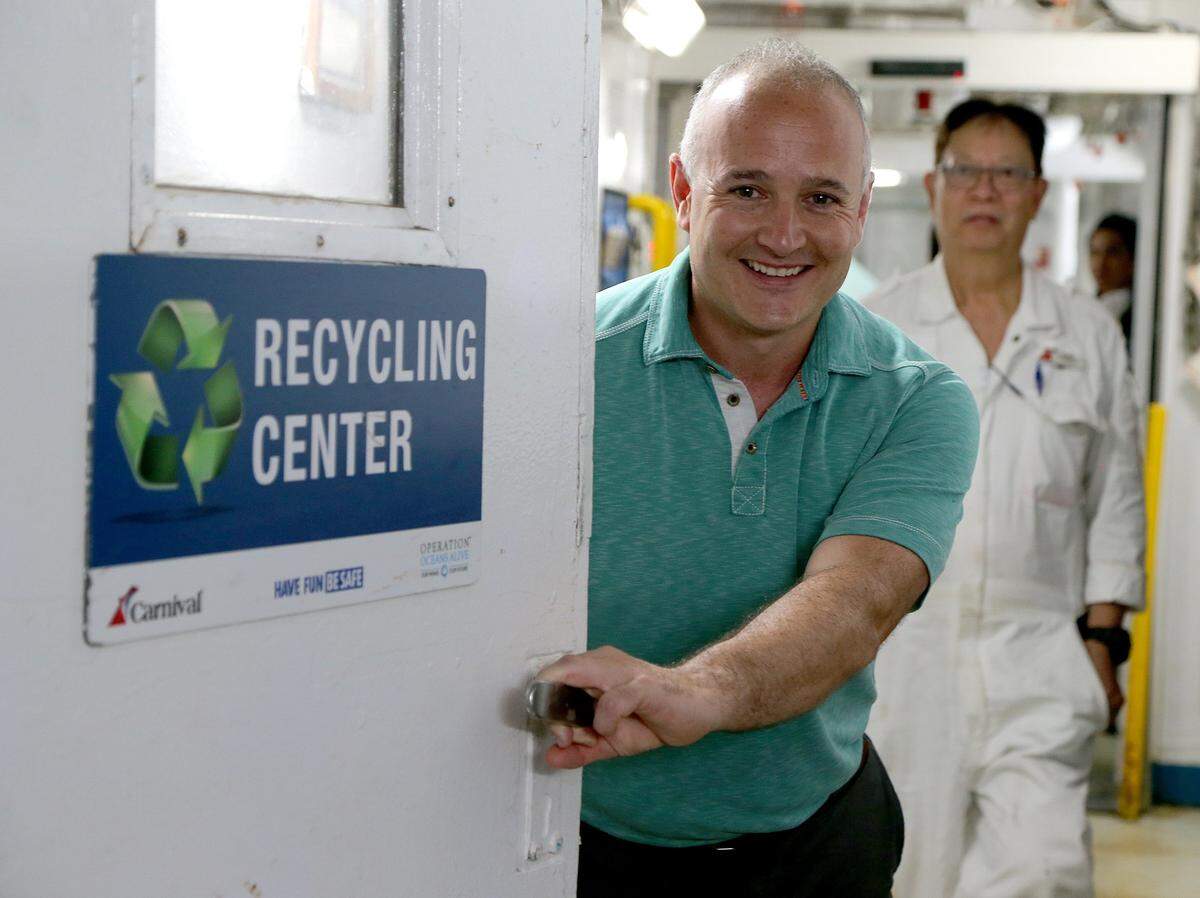
Chris Donald, the senior vice president of corporate environmental compliance on Anderson’s team, is leading the charge to prevent food waste mixed with plastic from being dumped overboard on Carnival Corp.’s ships, one of the main mandates of the June plea deal. The company is testing 20 machines called bio-digesters that consume food waste, leaving only a liquid byproduct that makes its way through a one-millimeter mesh filter into a holding tank to be dumped into the ocean more than 12 miles from land. The leftover plastic can then be recycled back onshore.
Donald led a company-wide compliance awareness challenge earlier this year, in which ship and shore teams created videos about how to correctly dispose of food waste to the tune of the 2007 hit “Cupid Shuffle.”
Other items on Anderson’s to-do list include launching a new environmental training course at the company’s Center for Simulator Maritime Training in The Netherlands. He plans to continue incentive programs for employees for good environmental work and explore possible technology solutions to prevent pollution caused by human error. He plans to revamp an environmental chat forum to communicate with shipboard environmental officers about issues in real time throughout the fleet.
On the leadership team
Environmental violations are not unique to Carnival Corp., although it is difficult to know the extent of the company’s competitor’s pollution problems because they are not under the same legal scrutiny. Royal Caribbean Cruises and Norwegian Cruise Line Holdings, Ltd., the second and third largest cruise companies in the world, respectively, have committed the same underlying crimes in the past.
In 1999, Royal Caribbean Cruises paid a $9 million fine after pleading guilty to federal crimes related to rigging its ships to bypass pollution control equipment and covering up dumps of oily waste.
In 2002, Norwegian Cruise Line Holdings pleaded guilty to falsifying records to cover up oil dumps and paid a $1 million fine.
Both Royal Caribbean Cruises and Norwegian Cruise Line Holdings have appointed compliance offers to their senior executive teams. At those companies, however, the executives carry other duties, like general counsel. Anderson’s position makes him the only cruise executive solely responsible for compliance and ethics at the biggest three companies, marking an industry shift. On the company’s website, Anderson’s bio is listed third under Micky Arison, chairman of the board, and the CEO.
Anderson said he loses sleep over showing enough progress quickly enough while trying to set up systems that will fundamentally change how the company works for years to come. By his estimate, the four newly trained investigators will need six months on the job before they are consistently able to determine a violation’s root cause and the data begins to show a corresponding improvement in violations. Judge Seitz and federal prosecutors want to see that progress now.
“I need patience,” he said. “But at the same time, the patience has really worn thin.”
On Thursday, Anderson’s team and Carnival Corp. executives will be back in federal court in Miami for a three-hour hearing to review the company’s progress. Important headway is evident in the queue of incident investigations. In January, the investigative team had a backlog of 38 incidents, Anderson said. By October, the backlog reduced to 28. By Thursday’s hearing, Anderson estimates it will be down to less than 10 incidents. All have been reported since September.
“I wouldn’t leave a successful law practice unless I was committed to make as much improvements to transform this company,” Anderson said. “There was a lot going on that was good. I think the company needed to make improvements. And we’re on that path.”
This story was originally published December 18, 2019 at 12:29 PM with the headline "Carnival has a plan for improving its environmental record. Meet the man in charge."