
As some ports rush to fund deeper waters, Port Manatee is still planning
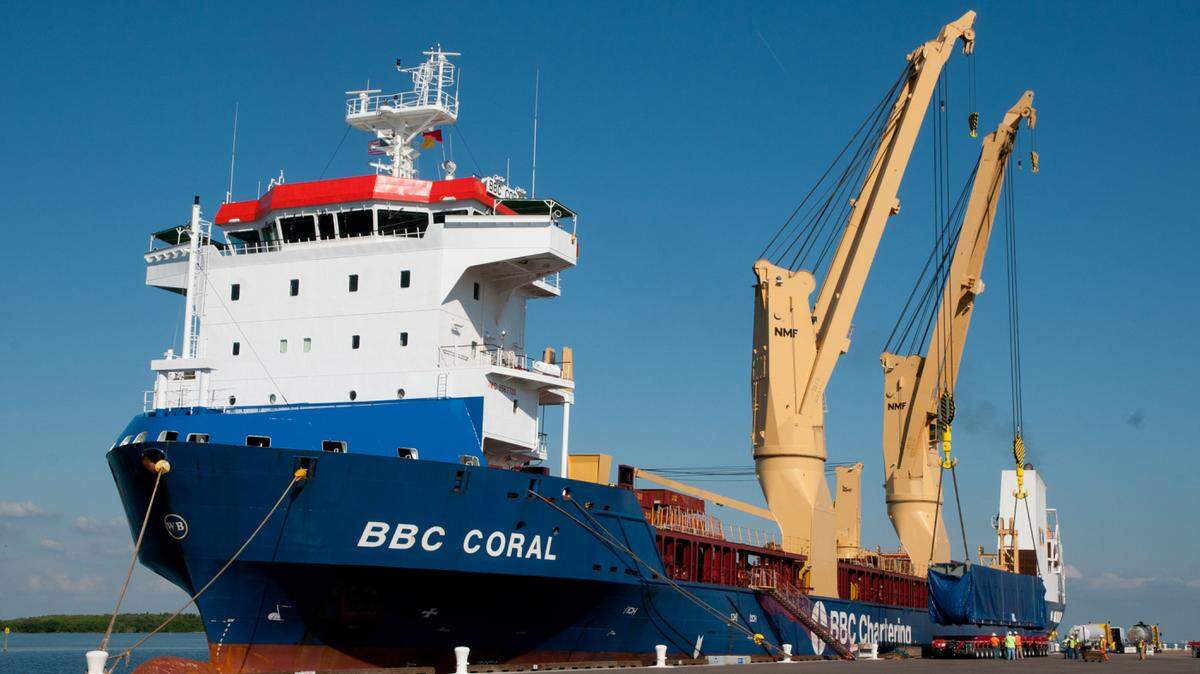
PORT MANATEE -- Tired of waiting for Congress, states racing to deepen seaports before the opening of the enlarged Panama Canal next year are picking up the cost of what has traditionally been a federal duty.
Port Manatee, one of the ports that is planning further ahead, has not gone after state funds. Port Manatee officials expect the port will use federal money for a proposed deepening project that probably wouldn't be finished until after 2020.
With funding for coastal navigation channels at its lowest in a decade, port directors worry that the federal government is abandoning construction and maintenance of U.S. waterways just as builders churn out a new generation of massive container vessels. The so-called post-Panamax class carries loads twice the size of current ships and demand ever-deeper harbors.
At least four other ports in Florida, Georgia and Texas have decided to foot the bill to deepen federal waterways, a total of almost half a billion dollars, rather than wait years for funds. To berth post-Panamax ships, ports typically need 50 feet of depth -- there are only four on the East Coast.
Smaller facilities are looking for an edge to gain a bigger piece of the $4.6 trillion in economic activity generated at U.S. ports last year, a quarter of the gross domestic product.
As one of those smaller facilities, Port Manatee plans to deepen its channels and berthing facilities, though it may not keep pace with some of the larger ports in Florida. The port has maintained 40-foot draft depths throughout its facilities for decades. It has plans to increase that depth to 45 feet in coming years to accommodate larger, heavier cargo vessels expected to start passing through a rebuilt Panama Canal next year.
"Based on the initial assessment conducted by the Army Corps of Engineers, it was anticipated that the maximum benefit /cost ratio would be expected to maximize at around 45 feet," said port spokeswoman Virginia Zimmerman.
In 2014, $100,000 was allocated to the Army Corps of Engineers Jacksonville district to study deepening the federal channel and harbor area at Port Manatee. President Barack Obama placed a request for an additional $700,000 for the Port Manatee study in his 2016 civil works budget.
Expected to cost tens of millions of dollars and to take up to eight years to complete, the deepening would take the port to the minimum depth needed to accommodate some of the biggest cargo-hauling ships in the world.
Extra depth would make Port Manatee a primary destination for heavy load ships, said the port's deputy executive director, Dave Sanford. The Army Corps recommended that Port Manatee receive this latest proposed funding in order to bring more efficiency to the state's shipping industry.
"Efficiency's the name of the game," said John E. Walsh, chief executive officer of the Canaveral Port Authority in Cape Canaveral, which is funding a deepening project with state and local money. "You will either be a port that can be a stop or you're not."
For more than a century, the U.S. government has been responsible for maintaining navigable waterways, with Congress traditionally authorizing projects overseen by the Army Corps of Engineers and appropriating funds. In recent years, Congress has been at a partisan stalemate over everything from the Export- Import Bank, temporarily shut down in July after lawmakers failed to renew its charter, to highway funding, which has been largely sustained with short-term, last-minute measures.
Federal lawmakers have been similarly slow to approve port work and even slower to appropriate money. President Barack Obama's fiscal 2016 budget request for the Army Corps's coastal navigation-channel construction program was $81 million, the least in over a decade, according to Jim Walker, director of navigation policy and legislation at the Virginia-based American Association of Port Authorities.
"The federal government is just funding constrained," Walker said. "They're very focused on the deficit and trying to reduce federal spending. The states just see the need to get these investments completed."
The reason is the end of the "Panamax standard," which was adopted in 1985 to accommodate the dimensions of the Panama Canal. Panamax ships can fit through the original width of the locks. Post-Panamax ships are wider, and require ports at least 43 feet deep. New generations are even bigger and require depths of 50 feet or more.
In September, Florida's PortMiami finished dredging its waters to 52 feet, making it the deepest south of Virginia and positioning it as one of the first calls for post-Panamax ships. The $220 million project was funded by state and local dollars after delays in Congress led Republican Gov. Rick Scott to say Florida would foot the federal government's $77 million share and seek reimbursement later.
"We're still hopeful that we can go back to the federal government and have them reimburse the port," said Juan Kuryla, director of PortMiami, which is only the nation's 14th largest by volume of container traffic. "What is the likelihood of that? We have to wait and see."
At Port Canaveral, 200 miles (320 kilometers) north of Miami, container traffic is tiny compared with its Eastern seaboard brethren, but it has big plans to deepen its waters. Canaveral gets 80 percent of its revenue from cruises. It ranks only 49th in container volume.
The port had planned to apply for federal funding, but quickly realized that it had little chance of securing any in a timely fashion due to its relatively small size and economic insignificance.
"There was no money available in Washington," said Walsh. "The likelihood of Port Canaveral getting it -- it's sort of like when you're the last child of six and your older brother isn't getting a cellphone. Your chance of getting a cellphone is pretty slim."
Georgia Ports Authority has been working for more than a decade on a $700 million harbor deepening along the Savannah River. The state advanced its entire $266 million share, a cost that normally would have been distributed over several years if federal dollars had been at hand. Now, port officials await federal money to maintain dredging already under way.
"Federal dollars have been hard to come by, and lean," said Curtis Foltz, executive director of Georgia Ports Authority.
Not all ports are ready to let the U.S. government off the hook. The Port of Corpus Christi in Texas is trying to keep pace with increased activity related to manufacturing and energy production, and has gotten approval from Congress to deepen its port to 52 feet. Even though the appropriations from Congress have yet to materialize, the port's executive director says he has no other choice but to wait for federal money on a project that will cost more than $300 million.
"We don't like having the federal government abrogate their responsibility," said John LaRue. "If everybody starts doing that they'll just say we really don't have to do this, we'll let the ports do it themselves."
-- Lauren Etter is a reporter for Bloomberg News. Herald business reporter Matt M. Johnson can be reached at 941-745-7027 or mjohnson@bradenton.com
This story was originally published November 9, 2015 at 1:21 PM with the headline "As some ports rush to fund deeper waters, Port Manatee is still planning ."