
Simple guide to making delicious latkes this Hanukkah
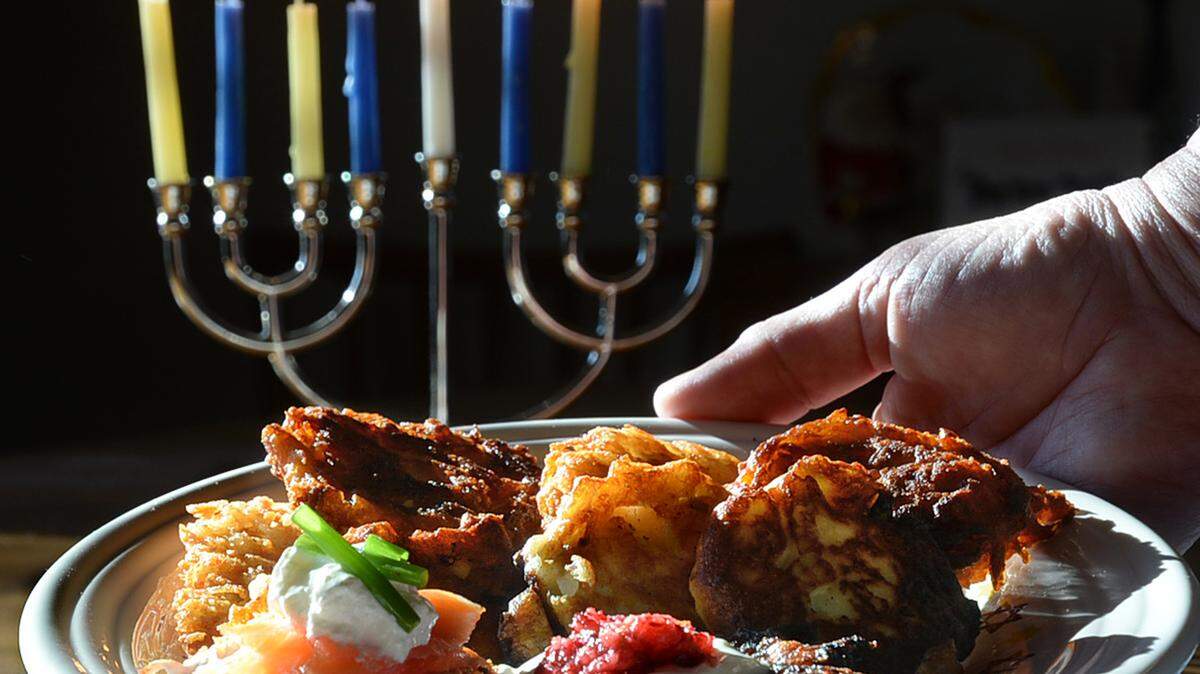
Why isn't the rest of America as crazy about latkes as we are about bagels?
After all, Hanukkah is the holiday when you have permission to eat fried food. You'd think this would be the biggest event in the country by now. This year, Hanukkah begins Sunday evening.
Despite their exotic-sounding name -- and we'll get to that later -- latkes are just grated potatoes or vegetables, fried and topped with tasty things like sour cream, applesauce, maybe even smoked salmon. What's not to love?
My own life has included plenty of kosher love. I'm not Jewish, but my family moved from Eastern North Carolina to South Florida in 1969. I was 10, and I was suddenly surrounded by a culture more exotic than anything I had known.
When my seventh-grade chorus teacher, Mrs. Rausch, lifted her arms to lead us in "Hava Nagila," you couldn't miss the numbers tattooed on her arm. When I encountered the words "lox" and "bagel" at a deli in Miami Beach, I discovered one of the loves of my culinary life.
Despite that, the making of a proper latke had escaped me. How do you keep the potatoes from turning dark before you can fry them? Does it have to be potato? And what's with the applesauce?
I needed an ubermensch. So I called Amy Rogers, the contributing editor of WFAE's food blog, WFAEats.org, and the author of "Hungry For Home," a collection of recipes and essays on the meaning of food.
Last week, she trekked to my house bearing a small menorah, her favorite Fiestaware Hanukkah plate and a lot of thought about latkes.
"I can't stress enough that this is not an elegant dish," she insisted. "It's wandering food from a wandering people."
Keep it simple
Rogers stripped off her rings and bracelets, rolled up her sleeves and got to work, shredding peeled white potatoes on the big holes of a box grater and tossing them onto a cotton dish towel. Each taking a side, we rolled up the towel and twisted it as tight as we could, squeezing out an astonishing amount of starchy liquid.
"I've probably made them a hundred times in my life," Rogers said, tossing in egg, milk and a little matzo meal. "The goal is to make them more delicious than beautiful. Use what you have, don't measure."
Latke-making is all about tradition, she said. They were made by Eastern Europeans who didn't have much. So yes, she could use a food processor to shred the potatoes. But it's about the tradition, and tradition says to grate the potatoes.
She also doesn't like to use a spoon to drop the batter in the oil. She used her hands to gather about 1/4 to 1/3 cup of the grated potato batter, pat it into a little cake about as wide as her palm, and ease each patty into hot oil in my cast-iron skillet.
Making latkes naturally turns into a party. Since the potatoes turn brown quickly, you have to work fast. And while you can keep latkes hot in the oven, they're best right out of the oil, when they're hot and crisp. So people gather around.
In her opinion, Rogers said, "Latkes aren't do-ahead any more than biscuits are do-ahead."
History of Hanukkah
There's nothing wrong with getting fancy or staying plain with latkes. The tradition is the oil, not what you put in it.
The story is simple: In 168 B.C., a Syrian/Greek king
named Antiochus captured Jerusalem and plundered the temple. A group of resisters calling themselves the Maccabees vowed to resist, and after three years, they retook the city.
But when they reconsecrated the temple, there was only enough oil to burn the sacred lamp for a day, not the eight days it took to press fresh oil. The lamp burned for eight days anyway. A miracle was declared, and Hanukkah was born.
Different foods became traditional anywhere Jews lived, from puffy doughnuts to chicken. In Eastern Europe, home of the Ashkenazi Jews, potatoes were what they had in winter, so they made potato cakes.
The word latke is Yiddish, but where it came from is debated. Many sources suggest it came from a Ukrainian word, oladka, which came from a Greek word, eladion, "little oily thing." That came from elai, or olive, because oil came from olives.
Most immigrant Jews were poor, Rogers says, so they improvised.
"You might have one radish for color, so you added that. Or if you wanted to grate some beets, you could do that. You used what you had."
TRADITIONAL POTATO LATKES
1 to 1-1/4 pounds russet potatoes (about 2 large potatoes)
1 small onion, peeled
1/4 cup matzo meal or all-purpose flour (see note)
1 teaspoon baking powder
3/4 teaspoon salt
1/4 teaspoon freshly ground black pepper
1 large egg, lightly beaten
Oil for frying
Toppings: Sour cream or plain Greek yogurt, applesauce, smoked salmon or caviar
Line a large bowl with a clean linen or cotton dish towel. Peel and grate the potatoes and place them in the towel. Grate the onion and add it to the potatoes. Roll up the towel lengthwise so the potatoes are enclosed. Twist the ends and wring out as much liquid as you can. Discard the liquid and dry the bowl.
Mix the flour, baking powder, salt and pepper together in the large bowl, then whisk in the egg. Stir in the potato-onion mixture and mix well.
Pour 1/2 inch of oil into a heavy skillet and preheat over medium heat. Don't allow it to smoke.
Use your hands to form potato patties about 2 ½ inches across and 1/3 inch thick. Place in the oil and cook until the edges are brown, about 3 to 4 minutes, then turn the latkes and cook the other side several minutes longer. Remove to drain on paper towels and serve hot, topped with your choice of toppings.
Note: While it's traditional to use matzo meal, it's OK to use all-purpose flour instead.
Yield: About 10 latkes. -- From Amy Rogers
GINGERED SWEET POTATO LATKES
1 pound sweet potatoes (about 1 large), peeled
1/2 cup all-purpose flour
2 teaspoons granulated sugar
1 teaspoon brown sugar
1 teaspoon baking powder
1/2 teaspoon grated nutmeg
1 teaspoon ground coriander
1/2 teaspoon ground cumin
Salt and pepper to taste
1/4 cup candied ginger, roughly chopped
2 large eggs, beaten
1/2 cup milk
Oil for frying
Topping: Sour cream and fresh cranberry sauce
Grate the sweet potatoes coarsely into a mixing bowl and set aside.
Mix the flour, sugars, baking powder, nutmeg, coriander, cumin, salt and pepper in a separate bowl. Add the beaten eggs and milk to make a stiff batter. Add to the grated sweet potatoes and mix.
Pour 1/2-inch of oil into a heavy skillet and preheat over medium heat but do not allow it to smoke.
Drop sweet potato batter by double tablespoonfuls into the hot oil. As the edges begin to color, flatten them slightly to an even thickness with a spatula. Once the edges are brown, about 4 minutes, turn the latkes and cook the other side several minutes more. Remove to drain on paper towels and serve hot, topped with sour cream and fresh cranberry sauce.
Yield: about 10 latkes.
-- From Amy Rogers
LEFTOVER MASHED POTATO PANCAKES
1 cup leftover chilled mashed potatoes
1 egg, beaten
2 to 3 tablespoons all-purpose flour or matzo meal
1/4 teaspoon each salt and pepper
Pinch of garlic powder
1 tablespoon snipped chives
Oil for frying
Pour 1/2 inch of oil into a heavy skillet and preheat over medium heat but do not allow it to smoke.
Mix mashed potatoes and egg until blended. In a separate bowl, combine the flour, salt, pepper, and garlic powder. Add to the potato mixture, then stir in the chives.
Drop by double tablespoonfuls into the hot oil. As the edges begin to color, flatten the pancakes slightly to an even thickness with a spatula. Once the edges are brown, about 4 minutes, turn the pancakes and cook the other side several minutes longer. Remove to drain on paper towels and serve hot.
This story was originally published December 2, 2015 at 12:00 AM with the headline "Simple guide to making delicious latkes this Hanukkah ."