
Speaking Volumes | Citizen Kane and the genius of Orson Welles
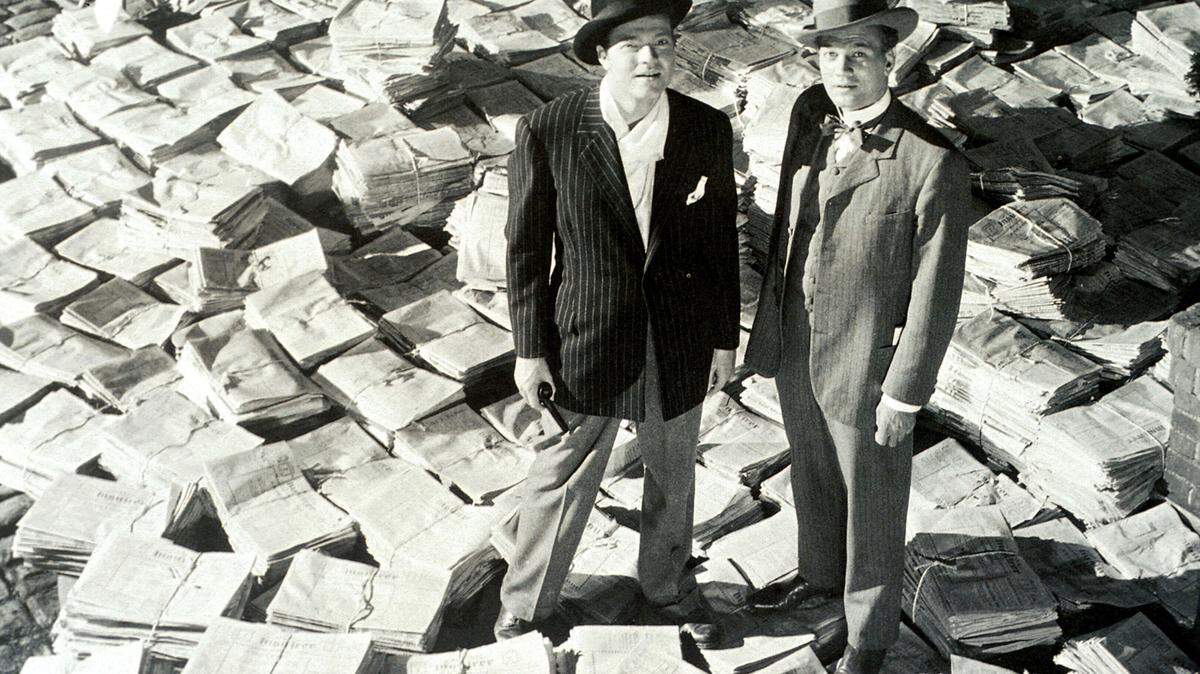
This year marks the 80th anniversary of the release of Orson Welles’ first film, “Citizen Kane.” Now considered one of the greatest films ever made, and the new style of filmmaking it introduced, it had a rocky road to completion.
Welles was born in 1915 in Kenosha, Wisconsin, an only child to wealthy parents. Both parents died in his childhood and the young boy traveled all over the world with a portion of his inheritance. He began acting in Ireland and eventually returned to the U.S. He worked for the Federal Theater Project, a part of the Works Progress Administration, a New Deal program that aimed to employ actors, writers, and directors in theatrical productions. One of these, “Voodoo Macbeth” (1936) was an all-Black production and ahead of its time in terms of interpretation and its promotion of African Americans in the arts.
He also established himself at CBS Radio Network with his repertory company that included Joseph Cotton, Agnes Moorehead, and George Coulouris, called the “Mercury Theatre on the Air.”
In October 1938, the program presented an adaptation of H.G. Wells’ “The War of the Worlds” that sent listeners into a panic across the country. The notoriety of that broadcast caught the attention of studios in Hollywood. George Schaefer, the head of RKO Radio Pictures, offered Welles an unprecedented choice of projects and, most importantly, final cut of each film he produced. After some deliberation Welles, in collaboration with writer Herman J. Mankiewicz, came up with the idea of “Citizen Kane.” “Kane” is the story of a wealthy and powerful news magnate that was based on the real-life William Randolph Hearst.
The production was top-secret, even from studio executives. Once the film was finished and viewed, the fallout was swift: Word reached Hearst, who was not amused. He decided to ban not only the film and Welles from his newspapers but threatened to extend it to any RKO production. MGM chief Louis B. Mayer and other studio moguls offered to buy the film and have it destroyed. RKO’s George Schaefer refused to buckle to the pressure.
The film was released and received critical praise, but wasn’t the hit that the studio was expecting. In the end, Welles lost his contract and the great filmmaker spent much of the rest of his career traveling the globe securing financing for his future productions.
If you’re looking for materials related to Welles and his masterpiece, your library has you covered. We have the film itself on DVD format and a great documentary on the making of the film called “The Battle Over Citizen Kane.” There is a film “RKO 281” (1999), that dramatizes the film’s production and stars Liev Schreiber as Orson Welles. If you’re interested in Welles’ life and films, be sure to check out Matthew Asprey Gear’s “At the End of the Street in the Shadow: Orson Welles and the City” available on Hoopla.
Speaking Volumes is written by members of the staff at the Manatee County Public Library System. David Breakfield is the Central LIbrary librarian.
Your library is online: www.mymanatee.org. Free masks are available at all library locations. Manatee Libraries are fine free! Please note that lost/damaged fees still apply.