With voting rights changes, what’s at stake for Florida’s young Black voters?
For decades, Black Floridians organized block by block to claim a right long denied to them — the vote.
Civil rights leaders like Harry T. Moore and Mary McLeod Bethune built statewide networks to register Black voters, while Miami activists such as Charles Hadley led door-to-door campaigns that transformed political participation in South Florida. Their efforts, often carried out under threat of violence and economic retaliation, helped lay the groundwork for the representation gains that followed the Voting Rights Act.
Now, historians warn, the question is no longer just how those victories were won — but what will remain of them for the next generation, many of whom haven’t been educated about civil rights history.
Read more: ‘Not race neutral’: How Florida’s new voting maps favor white voters
On the day the Florida legislature voted to redraw its maps to shift the number of Black voters in congressional districts, essentially weakening Black voters’ ability to elect officials from their community, the Supreme Court ruled that considering race in drawing congressional maps can qualify as racial gerrymandering – even if it’s done to avoid racially discriminatory maps that diminish Black voters’ power.
The ruling, issued Wednesday, came nearly 35 years after Florida sent its first Black delegates to Congress, which happened after maps were redrawn in 1992 to ensure Black people had adequate representation in Congress. Those three delegates – Corrine Brown in Jacksonville, Alcee Hastings in Broward County and Carrie Meek in Miami-Dade County – were the first Black representatives from the state since Reconstruction.
The new Supreme Court ruling and the ongoing efforts to reshape how Black history is taught, raises alarms among scholars who study Florida’s civil rights past. They say the convergence of those forces risks not only weakening Black voting power, but also leaving younger voters without the historical context to understand what is being lost — or how hard it was to gain in the first place.
To not know your history is to repeat it
Historians and educators who spoke to the Miami Herald about the Supreme Court’s decision pointed to a common thread: a growing gap in how Black history — and the history of voting rights — is taught is leaving younger generations less equipped to understand what’s at stake.
“I think that a lot of younger people, especially, have not really seen the importance of voting because their generation didn’t have to deal with the fight for voting rights,” University of Florida political science professor Sharon Austin said. “I’m not saying that this is their fault, because it isn’t, but if anything, I hope that this motivates them to see that this is their struggle.”
Nationally, Black youth had a 34 percent voter turnout rate in the 2024 presidential election, lower than young white voters (55 percent) and Asian voters (43 percent), but higher than Latino youth (32 percent), according to the Center for Information and Research on Civic Learning and Education.
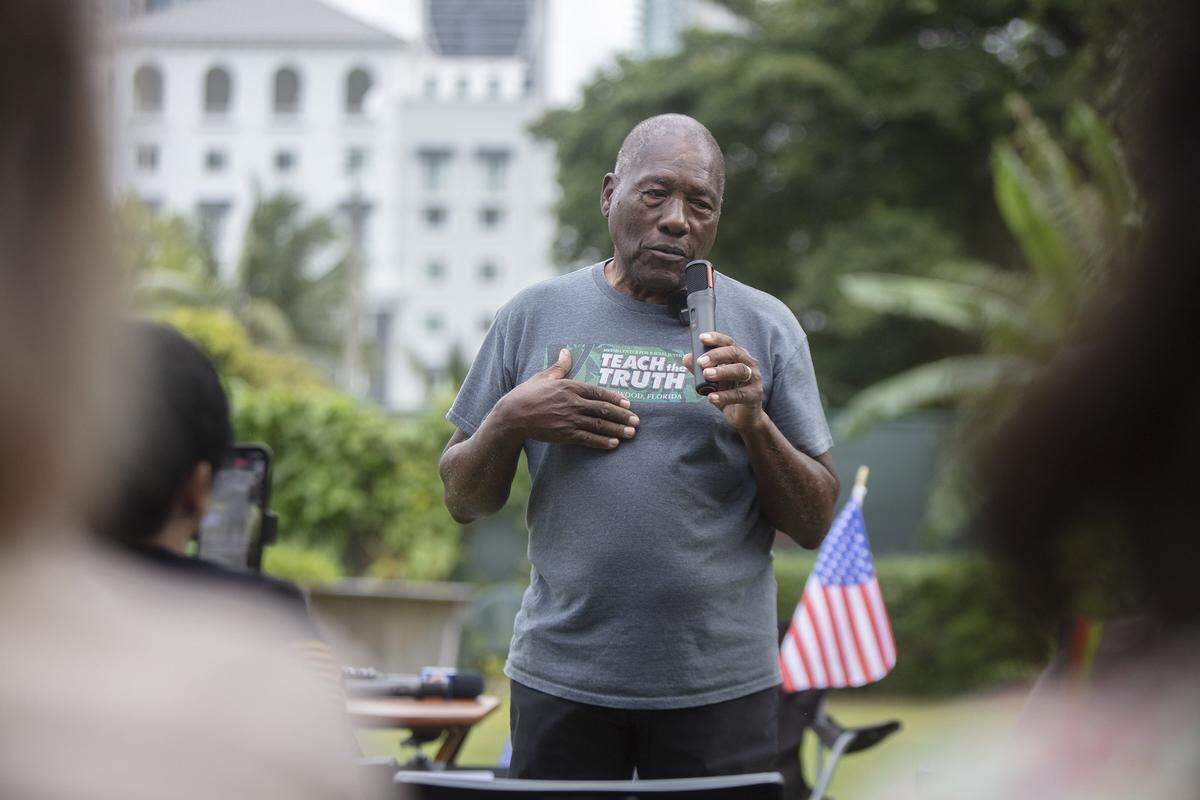
Historian Marvin Dunn echoed that concern, describing a disconnect among younger Black people who did not live through — and in many cases were never deeply taught about — the violence, intimidation and systemic barriers that shaped earlier generations’ fight for the ballot. Without that lived or learned context, the erosion of voting protections can feel abstract rather than urgent.
“That’s not a part of their lived experience. Therefore, I think, there’s a kind of emotional detachment among young Black people about what has happened in the past, which is understandable,” said Dunn, who was 25 when the Voting Rights Act was passed. “They didn’t live through it. Their parents didn’t live through it. We did.”
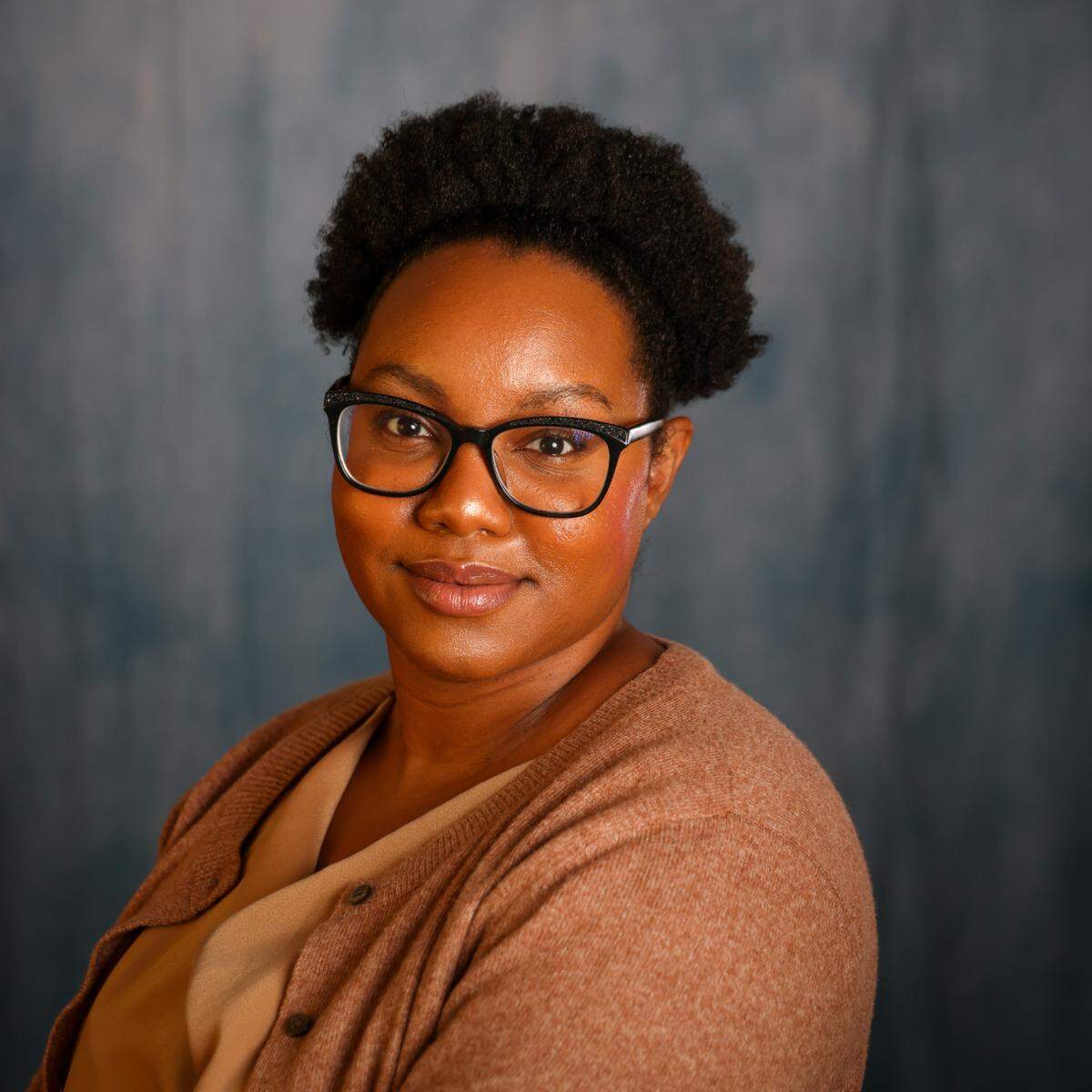
For historian Tameka Bradley Hobbs the disconnect is not accidental. It’s rooted in broader efforts to limit the education students receive about their Black history and the ways in which governments have limited how educators talk about the facts around Jim Crow, slavery and systemic inequality. The result, she said, is not just historical ignorance but diminished civic awareness.
“I think it is important for people to remember the health of our democracy rises and falls with a level of intellectual freedom we’re able to exercise in this country,” she said. “Black history especially teaches us this. There is a reason why we were forbidden to learn to read and write as enslaved people. It was part of the way that we were kept in oppression.”
Hard won victories lost
In Florida, a generation of organizers built Black political power from the ground up. Leaders like Harry T. Moore, Mary McLeod Bethune and Miami’s Charles Hadley registered tens of thousands of Black voters through relentless, often dangerous grassroots work. Their efforts expanded after the Voting Rights Act, when large-scale campaigns like Operation Big Vote helped transform elections across South Florida.
Black voters faced challenges from poll taxes to threats. Dunn said Black domestic workers were often forced to work longer on election days by their white families, weakening their chances of casting a ballot.
“There were these subtle acts of oppression through economic threats to Black people voting,” he said, adding it was worse if your employer didn’t like who you were voting for. “It was a chilling effect because of the possible economic repercussions of voting.”
Over time, as populations shifted and overt barriers like poll taxes and intimidation faded, historians say there was a growing assumption that those hard-won rights were permanent. That belief, they argue, contributed to a quiet erosion of vigilance, even as political and legal challenges to voting protections continued to build.
“There’s an accountability conversation,” said Tameka Bradley Hobbs. “We have to talk about how we got this so wrong.”
“People felt their right to vote was protected,” historian Marvin Dunn said.
The result, historians warn, is a generational disconnect: those who fought for voting rights understood they could be lost, while many who came after believed they were settled law. Now, as courts revisit long-standing protections and legislatures redraw the political landscape, that assumption is being tested. Both Dunn and Hobbes noted that the Supreme Court was once a place where Black voters could see justice for their rights, but the recent decision is further indication tides are changing.
Hobbs said there has been an about-face in how the Supreme Court has worked to protect and ensure the rights of everyone. “To now live through a serious and dangerous change in these institutions...it ought to be very concerning for everyone,” she said.
Austin said prior to Wednesday’s ruling, the Voting Rights Act had already been eroded with the 2013 Shelby County v. Holder decision, which determined which states and municipalities needed federal approval for changes to voting policies to ensure that they were not racially discriminatory.
“Now we have a situation where state legislatures are empowered to redraw their district lines to benefit one party over the other, and to me, that’s a dangerous thing regardless of which party benefits,” Austin said. “That sets a dangerous precedent.”
For Dunn, the trajectory is even more troubling. The same line of thinking behind recent rulings, he said, could extend further, threatening other landmark decisions rooted in racial equity, like Brown v. Board of Education.
“That’s where we’re headed,” he said. “With that mindset, you would erase any laws that gave any recognition to racial discrimination.”
This story was originally published May 2, 2026 at 1:58 PM with the headline "With voting rights changes, what’s at stake for Florida’s young Black voters?."