
Is it OK to eat and drive in Florida? What the law says about distraction
AI-generated summary reviewed by our newsroom.
- Florida has no specific ban on eating while driving but risks remain.
- Distracted driving—manual, visual or cognitive—can trigger citations.
- Careless or reckless driving charges can bring fines and jail time.
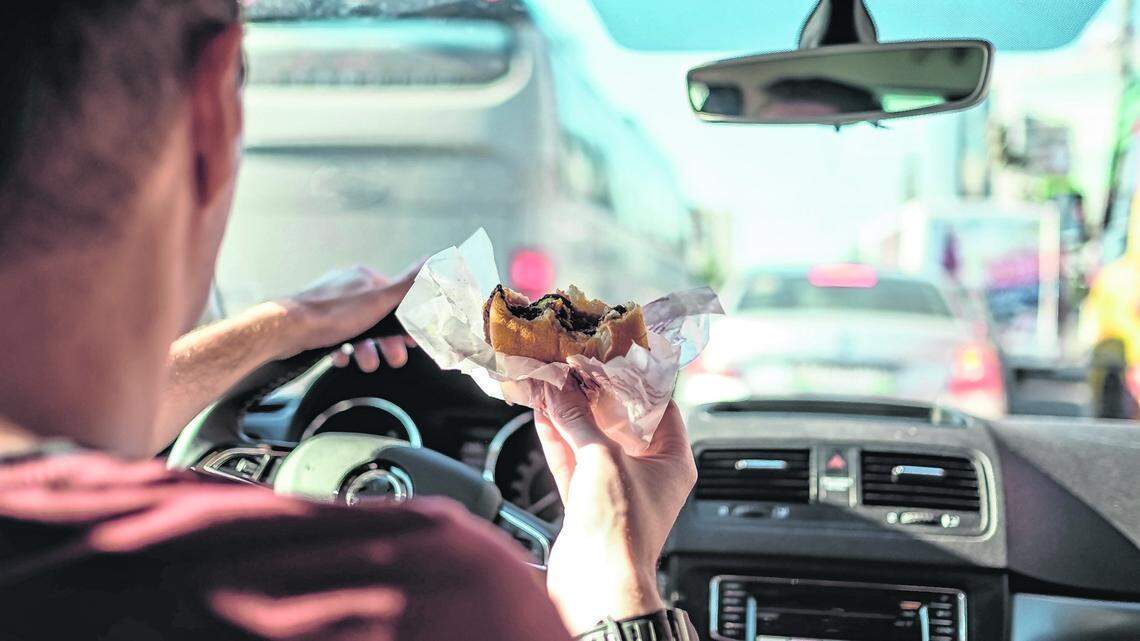
What happens if you eat a dripping burger while driving on I-95? What about biting into a burrito that squirts hot sauce on your arms?
There’s no law that prevents you from enjoying a good meal in one hand while you have the steering wheel in another. Or even cutting your steak while in self-driving mode.
But if your driving suffers while you eat, or spill, that could be trouble. After all, what could be more distracting than guac in your groin or latte in your lap while trying to navigate 836? And distracted driving could lead to the very illegal careless or reckless driving.
Here’s what to know:
Is eating while driving illegal in Florida?
The law: Despite the myth, there are no Eating While Driving laws in the state. But that doesn’t mean you can’t get in trouble for doing so. More on that in a bit.
The menu: Does your food have to be hand-held while driving, or can you use utensils? The law doesn’t have a preference on what you eat or how you eat it — whether it’s a Big Mac from McDonald’s; a Crunchwrap Supreme from Taco Bell; or boliche, black beans and a mound of maduros from Las Vegas Cuban Restaurant (which has a drive-through window, by the way, right off I-95 in Hollywood.) Eating in the car is so powerful that McDonald’s once ran a TV commercial featuring a man who couldn’t wait to get home and polished off the whole container while driving. Regardless of main course and a side, your drink has to be non-alcoholic because there are strict laws against drinking alcohol while behind the wheel. Matter of fact, you can’t even have an open bottle of beer in the car, even if you are not drinking it while driving.
Can you get a ticket for eating and driving in Florida?
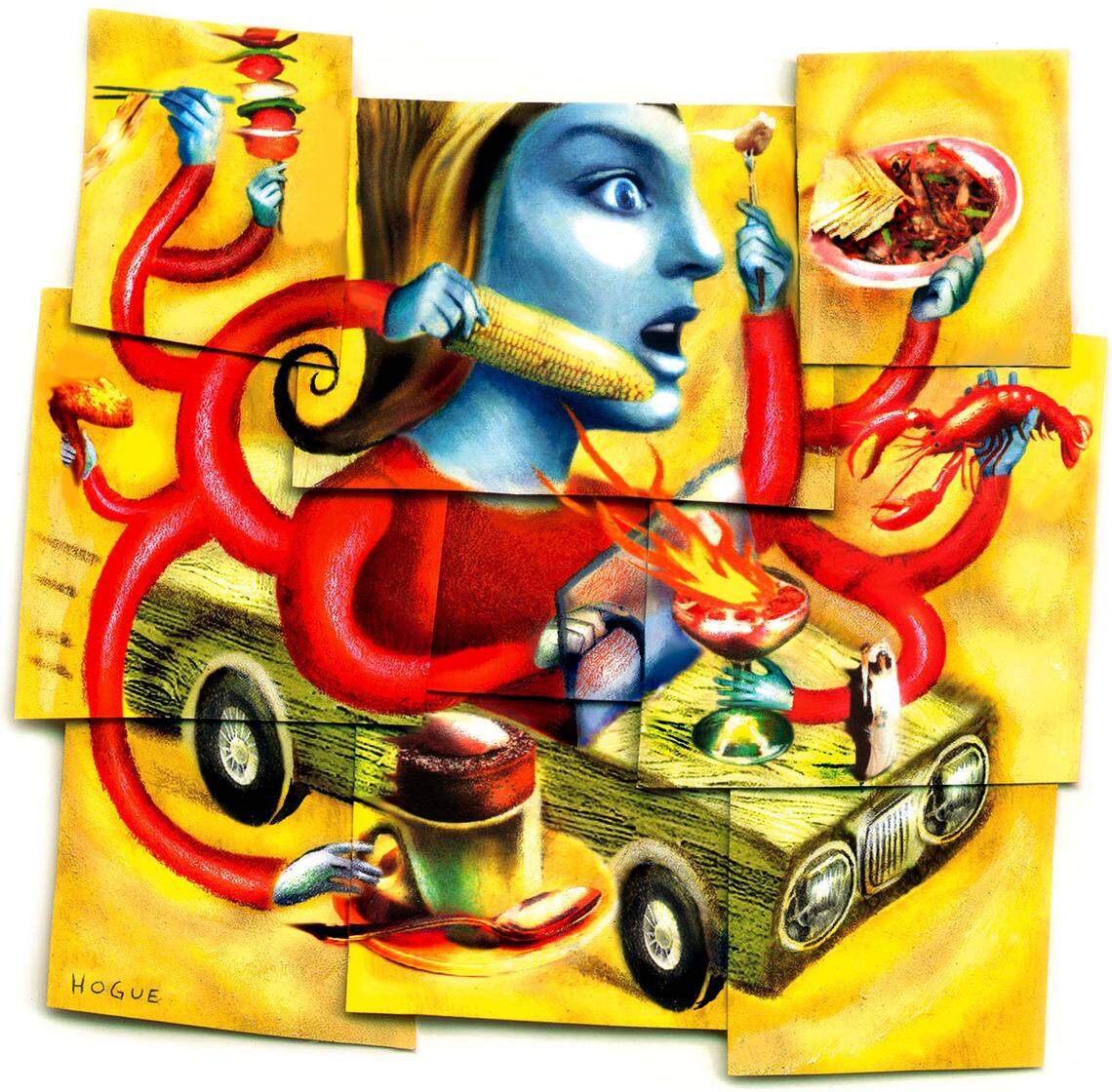
Distracted driving laws: The Florida Department of Transportation says that “activities such as eating, talking to passengers, reading, adjusting the radio or climate controls, dealing with children, and being fatigued or drowsy can be equally as distracting” as texting on a cellphone. However, these activities aren’t illegal. But that doesn’t mean that they can’t land you in serious trouble.
What a lawyer says about eating while driving: “Multitasking might be a valued skill in today’s fast-paced society. But one place where it could be dangerous is on the road. Eating while driving is a habit many drivers develop without realizing the potential risk it brings,” Florida lawyer Angela Zervos writes in a blog.
What is the citation if eating while driving causes an issue on the road?
Penalties: If trying to get the perfect bite of a burrito without squirting sour cream all over your pants causes you to swerve, speed or otherwise drive dangerously, you can be cited for a moving violation under a careless driving statute. That could cost you up to $500 in fines. If your eating causes a crash, you could be charged with reckless driving. According to Florida law, reckless driving occurs when a driver operates a vehicle with “willful or wanton disregard for the safety of persons or property.” If convicted, you could face up to 90 days in prison or a $500 fine for a first offense, and up to six months or a $1,000 fine for a subsequent offense. Now, that’s some indigestion right there.
Driving distractions
According to the Florida Department of Transportation, there are three types of distraction: manual, visual and cognitive:
▪ Manual distraction involves taking your hands off the wheel.
▪ Visual involves taking your eyes off the road.
▪ Cognitive involves taking your mind off of driving.
This story was originally published February 26, 2026 at 9:51 AM with the headline "Is it OK to eat and drive in Florida? What the law says about distraction."