
Manatee students will spend more time in class next year, making up for COVID-19 loss
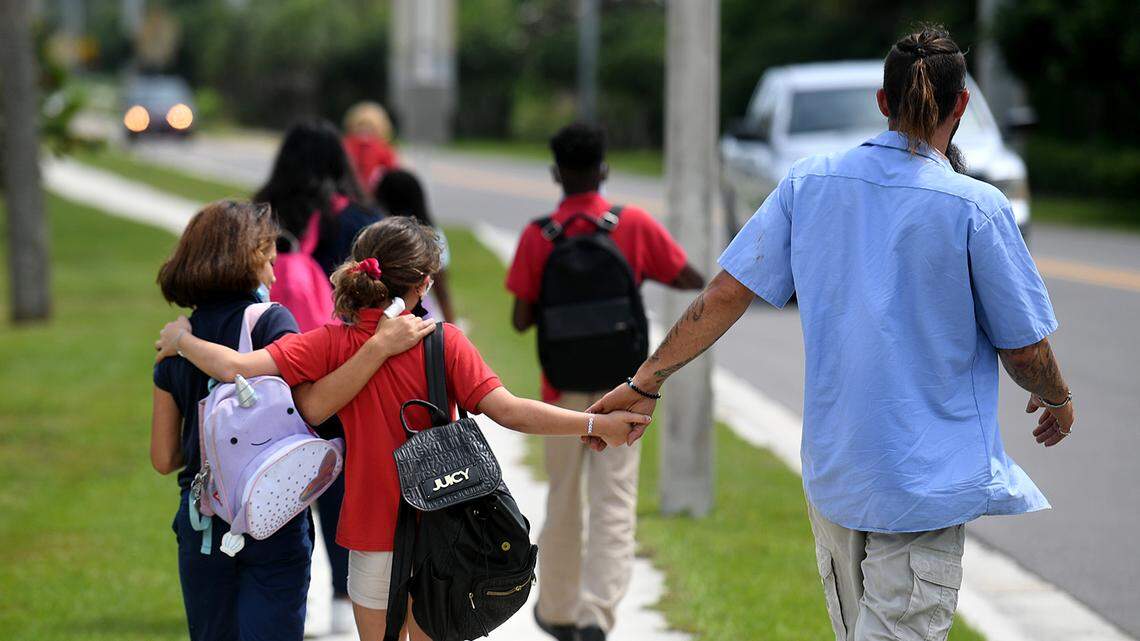
Students will spend more time in class in the upcoming 2021-22 school year, using a handful of extra hours to make up for disruptions caused by the COVID-19 pandemic.
District leaders approached the school board on Tuesday and requested several changes to next year’s academic calendar, including the removal of about half a dozen early-release days. The board unanimously approved those changes, though some details have led to an ongoing disagreement between the district and the teacher’s union.
“The theme of this calendar was devised to provide additional instructional minutes in the calendar through the entire year to close the academic gaps that, unfortunately, we have felt through the pandemic,” Deputy Superintendent Genelle Zoratti Yost said during her presentation to the board.
Recent changes, including the removal of four elementary early-release days, created an extra 744 minutes — or about 12 hours — of instructional time for elementary students in the new school year, according to a statement provided by district spokesman Mike Barber on Friday.
According to the documents approved by board members on Tuesday, the following changes were made for elementary schools:
- Removal of elementary early release on Oct. 15, 2021.
Removal of elementary early release on Oct. 29, 2021.
Removal of elementary early release on March 25, 2022.
Removal of elementary early release on April 1, 2022.
Elementary early-release days are traditionally times when educators hold a shorter class and then meet with families to review their students’ report cards in the evening.
Families will still have access to student grades online and teachers will still meet with parents throughout the year, but the traditional meeting days were removed from next year’s calendar, Yost confirmed.
With the school board’s recent approval, three “professional learning” early-release days were also removed from the 2021-22 school year, which begins in August. Professional learning is an official term for staff training on learning materials and teaching strategies.
Removing those early-release days created 276 extra minutes of instruction for middle school students and 264 minutes for high school students, or a total of about nine hours between both groups. The changes include:
- Removal of a professional learning early release on Sep. 15.
Removal of a professional learning early release on Nov. 3.
Removal of a professional learning early release on Dec. 1.
To ensure employees still receive the needed training, Yost said, the calendar includes a hybrid day that includes both a record day and professional learning for staff.
That day has led to contention with the local teacher’s union, the Manatee Education Association. The district maintains that next year’s calendar provides adequate record days for teachers, but MEA President Pat Barber said educators were shorted by the board’s unanimous decision.
And while district leaders said they hoped to work with MEA and find a solution, Pat Barber said an agreement should have preceded the calendar changes.
“That is not going to be a grievance,” the union president said. “It will be an unfair labor practice charge that comes from us.”
Making up for COVID struggles
When asked for data on the learning losses experienced during the COVID-19 pandemic, Yost said the district was still examining the results of benchmark testing. However, existing research highlighted problem areas based on the subject matter and learning format.
On the benchmark testing for English language arts (ELA), 61% of full-time online students performed at or above grade level. That was a noticeable gap from the 52% of in-person students who met the same ELA criteria.
But when it comes to the benchmark testing for math, 61% of in-person students achieved proficiency, outpacing the 49% of online students who met the same criteria.
The provided ELA data tracked students in grades three through 10, while the provided math data tracked students in grades three through eight. And the data only included students who attended class online or in person full time, not the children who rotated between learning formats throughout the school year.
In an interview, Yost said it was possible that families had an easier time helping their online students with English language arts, and that in-person students had the benefit of math instructors.
And before the current academic year, when all students were forced to finish the 2019-2020 school year online, some students missed several weeks of classes.
“That’s a simplistic response, but we are digging deeper to find additional answers,” she said.
This story was originally published April 17, 2021 at 5:00 AM with the headline "Manatee students will spend more time in class next year, making up for COVID-19 loss."