
A small fish with a big job: The American Flagfish and Florida’s troubled waters
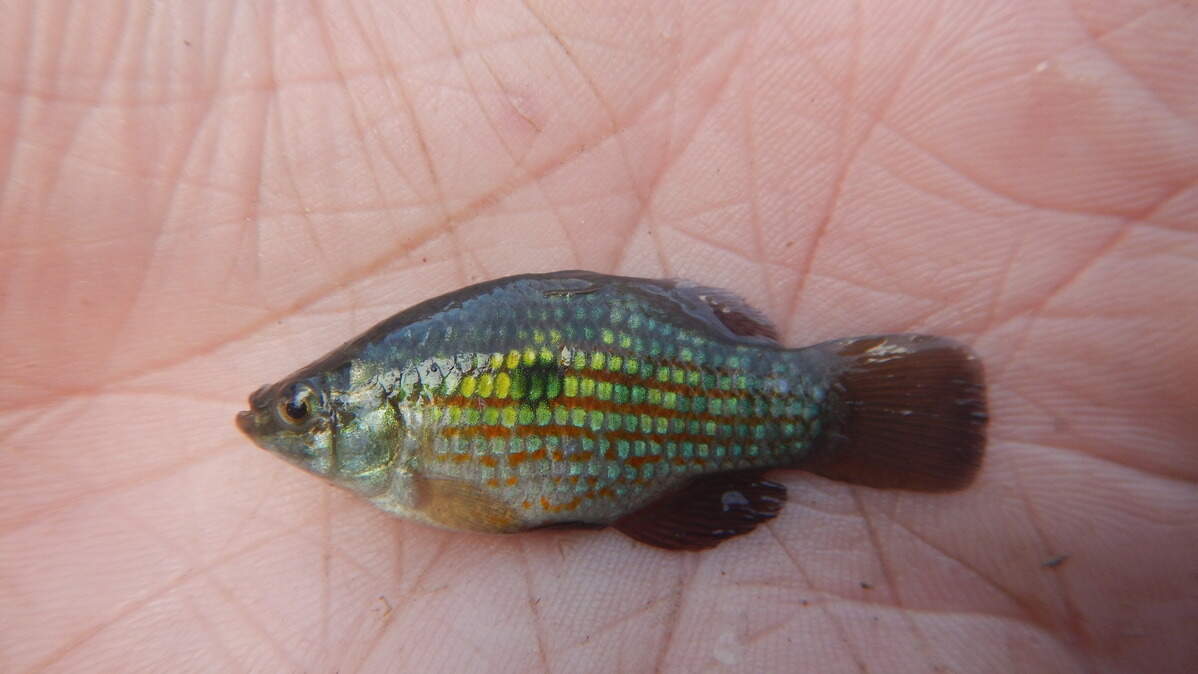
Florida is home to some of the most remarkable freshwater life in North America, and few species illustrate this better than the American Flagfish (Jordanella floridae). Found naturally nowhere else on Earth, this small, colorful fish is one of Florida’s most distinctive native species, and one of its most overlooked sentinels for pond and wetland health.
The Flagfish earns its name from the males, who display the unique markings of the American flag — vivid red and white horizontal stripes and an iridescent blue patch marked with a white spot. They are only three inches in length, yet they punch well above their weight in ecological importance.
Flagfish feed on filamentous algae, aquatic plants and mosquito larvae, keeping the ponds and wetlands they inhabit in balance. In turn, they are prey for wading birds, largemouth bass, gar, softshell turtles and water snakes. They are a small but essential link in a food web found only in Florida, where more than 10 percent of native species exist nowhere else on the planet.
The American Flagfish requires specific habitat to survive: well-vegetated, slow-moving freshwater with abundant native plants for cover — pickerelweed and arrowhead marshes, willow and cypress swamps, spring-fed runs with tapegrass beds.
So many Florida ponds have become hostile territory with turf grass to the water’s edge, concrete-lined outfalls, chemically scrubbed crystal-clear water devoid of the native vegetation that shelters them from predators. Invasive species like swamp eels and tilapia can displace Flagfish from a waterbody entirely. Roadside ditches, mowed to bare mud and filled with runoff and debris, offer no habitat at all.
The disappearance of the Flagfish is more than a biodiversity loss. It has direct consequences for water quality and, ultimately, for red tide.
When the algae that Flagfish naturally consume is instead sprayed with herbicides, it breaks down into nutrient-laden sludge. Florida’s heavy rains then flush those nutrients into our bays and coastal waters, where they fuel blooms of red tide. Every pond that loses its Flagfish, every ditch stripped of native vegetation, every shoreline converted to turf becomes part of a nutrient pipeline that ends in our bay waters.
The good news is that the habitat these little fish need is also the habitat that benefits homeowners, reduces maintenance costs and supports the other fish, turtles, butterflies and wading birds that make Florida living so unique.
Replacing turf grass along pond edges and drainage ditches with native shoreline plantings and avoiding aquatic herbicides restores the cover and food Flagfish need. Flagfish are the biological agents for algae management, while native plants reduce erosion, filter nutrients before they leave your property and require far less water and chemical input than conventional lawn.
Local resources are available to help. The Sarasota and Manatee County UF/IFAS Extension Offices offer guidance on native plant installation and pond restoration. The Healthy Pond Collaborative has already helped neighborhoods plant more than 15 miles of native pond shoreline across Sarasota and Manatee counties.
Every pond in Florida eventually drains to the coast. What happens at the shoreline of a neighborhood retention pond matters to the health of our bays. The American Flagfish, small as it is, is part of the system that keeps those connections clean. Restore its habitat and the rest — the birds, the bass, the clear water and the healthier coast — tends to follow.
Sean Patton is an ecologist who works statewide managing wetlands of all kinds through his company Stocking Savvy. He is an international science ambassador through iNaturalist and Adjunct Professor of Environmental Studies at Ringling College of Art & Design.
This column is part of EcoBeat, a monthly series produced by the Science and Environment Council to bring leading Gulf Coast environmental voices directly to the public. Learn more at scienceandenvironment.org/ecobeat.